For generations, Caribbean households have honed a quiet, collective instinct when a major storm approaches. Before the meteorologist finishes their emergency broadcast, mothers are already inventorying non-perishable food in the pantry, children are filling every available container with fresh water, elders are checking emergency lighting, and fathers stand on porches scanning the horizon, passing down generations of storm-watching knowledge. No words need to be spoken: the whole community knows a hurricane is on its way.
Once, catastrophic hurricanes were once-in-a-generation events seared into collective memory as singular disasters. Hurricane Gilbert in 1988 was exactly that – a terrifying force that tore through the Caribbean, leaving widespread destruction, loss of life, and lasting psychological trauma that communities still recount decades later. But today, that pattern has shifted drastically. Since 2016, devastating Category 5 hurricanes have become a grim, recurring normal for the region.
The roll call of destruction stretches across the last decade: In 2016, Hurricane Matthew made landfall in Haiti as a Category 4 storm with 150-mile-per-hour winds – the strongest system to hit the country in more than 50 years. It killed more than 500 people, wiped out 90% of the nation’s crops, and left more than 120,000 families homeless. Three years later in 2017, Category 5 Hurricane Maria erased 226% of Dominica’s total gross domestic product in a matter of hours, rolling back decades of hard-won development. In 2019, Category 5 Hurricane Dorian stalled over the Bahamas for days, wiping the town of Marsh Harbour off the map and leaving families searching for missing loved ones for weeks after the waters receded.
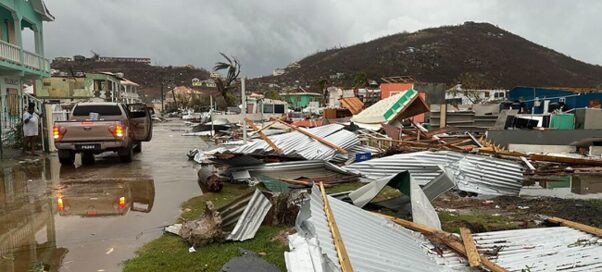
The pace of destruction accelerated sharply in recent years. In July 2024, Hurricane Beryl made history as the earliest-forming Category 5 storm ever recorded in the Atlantic, forming before the official hurricane season had even fully begun. It hit Carriacou as a Category 4, stripping the island of nearly all infrastructure, destroying crops across Jamaica, and leaving the entire region reeling from the shock of yet another unprecedented disaster. Just 15 months later in 2025, Category 5 Hurricane Melissa became the strongest Atlantic hurricane ever recorded, packing 185-mile-per-hour winds that claimed 95 lives and earned its name a permanent retirement from the list of cyclone identifiers.
This rise in catastrophic storms is not a random coincidence – and it is not a crisis the Caribbean created. The region contributes less than 0.1% of global greenhouse gas emissions, yet it bears the worst brunt of a climate crisis driven by two centuries of fossil fuel dependency driven by the world’s largest economies. While the global north reaped the economic benefits of carbon-intensive development, small island states in the Caribbean are left filling water buckets, rebuilding shattered homes, and burying their dead after every storm.
The science behind this trend is clear: hurricanes draw their energy from warm ocean water. Decades of carbon pollution have trapped excess heat in the atmosphere, and 90% of that extra heat has been absorbed by the world’s oceans. Today, the Caribbean Sea is far warmer than historic averages, giving every passing storm more destructive power than the one that came before it. Rapid attribution analysis from Climate Central confirms that climate change directly strengthened Hurricane Melissa’s winds, and human-caused carbon emissions made the record-warm ocean temperatures that powered the storm hundreds of times more likely.
The cumulative toll across the region is immeasurable. When Maria hit Dominica in 2017, then-Prime Minister Skerrit documented the disaster in real time from his storm-battered home, his roof torn away and floodwaters rising around him as the “Nature Island” of the Caribbean fell apart. When Dorian stalled over the Bahamas for two days, entire communities on Abaco and Grand Bahama were completely erased from the map. Beryl damaged or destroyed 90% of all structures on Carriacou, including homes, schools, and the fishing fleets that feed local families. When Melissa made landfall, outer rainbands triggered catastrophic landslides in Haiti, Cuban authorities evacuated 735,000 people in a single night, and western Jamaica was flattened – leaving crops submerged for the second time in less than two years. Time and again, critical infrastructure – hospitals, roads, food supply chains that communities have rebuilt again and again – take another devastating blow.
Caribbean communities and frontline climate activists have shown extraordinary resilience in the face of repeated ruin, a level of fortitude most of the world will never be forced to demonstrate. But resilience is not a substitute for justice. You cannot rebuild a destroyed hospital with resilience alone, and it is unfair to ask a region to keep “bouncing back” while the fossil fuel policies that create these disasters remain unaddressed. Too often, praise for Caribbean resilience becomes a distraction from the critical question: who is responsible for the unending burden these communities are forced to bear?
That question is at the heart of the global fight for climate justice, which demands that the world’s wealthiest highest-emitting nations honor their long-overdue climate finance commitments as a legal and moral debt owed, not optional charity to be given or withheld. In a major step forward for the region, the United Nations General Assembly voted in May 2026 to endorse an advisory opinion from the International Court of Justice (ICJ) on climate change, a resolution co-sponsored by Caribbean nations including Barbados and Jamaica. The opinion clarifies that all states have binding international legal obligations to protect the global climate system, and that nations that fail to meet those obligations can be held liable for damages and forced to pay reparations to affected states.
Turning this historic legal victory into meaningful change requires concrete action. It means delivering loss and damage funding to small island developing states as outright grants, not predatory loans that deepen existing debt. It means guaranteeing the Caribbean a full, equal seat at every global table where climate policy is negotiated. It requires all major emitting nations to follow through on the ambitious, actionable emissions cuts they promised in their Paris Agreement Nationally Determined Contributions, and to deliver on those commitments on time.
For Caribbean communities and advocates, the work continues. Citizens must stay resolute in grassroots advocacy, using their voices to demand justice for the region. Beyond educating themselves on the link between hurricanes and human-caused climate change, they must hold their own leaders accountable to push the international community to act, and support the grassroots and regional organizations fighting for climate justice every day.
The Caribbean did not create the climate crisis that is destroying our communities, but our experience is more than a warning to the rest of the world. It is irrefutable evidence of the human cost of climate inaction. And the most powerful thing we can do today is refuse to stay silent.