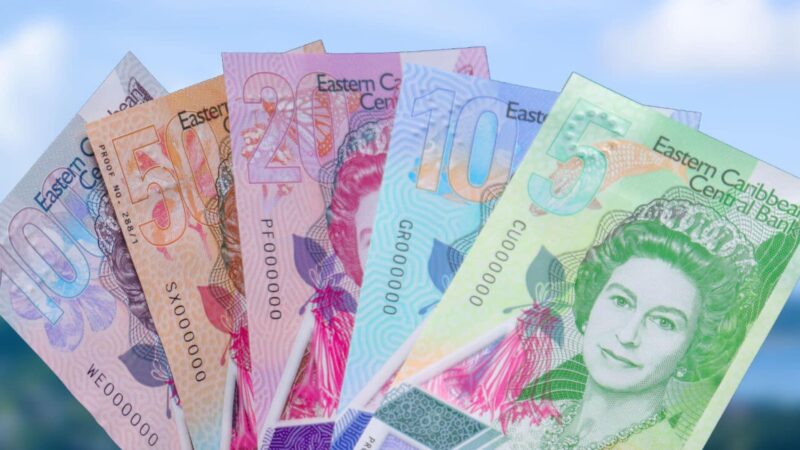
For small open economies bound together in a monetary union like the Eastern Caribbean Currency Union (ECCU), the dynamics of money go far beyond simple transactions and cash holdings. Every aspect of the currency system, from interest rate setting to currency stability, carries a tangible cost that shapes the daily lives of citizens, the growth trajectory of local businesses, and the fiscal space of member governments. To understand these costs, we must first examine the structural foundations that underpin the ECCU: a long-standing currency board arrangement pegged to the U.S. dollar, which has delivered decades of exchange rate stability but also imposes unique tradeoffs that are often overlooked in mainstream policy discussions.
One of the most immediate costs of money for ECCU residents is the cost of borrowing. Across the union, commercial interest rates remain significantly higher than those available in larger advanced economies, even with the currency peg locking in low exchange rate risk. This gap stems from multiple factors: small domestic financial markets that lack depth, higher perceived risk of default in small island economies, and rigidities in the regulatory environment that limit competition among lending institutions. For small and medium-sized enterprises (SMEs) that form the backbone of the ECCU’s tourism-dependent and service-based economy, these elevated borrowing costs often mean abandoned expansion plans, missed opportunities to innovate, and a persistent gap in job creation that holds back inclusive growth. For individual households, high lending rates translate into less access to affordable mortgages, consumer loans for education or healthcare, and greater financial vulnerability when economic shocks hit.
Beyond borrowing costs, the ECCU’s currency framework carries another significant cost: the requirement to hold large foreign reserve buffers to maintain the U.S. dollar peg. The Eastern Caribbean Central Bank (ECCB) is required to keep a high percentage of the monetary base backed by foreign reserve assets to guarantee full convertibility at the fixed exchange rate. While this reserve requirement is critical to maintaining market confidence and the peg’s credibility, it also represents an opportunity cost. Those reserves could otherwise be deployed to finance domestic infrastructure projects, social programs, or green transition investments that would deliver long-term economic and social benefits to member states. For small island nations already facing tight fiscal constraints and growing costs from climate change adaptation, this locked-up capital represents a substantial ongoing burden that cannot be ignored.
Inflation, too, imposes a silent cost of money across the ECCU. In recent years, global inflationary pressures driven by supply chain disruptions, rising energy and food prices, and post-pandemic demand shifts have spilled over into the ECCU, eroding the purchasing power of household incomes and savings. Because the ECCU imports nearly all of its essential goods, it is disproportionately exposed to global price swings, meaning inflation hits lower-income households the hardest, as they spend a larger share of their income on basic necessities. This erosion of purchasing power is a hidden but persistent cost that reduces living standards across the union, even when nominal wages remain stagnant.
Looking ahead, the evolving global financial landscape is creating new cost dynamics for the ECCU. As major central banks around the world raised interest rates to combat inflation in recent years, the ECCB has had to follow suit to maintain the attractiveness of the Eastern Caribbean dollar and protect reserve levels, passing on higher global borrowing costs to domestic borrowers. At the same time, the rise of digital payment technologies and crypto assets presents both opportunities to reduce transaction costs and new risks that require costly regulatory and infrastructure upgrades to protect consumers and financial stability.
Addressing the cumulative cost of money in the ECCU will require targeted policy reforms that preserve the core benefits of the existing currency arrangement while easing its burdens on households and businesses. Proposals to deepen regional financial integration, increase competition in the banking sector, and unlock capital for domestic investment are all critical steps to reduce borrowing and opportunity costs. Investing in digital financial infrastructure can also lower transaction costs for cross-border remittances and daily commerce, bringing greater financial inclusion to unbanked and underbanked populations across the region. Ultimately, confronting the cost of money is not just a technical monetary policy issue—it is a core priority for boosting shared prosperity and building more resilient economies across the Eastern Caribbean.