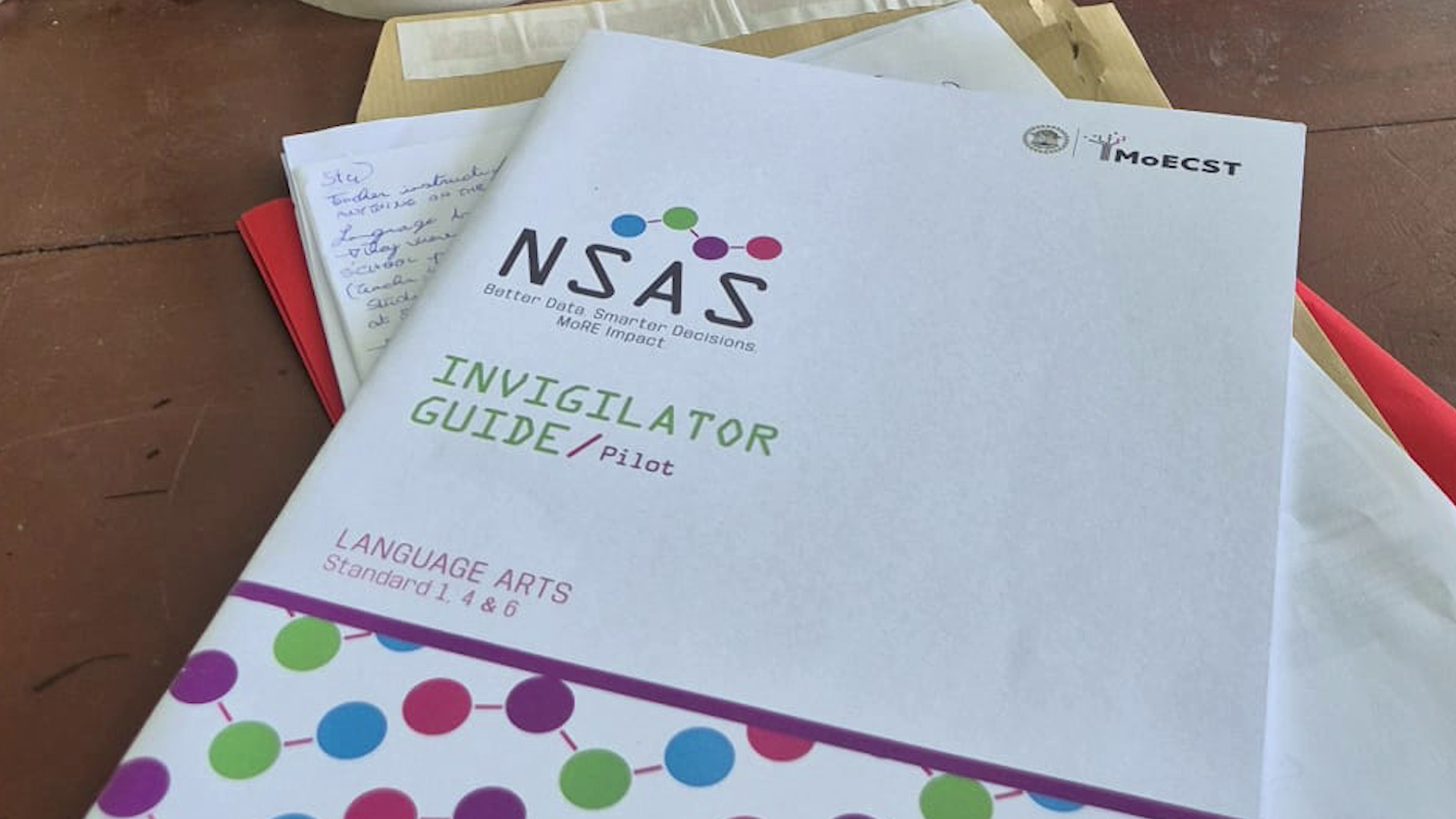
On June 4, 2026, a landmark nationwide education pilot moved into its next phase across Belize, as thousands of primary school students from coastal towns to remote inland villages sat for the mathematics section of the new National Schools Assessment System. This testing round follows the English language exam administered just days earlier, rolling out across 287 participating schools to evaluate the new framework before its full implementation.
Even extreme weather could not derail the rollout: in flood-prone regions of southern Belize, where rising waters turned rural roads into rushing streams, exam invigilators navigated hazardous conditions to reach testing sites and ensure every registered student could participate. In total, 20,965 students across three grade levels — Standards One, Four and Six — are taking part in the pilot program.
For Belize’s Ministry of Education, the pilot represents the most ambitious step in recent years to map student learning outcomes across the country’s diverse education system. Dian Maheia, Chief Executive Officer of the Ministry of Education, explained that the assessment is designed as a diagnostic tool, not a high-stakes evaluation. “It will give the ministry, individual schools and teachers clear insight into where students currently stand in their learning progress,” Maheia noted. “Once we understand gaps in knowledge and areas of strength, we can better target instruction, highlight successful practices, and address weaknesses across the system.”
Education leaders across the country have broadly welcomed the initiative, praising its potential to drive systemic improvement. Keisha Garbutt, principal of St. John’s Anglican School, called the program one of the most impactful education reforms the ministry has launched in recent years. “Aggregated national data on student performance will give us a clear benchmark to measure progress, and it strengthens accountability across all levels of schooling,” Garbutt explained. She added that the standardized assessment will also push parents to take a more active role in their children’s learning, filling a gap created by the absence of consistent nationwide testing in recent years. “Too many parents have become complacent when there is no formal, consistent measure of how their children are progressing,” she said. “This assessment will encourage families to engage more actively with student progress.”
At All Saints Primary School, principal Colin Estrada reported that many students found the math assessment challenging, but framed that difficulty as a useful outcome. “That challenge shows us exactly where we need to adjust our curriculum and teaching practices to meet national standards,” Estrada said. He added that the data collected from the pilot will be critical to updating school improvement plans, allowing institutions to direct limited resources to the subject areas and student groups that need the most support. “Data is the only way we can clearly identify our strengths and our gaps,” Estrada noted. “This assessment gives us that consistent, comparable data we’ve been missing.”
Ministry officials have emphasized that the assessment is explicitly structured as a low-stakes exercise, designed to avoid penalizing students or schools during the pilot phase. “This test will not affect student report cards, it will not determine promotion to the next grade, and it will not be used to rank or stigmatize schools or communities,” Maheia clarified. “It is solely a tool to improve the entire education system, not to judge individual students.”
Looking ahead, the Ministry of Education plans to expand the assessment framework to include science and Belizean studies by 2027, with a future expansion to secondary schools already in early planning stages. The pilot data will be analyzed over the coming months to adjust the assessment structure and address any implementation gaps ahead of full national rollout.