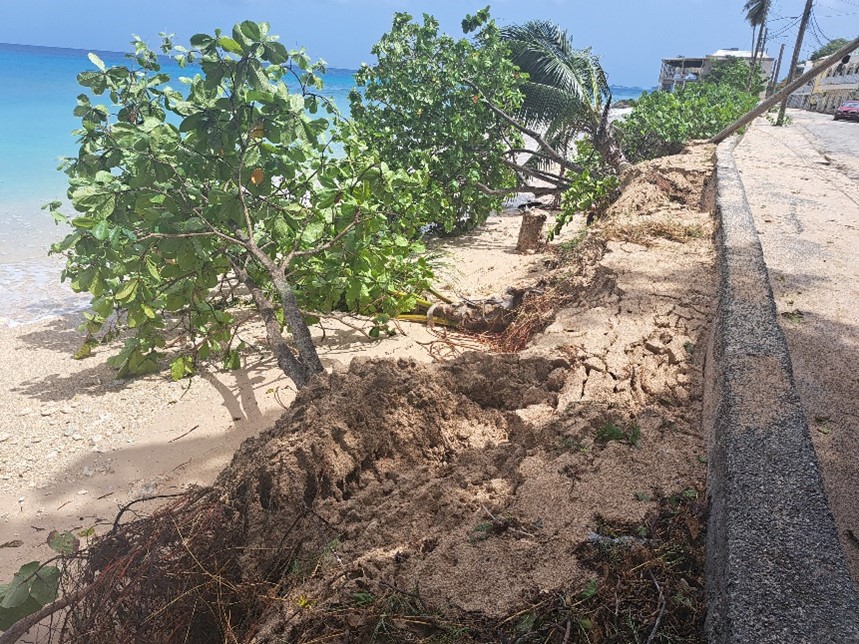
Barbados’ iconic Caribbean beaches are facing an unprecedented environmental crisis, with unseasonal coastal erosion accelerating across the entire island at a time when shorelines should be naturally rebuilding ahead of hurricane season, the country’s leading coastal management official has warned.
Dr. Leo Brewster, director of Barbados’ Coastal Zone Management Unit (CZMU), told local media the unusual erosion is being driven by a massive, off-schedule pulse of low-density freshwater from South America’s two largest river systems — the Amazon and the Orinoco. This so-called “green water” forms a buoyant layer on top of denser saltwater, artificially raising overall sea levels around the island far beyond what would be expected at this time of year.
“The whole island is being impacted by what people will be seeing as out-of-season erosion,” Brewster explained. “This is happening at a time when the beaches should actually be building now, after the Easter swell period and going into the hurricane season. Because of this excessive water, we’re getting more wave activity on the beach face and therefore greater penetration inland, and some areas have been hit very hard.”
The timing of the green water event has caught coastal scientists off guard. While discharges of Amazon and Orinoco freshwater into the Caribbean are a natural recurring regional phenomenon, they typically follow a predictable seasonal pattern, occurring either in the early year rainy season or between August and September. The arrival of this large pulse in the pre-hurricane rebuilding window is highly irregular, Brewster emphasized, marking a sharp break from historical environmental patterns that has compounded longstanding concerns over climate change and unregulated coastal development.
Local residents and tourists have already reported alarming shoreline retreat at popular recreational sites including Worthing Beach, where significant stretches of sand have disappeared in recent weeks. The crisis comes on the heels of recent public uproar over “brown water” discoloration at Carlisle Bay, a popular tourist beach that many have linked to sediment runoff from the construction of the luxury Fort Carlisle condominium development. That incident has reignited fierce public debate over whether high-end coastal development is being allowed to encroach too close to Barbados’ already fragile shorelines, putting both ecosystems and infrastructure at long-term risk.
When asked about the island’s regulatory framework for coastal construction, Brewster clarified that while the CZMU maintains strict mandatory setback requirements to protect shoreline ecosystems, final planning decisions rest with higher government authorities, and developers regularly seek exceptions to reduce the required distance between new builds and the water. “Some properties, as part of their application process, ask for reduced setbacks,” he said. “Of course, the coastal zone management unit has a policy for setback requirements and we try to adhere to those as best we can. Whatever happens after we have sent forward our recommendations is at a planning level.”
Coastal management challenges have been further intensified in the wake of Hurricane Beryl, which tore through the region earlier this year leaving widespread destruction to coastal infrastructure. In the storm’s aftermath, hundreds of shoreline property owners in high-end areas including Payne’s Bay and Gibbs have rushed to erect makeshift boulder barricades to protect their land from further erosion. While the public has raised complaints about the unregulated structures blocking public beach access, Brewster noted that property owners are legally permitted to install emergency protective measures when existing sea walls fail under the island’s current legislation. Authorities require that rebuilt structures remain within the original footprint of existing sea defenses to avoid expanding coastal encroachment.
However, Brewster warned that enforcement of these rules remains a persistent challenge due to the dynamic nature of the island’s shorelines. “What you may find is that some persons do try to come forward, or through the use of the boulders that they’re building, the actual base of the structure comes further seaward than it ought to,” he said. “We try to correct that after it’s discovered, but sometimes they may be buried with sand through the natural recovery of the beach. It would only be then exposed again during rough seas, or they can become permanently exposed because the beach has not been able to recover due to the placement of the boulders.”
For a small island nation whose economy is heavily dependent on pristine coastal tourism, the accelerating off-season erosion has raised urgent new questions about how Barbados will adapt to shifting climate patterns and balance development interests with long-term environmental protection.