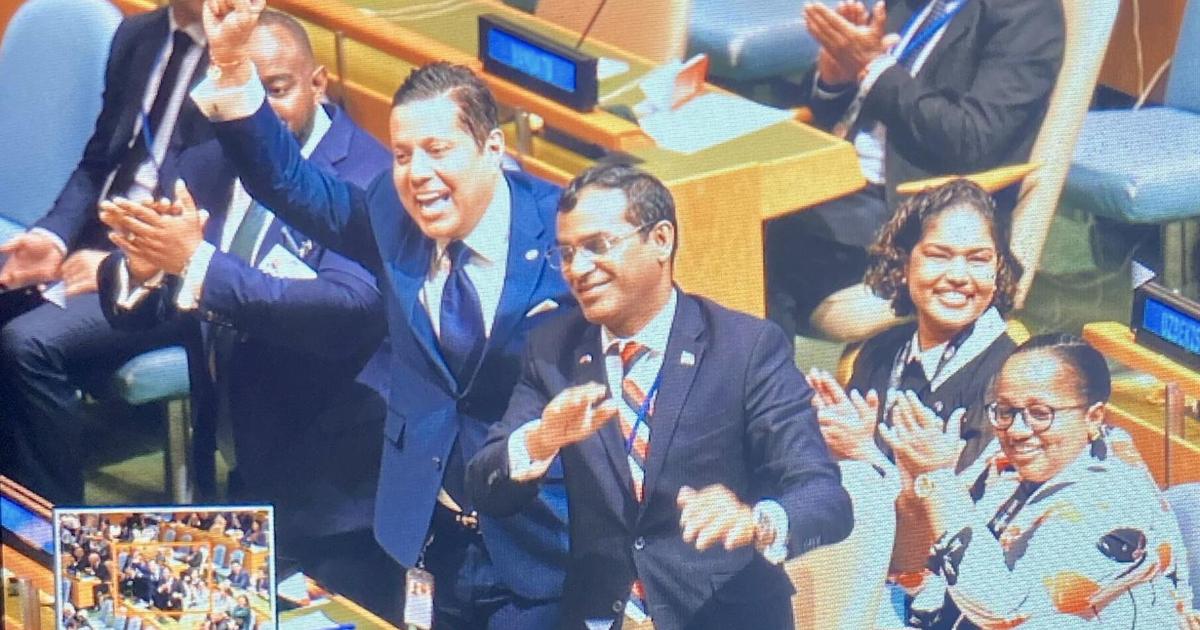
In a landmark diplomatic win that marks the Caribbean nation’s return to the United Nations’ most influential decision-making body after more than 20 years, Trinidad and Tobago has been elected to a non-permanent seat on the UN Security Council for the 2027–2028 term, earning overwhelming cross-global support from UN member states.
The election, held Wednesday at UN headquarters in New York, saw Trinidad and Tobago secure backing from 181 of the 190 voting countries, according to the nation’s Ministry of Foreign and CARICOM Affairs. This margin far exceeded the two-thirds majority threshold required to claim the seat, which was allocated to the Latin American and Caribbean Group (GRULAC). Parallel elections for UNSC seats representing Africa, the Asia-Pacific region, and the Western European and Others Group were also held alongside the GRULAC contest.
Trinidad and Tobago’s government framed the landslide result as a defining diplomatic achievement under the leadership of Prime Minister Kamla Persad-Bissessar. The nation’s official campaign launched during the 2025 UN General Assembly in September, built on months of extensive diplomatic outreach and relationship-building with heads of state and government across every global region.
Centered on the campaign theme “Building Consensus for the Realization of Sustainable Peace and Security,” Trinidad and Tobago’s candidacy outlined three core priorities for its upcoming term: cracking down on the illegal trafficking of small arms and light weapons, advancing the global peace and security agenda focused on protecting and empowering women and children, and addressing the emerging security risks and opportunities tied to artificial intelligence’s global impact.
As the body tasked with upholding international peace and security, the UNSC holds unique authority to pass binding resolutions on a sweeping range of critical global issues, from armed conflict mediation and counter-terrorism operations to the imposition of international sanctions, deployment of peacekeeping missions, and coordination of responses to humanitarian emergencies. As a non-permanent member, Trinidad and Tobago will hold full voting rights on all Security Council resolutions and take a direct seat at the table during deliberations on the world’s most urgent security challenges.
This election marks the third time in Trinidad and Tobago’s history that the nation will hold a UNSC seat, following previous terms in 1985–1986 and 2002–2003. The new two-year term will officially begin on January 1, 2027, and conclude on December 31 of 2028. Now that the election is finalized, government teams are expected to begin formal preparations for the nation’s return to the council, where it will join five permanent and nine other non-permanent members to address pressing threats to global stability.
In an official statement, the foreign affairs ministry emphasized that the successful bid reflects Trinidad and Tobago’s longstanding commitment to multilateral cooperation and its consistent work advancing global peace and security goals. Government officials added that the seat will not only boost the nation’s own diplomatic standing on the global stage, but also provide a critical platform to elevate the priorities and interests of Small Island Developing States (SIDS) and the broader Caribbean community. The ministry also noted that the election outcome underscores the country’s proven ability to build international consensus, and is set to unlock new opportunities for deeper diplomatic partnerships and more impactful engagement on critical global issues.