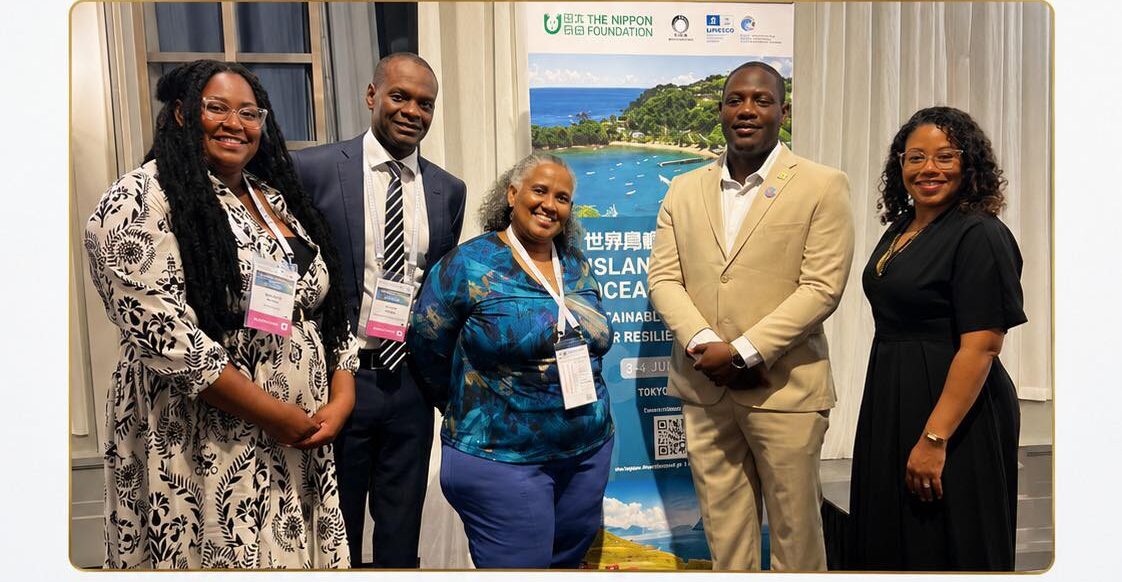
Against a backdrop of growing climate vulnerability for low-lying coastal nations, the 2026 Island States Ocean Summit kicked off on June 3–4 in Tokyo, Japan, gathering global stakeholders around the central mission of turning ambitious ocean sustainability goals into tangible, resilience-building action for island communities. This year’s gathering, themed “Sustainable Ocean Action for Resilient Islands,” brought together a diverse coalition of island state representatives, global development partners, leading marine scientists and representatives of major international organizations, all united by a shared goal: to advance climate-resilient, data-driven ocean planning that meets the unique needs of small island developing states (SIDS).
Leading Antigua and Barbuda’s high-level delegation to the summit is Honourable Anthony Shamari Smith Jr., the country’s Minister of Agriculture, Lands, Fisheries and the Blue Economy. He is joined by a cross-sectorial team of experts: Climate Ambassador Her Excellency Ruleta Camacho Thomas, Marver Woodley, Senior Operations and Policy Manager at the national Department of the Blue Economy, Dr. Tricia Lovell, Deputy Chief Fisheries Officer, and Dr. Branson Belle from the Centre of Excellence for Oceanography and the Blue Economy at The University of the West Indies Five Islands Campus. The diverse composition of the delegation reflects Antigua and Barbuda’s holistic approach to blue economy governance, bridging policy, science, and climate action.
During the summit’s opening High-Level Segment, Minister Smith delivered Antigua and Barbuda’s official national statement, grounding the global conversation in the daily reality of SIDS. He emphasized that for Antigua and Barbuda, the ocean is far more than an environmental resource—it underpins every pillar of the national economy, from food security for local communities to the livelihoods of thousands employed in tourism, fisheries, and maritime sectors. Against this context, he laid out the cascading threats that SIDS like Antigua and Barbuda face daily: accelerating sea-level rise that eats away at coastal land, widespread erosion that threatens tourism infrastructure and residential areas, degradation of critical coral reef habitats that buffer storms and support fisheries, rampant marine pollution from plastic runoff and shipping activity, and mounting pressure on finite marine resources that local communities depend on for survival.
In his address, Minister Smith also outlined the proactive steps Antigua and Barbuda has already taken at the national level to strengthen ocean governance and build long-term resilience. Key initiatives include the ongoing drafting of a landmark national Blue Economy Bill, designed to create a clear legal framework for sustainable ocean use, and continuous work to implement comprehensive Marine Spatial Planning—an approach that maps out competing ocean uses from conservation to shipping to reduce conflict and protect sensitive ecosystems. Both initiatives are designed to support balanced, sustainable management across all key ocean sectors: commercial and small-scale fisheries, tourism, marine conservation, maritime transport, and coastal development.
Minister Smith went on to reaffirm Antigua and Barbuda’s full commitment to the global 30×30 biodiversity target, which calls for protecting 30% of the world’s land and oceans by 2030. But he also stressed that SIDS cannot meet these global goals alone. He issued a clear call for expanded global access to critical resources for SIDS: advanced ocean science, targeted research support, standardized marine data collection, innovative climate adaptation technology, and sustained technical assistance to help local governments implement their ocean action plans.
As a newly admitted member of UNESCO’s Intergovernmental Oceanographic Commission, Antigua and Barbuda also expressed strong support for the Summit’s new Sustainable Ocean Planning and Management Strategy, framing it as a valuable, practical framework to advance integrated ocean governance and deepen regional cooperation between island states facing shared climate challenges.
Beyond the plenary sessions, Minister Smith took part in a High-Level Special Event focused on “Sea Level Rise and International Law,” a gathering dedicated to advancing legal frameworks that protect the sovereign rights and economic interests of SIDS at risk of displacement and territorial loss from rising seas. A core outcome of this year’s summit is the official launch of the new Sustainable Ocean Planning and Management Support Platform, a global initiative designed to scale up technical assistance, improve cross-stakeholder coordination, and strengthen global partnerships to support ocean action in island states. While in Tokyo, Antigua and Barbuda’s delegation has also held a series of bilateral meetings and technical working sessions covering a range of priority issues, from improved ocean governance frameworks to sustainable fisheries management, climate resilience programming, and innovative climate finance for SIDS.
In closing, Minister Smith reaffirmed Antigua and Barbuda’s long-standing commitment to working hand-in-hand with regional and international partners to advance science-based sustainable ocean management, and build a resilient, inclusive blue economy that will benefit current and future generations of island residents.