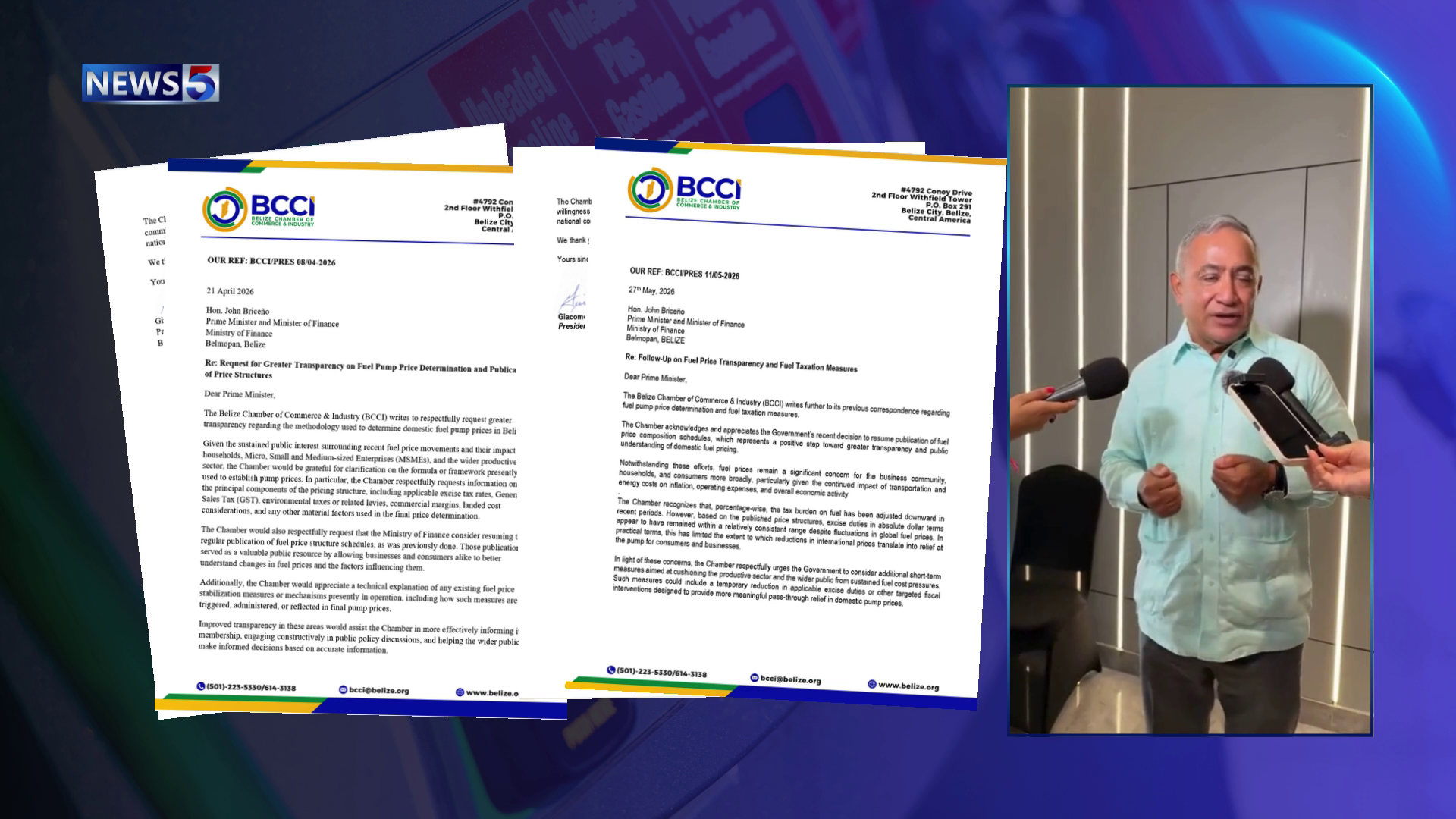
A public clash between Belize’s top government leader and the nation’s leading business association has put the country’s ongoing fuel price crisis front and center, exposing deep divides over economic policy and shared burden amid global market volatility. As of June 3, 2026, the Belize Chamber of Commerce and Industry has ramped up calls for temporary reductions to national fuel taxes, claiming that recent dips in global crude prices have not translated to savings for ordinary consumers at local gas pumps. The business group argues that cutting fuel levies would deliver much-needed relief to households and small businesses already grappling with broad-based cost-of-living increases. But Prime Minister John Briceño has pushed back hard against the proposal, dismissing the Chamber’s demand as a misinformed argument that misunderstands the role of fuel taxes in government revenue, and even calling the group’s public stance “embarrassing.”
Briceño explained that regardless of how fuel taxes are split across different levies—including environmental taxes, goods and services tax (GST), excise tax and import duties—any overall cut would remove the same total amount of critical revenue from government coffers, which funds essential public services and social programs across the country. The prime minister’s rejection sets the stage for a broader standoff over how to address soaring fuel costs, which have been amplified by ongoing geopolitical tensions in the Middle East that have pushed global energy prices upward in recent months.
Beyond rejecting the tax cut push, Briceño has called for collective action across all parts of the fuel supply chain, noting that the government has already sacrificed millions of dollars in foregone fuel tax revenue to cushion the blow of global price increases for consumers. He pointed out that the current national fuel pricing framework was established back in 2004, when global crude prices were far lower than today’s levels, and argued that the outdated formula no longer aligns with 2026’s volatile economic realities.
Notably, Briceño declared a conflict of interest related to the debate, noting that his family owns a service station in Orange Walk Town, which is why he has delegated discussions on the issue to the financial secretary and avoided direct negotiations. Drawing a parallel to the collective sacrifices made during the COVID-19 pandemic, when the government appealed to public sector unions to accept temporary salary cuts to address a national fiscal crisis, the prime minister is now calling on fuel importers and dealers to reduce their profit margins to help ease pressure on consumers.
“It’s not something that we do out of malice or anything, but this – we’re all in this boat together so everybody has to do their part,” Briceño stated in his remarks. “I’m appealing to them, and I’m hoping that common sense is going to prevail.”
The disagreement underscores a growing tug-of-war across Belize between business groups pushing for consumer tax relief and government leaders working to protect already strained public revenues amid ongoing economic uncertainty. For ordinary Belizean drivers, who have already seen their household budgets stretched thin by rising fuel costs, the standoff means immediate relief at the pump remains unlikely for the near term.