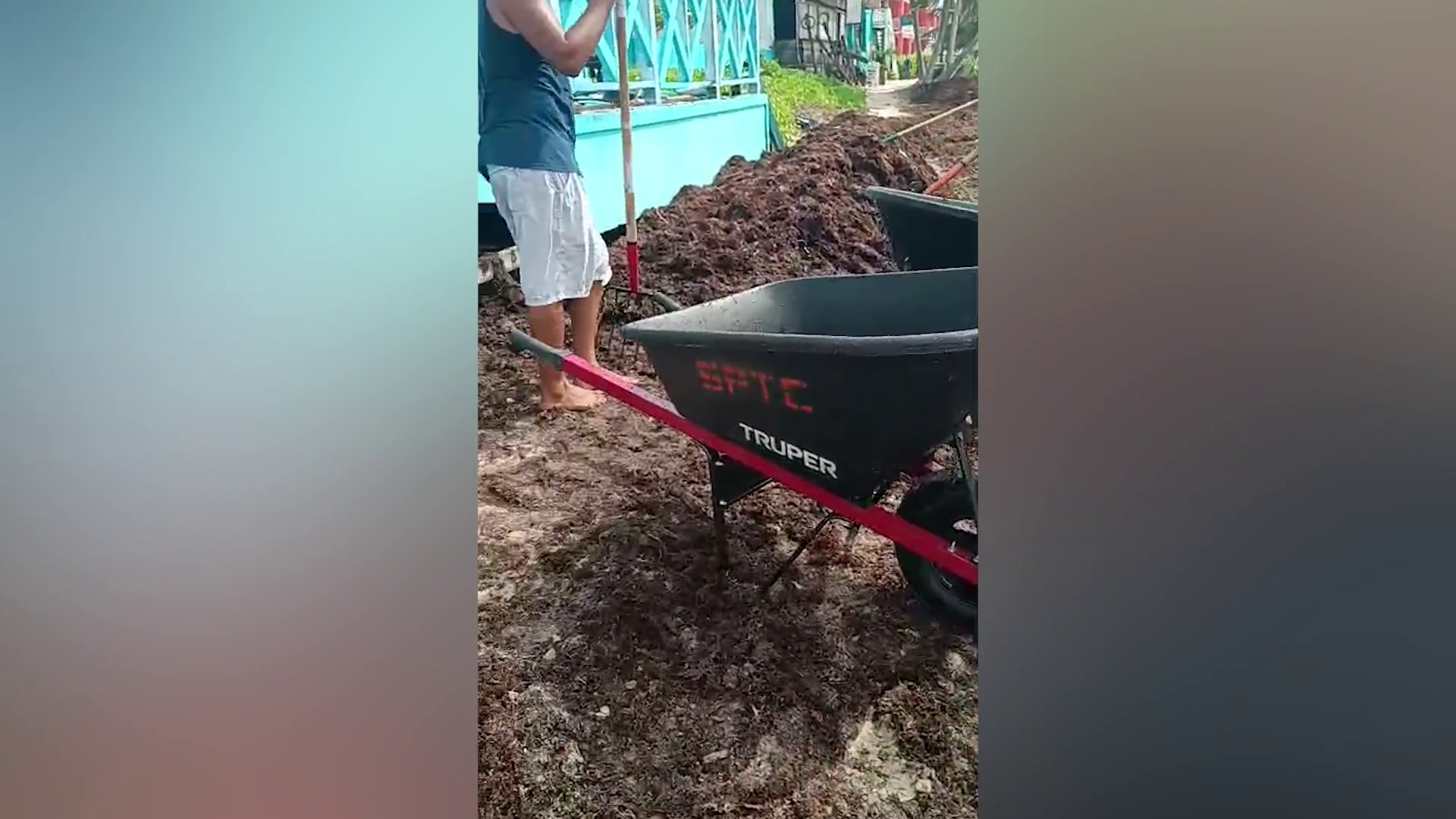
As massive quantities of sargassum seaweed continue to accumulate along San Pedro’s scenic shorelines, overwhelming local ecosystems and threatening the island’s tourism-dependent economy, a local tour guide has launched a growing grassroots movement to reclaim the coast through regular community cleanup initiatives.
Oscar Iboy, a long-time tour guide and active member of local advocacy group San Pedro Citizens for Change, launched the recurring effort after participating in a small one-off cleanup near the local high school in early 2026. Disappointed by the low initial turnout at that event, Iboy made the decision to expand the project into a sustained, organized campaign to encourage broader resident engagement.
While participation in the cleanups started off modest, the movement has steadily gained momentum in recent months. The first organized event drew just 13 local volunteers, but the most recent cleanup attracted roughly 20 committed community members, marking a steady upward trend in public buy-in for the initiative.
Iboy’s group currently plans to host cleanup events every other Sunday, and has ramped up outreach to encourage both local residents and small business owners across the island to join the effort. Beyond the immediate environmental benefits of removing rotting sargassum from public beaches, Iboy has also proposed a policy solution that addresses two pressing local issues at once:
a cross-sector proposal that would have the San Pedro Town Council fund paid cleanup positions for unemployed local workers. With the sargassum surge driving a downturn in tourism, hundreds of tour guides and hospitality workers across the island are currently out of work. Iboy’s plan would not only put unemployed locals back to work earning a steady income, but also permanently improve the island’s coastal environment and its reputation as a top Caribbean travel destination, helping to revive the tourism sector long-term.
This report was originally transcribed from a June 2, 2026 evening television broadcast, with Kriol-language commentary transcribed using a standardized regional spelling system.