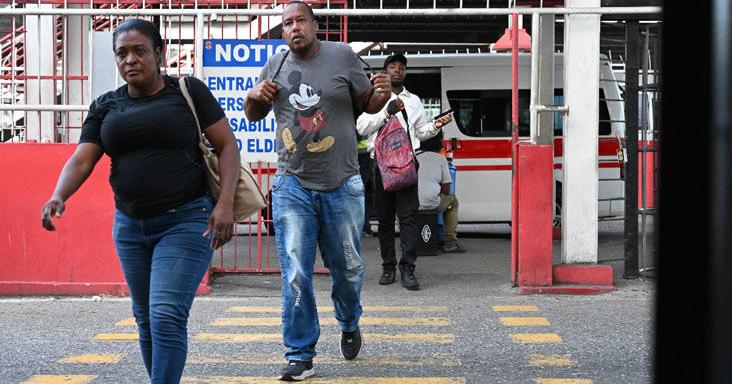
Starting Monday, thousands of daily commuters across Trinidad and Tobago are bracing for significant travel disruptions, as maxi-taxi operators from all six national routes have launched a three-day work stoppage framed as a “rest and reflection” action to push for long-delayed government action on decades of unresolved industry issues.
Vernell Carter, Assistant Secretary of the Association of Maxi Taxi Trinidad and Tobago (AMTTT), confirmed the industrial action last week, noting it will run through Wednesday. Carter added that the strike will be called off immediately only if the government delivers formal documentation laying out a clear, reasonable timeline to address the full list of operator demands. Approximately 5,000 maxi-taxis provide core public transport across the twin-island nation, meaning the shutdown will leave tens of thousands of workers, students and daily travelers without their regular transport option, and place extra strain on the few remaining operating transit services.
During the three-day action, AMTTT executive members will gather at the Route Two (red band) compound at Port of Spain’s City Gate and the Route One (yellow band) compound on South Quay, with drivers from all other routes invited to attend the organized gathering. Carter highlighted that one core demand is the construction of dedicated transit hubs for every maxi-taxi route, a need that has gone unmet for smaller routes for years. “The other routes don’t have a hub to gather in, to sit down and rest and reflect, so they would be up on our side between Route One and Route Two,” Carter explained, noting the existing facilities offer amenities including a cafe and television that will accommodate visiting drivers throughout the action.
Operators have laid out a broad set of long-standing grievances that have prompted the shutdown. Top concerns include rampant illegal competition from unlicensed “PH” vehicles and unauthorised white buses that operate on routes legally reserved for maxi-taxis. Operators have also been pushing since 2021 to raise the maxi-taxi speed limit from 65 km/h to 80 km/h, and are calling for clear, standardized regulations for transferring public service vehicle licences in cases of owner death, serious illness, amnesty programmes and open transfers. Additional demands include: the upgrade and improved management of maxi-taxi stands and dedicated hubs across all routes; full payment of outstanding dues owed to maxi-taxi operators that provide contracted school transport services; clearly marked pick-up and drop-off zones, particularly in the capital Port of Spain; permission for maxi-taxis to use overpasses and priority routes currently restricted to Public Transport Service Corporation (PTSC) buses; revised, more accessible National Insurance contribution arrangements for self-employed operators; clear legal guidelines for on-board radio communication systems; enhanced safety and security measures for both drivers and passengers during overnight trips; and simplified application processes for intra-city service passes.
The timing of the strike has sparked urgent concern from education stakeholders, as the action coincides with ongoing CSEC and CAPE examinations for secondary school students. Crystal Ashe, President of the Trinidad and Tobago Unified Teachers Association (TTUTA), said the shutdown poses major disruptions for daily commuting teachers and exam-taking students. “Our teachers and students use this service daily and it will definitely impact on them,” Ashe said, noting that parents of exam candidates will need to make alternate travel arrangements at short notice.
Ashe also confirmed that TTUTA supports operators’ demand for immediate payment of $10 million in outstanding school transport dues, noting that operators have only received two weeks of payment so far this year – a parallel to the delayed backpay owed to many public school educators. “TTUTA asks that the Ministry of Finance and Ministry of Education get their house in order and pay all persons their outstanding monies immediately. Citizens cannot take promises to the groceries and financial institutions,” Ashe said, adding that he remains hopeful that productive negotiation between the government and operators can still deliver a positive resolution.
Walter Stewart, President of the National Parent-Teacher Association (NPTA), echoed that concern, saying the strike deeply worries parent leaders and has prompted the association to call for a pause in industrial action during the critical exam period. “The NPTA fully acknowledges and respects the rights of maxi-taxi operators to pursue legitimate avenues to address their challenges relating to school maxi-taxi payments, hub development revitalisation and management, policy guidelines on [licence] transfers and other concerns which have persisted across successive administrations,” Stewart said. However, he added, “Our students have toiled and prepared diligently for these exams and any disruption has the potential to cause unnecessary anxiety, uncertainty, disadvantage and inequity.”
Stewart urged the government to immediately roll out contingency transport plans to ensure affected students can reach their exam centres on time, and called on both sides to enter urgent good-faith negotiations to resolve the outstanding issues that led to the strike.
All six color-coded maxi-taxi routes are participating in the three-day action: red band (Route Two), the largest route with roughly 2,000 vehicles serving the Eastern Main Road and Priority Bus Route between Port of Spain, Arima and Sangre Grande; yellow band (Route One) serving Port of Spain, St James, Carenage, Chaguaramas, Diego Martin and Petit Valley; green band connecting Port of Spain, Central Trinidad and South Trinidad through Chaguanas, Couva and San Fernando; black band serving the route from San Fernando through Princes Town to Mayaro; brown band running from San Fernando to La Romaine, Siparia, Penal, Cedros and Point Fortin; and blue band, which operates exclusively across Tobago.