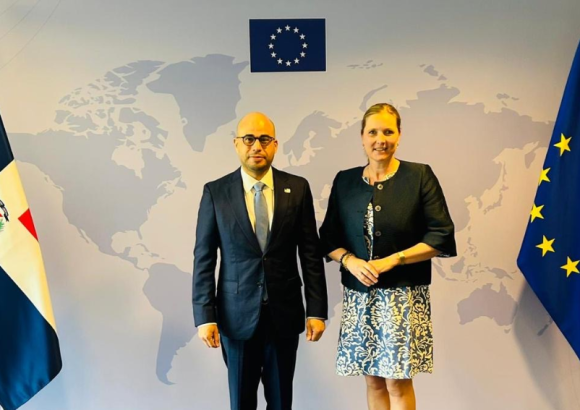
BRUSSELS, Belgium — The Dominican Republic and the European Union have wrapped up their fifth high-level political dialogue in Brussels, using the occasion to reaffirm their shared commitment to core global principles including democratic governance, inclusive multilateralism, transnational security, equitable sustainable development, and cross-border international collaboration.
The talks were hosted at the headquarters of the European External Action Service, and formed a central pillar of Dominican Week, a series of diplomatic and cultural events held across Belgium and the Netherlands designed to deepen ties between the Caribbean nation and Western European partners.
Leading the Dominican delegation was Francisco Caraballo, Vice Minister of Bilateral Foreign Policy, who sat down with senior EU representatives to work through a packed agenda of pressing bilateral and regional priorities. Core discussion topics included the full implementation of the Samoa Agreement, the landmark pact that governs relations between the EU and African, Caribbean and Pacific (ACP) states, as well as frameworks for orderly international mobility, expanded regional integration initiatives, and the ongoing operation of the Economic Partnership Agreement (EPA) between the Caribbean Forum (CARIFORUM) bloc and the European Union. Both negotiating teams underlined their mutual dedication to unlocking new trade flows, attracting targeted foreign investment, and expanding inclusive development opportunities for communities across the Dominican Republic and the Caribbean region.
Beyond economic and trade issues, the dialogue also centered heavily on deepening transnational security cooperation. Participants aligned on the urgent need to ramp up joint efforts to counter a range of cross-border threats, including transnational organized crime, international drug trafficking, human and migrant smuggling networks, and rapidly evolving cybercrime. The two sides also held an in-depth exchange of perspectives on the ongoing humanitarian and political crisis in neighboring Haiti, where the Dominican Republic has long shouldered the brunt of regional spillover effects. Dominican representatives stressed that only a coordinated, well-resourced international response can effectively address the instability and suffering unfolding in the country.
By the close of the talks, both delegations reached a shared agreement to continue strengthening and expanding formal political dialogue and institutional cooperation mechanisms moving forward. To lock in this commitment, they officially confirmed that the sixth high-level political dialogue will take place in the Dominican Republic in 2027, marking a key milestone in the deepening relationship between the Caribbean nation and the European bloc.