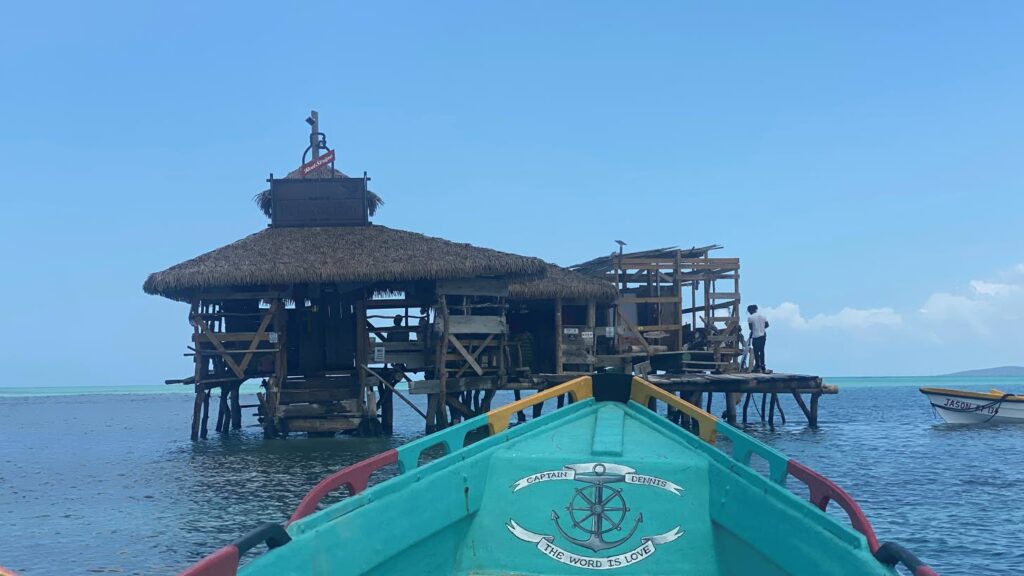
Seven months after Category 5 Hurricane Melissa tore through Jamaica’s southwestern coast, leaving widespread destruction of homes and local livelihoods in its wake, three small business owners in Treasure Beach, St Elizabeth are slowly rebuilding their operations, bracing for the 2026 Atlantic hurricane season and holding out hope for a calm, storm-free year.
Denever “Floyd” Forbes, owner of the world-famous Pelican Bar, Dennis Abrahams, founder of Captain Dennis Boat Tours, and Ridge Harvey, operator of Captain Ridge Boat Tours, have collectively rehired 16 local workers, breathing much-needed life back into the region’s community tourism sector, the backbone of the local economy. For Forbes, this rebuild marks the second time he has restored his iconic floating bar after severe hurricane damage.
Last October, Hurricane Melissa scattered the broken wooden frames of Pelican Bar across the entire coastline, but Forbes managed to reconstruct the popular destination in just two months. The rebuild was far more than a personal win: boat tour operators across the region depend on Pelican Bar as a core stop for their visitors, making its restoration critical to the entire local tourism ecosystem.
The new iteration of the bar is smaller than its predecessor, so Forbes currently rotates his six-member team on a biweekly three-by-three schedule to accommodate slower business. Still, he remains grateful for any progress. “Things are not bright like before, but we still give thanks, we have something working with,” he shared in a recent interview. Reflecting on his experience with 2024’s Hurricane Beryl, which spared his bar but destroyed other local properties, and 2025’s devastating Melissa, which impacted every community across the southwestern coast reaching into Westmoreland, Forbes said he is hopeful the 2026 season will bring no major storms. “I am hoping for the best…I wouldn’t want it to come as terrible as last year and the year before,” he added.
Pelican Bar has recently drawn a high-profile visitor: American actress and entrepreneur Ayesha Curry, who has Jamaican heritage. Forbes frames his business as an inclusive space for everyone, from A-list celebrities to everyday tourists and local residents. “It is everyone’s home away from home. I am not too surprised for anyone who comes here, because I provide it as everyone’s home away from home, it is a throne, and as long as anyone enters they wear the crown, whether male or female,” he explained. Boat tours to the bar depart from multiple launch points across the region: Treasure Beach, Black River, and Parottee Bay.
Abrahams, a Treasure Beach native who has operated coastal boat tours for 30 years, has weathered four major hurricanes along Jamaica’s south coast. He says Hurricane Melissa was unlike any storm he has ever experienced. “Melissa is one of them that devastated the coastal area all the way from Treasure Beach right back to Westmoreland and beyond, because it came off the water it took a different approach than the rest that I have experienced. Coming off the sea then, there is nothing to shelter us, so everything was exposed,” he said. The storm completely wiped out all of Abrahams’ assets, but within three weeks, he had cleared debris and started rebuilding, determined to be open in time for the December winter tourist season. Today, his business employs eight local workers and offers a diverse range of experiences, from coastal excursions and snorkeling on calm days to trips to Pelican Bar and the Black River Safari. It was Abrahams who transported Curry to Pelican Bar during her recent visit, and he says she was impressed with the warm, laid-back service his team provides.
Abrahams credits local social media influencers with helping grow his business and market Jamaica as a tourist destination to international visitors, saying he is deeply grateful for their support. Like Forbes, he is praying for a quiet 2026 hurricane season, noting that small businesses are still recovering and are in no position to absorb another major disaster. Beyond his own hopes, he is urging residents and local leaders to prioritize storm preparedness education, drawing on his recent experience with Melissa to help other Jamaicans stay safe. He says preparedness goes far beyond stocking up on food, water, and flashlights: residents need to physically reinforce their homes by adding extra screws to roofs and boarding up windows, and those in low-lying coastal areas must evacuate inland immediately when storm warnings are issued, without ignoring evacuation orders. “The more people are educated, more lives will be saved, fewer injuries will be reported, and post-hurricane spend will be less,” he explained, calling on the government and storm survivors to lead public preparedness workshops across the island.
For Harvey, who operates his boat tours out of Parottee Bay, business has slowly restarted, but the broader community of Parottee still faces significant ongoing challenges seven months after the storm. Harvey currently employs two people, and he says tours are running, but increased visitor numbers are critical to full economic recovery for the entire region. While power has been restored to most of Parottee, a community where most residents are independent small business owners working in tourism or fishing, access to consistent potable running water remains a major unmet need. “The storm was an earthquake and tornado, so everything mash up. We nah get nuh water. Trucks do come, but as they go up the road and come back they say they don’t have water, and for a big, long water truck, how you don’t have water, or is some favouritism?” Harvey asked. He added that while some residents still lack permanent housing, many have received government disaster assistance, a small bright spot amid ongoing recovery. Across all three businesses, the message is clear: resilience has carried the community this far, but a calm 2026 hurricane season is critical to building back better for southwestern Jamaica’s tourism economy.