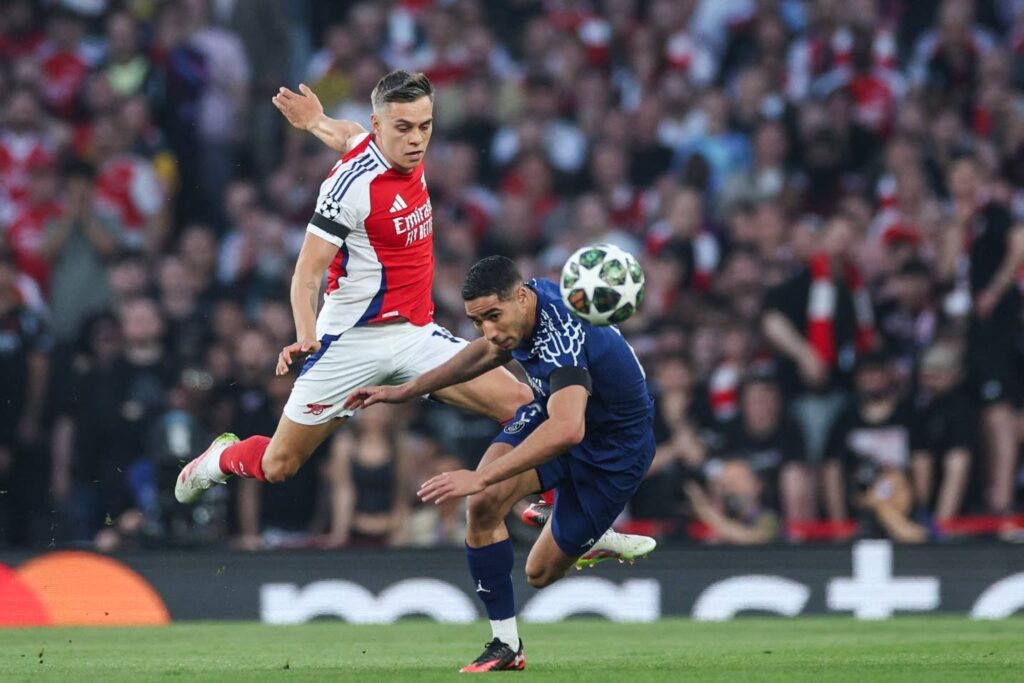
The Puskas Arena in Budapest is set to host one of the most anticipated UEFA Champions League finals in recent memory, as two contrasting powerhouses — Paris Saint-Germain and Arsenal — prepare to battle for European football’s most prestigious club trophy on Saturday.
The matchup has already been framed as a classic clash of playing identities: PSG, backed by its high-octane, unstoppable attacking line, enters the contest as narrow pre-game favorites among bookmakers, while Arsenal, the newly-crowned Premier League champion, brings a famously tight defensive organization that has made them a formidable force throughout the tournament. This narrative of opposites colliding has only built hype for a final that analysts broadly agree is far harder to predict than most editions of the showpiece match, the hardest to call since Real Madrid’s 2018 final victory over Liverpool.
Both PSG’s coaching staff and leadership have emphasized that the result will hinge on small, critical details rather than overall pre-tournament form. Head coach Luis Enrique rejected the label of favorite ahead of kickoff, echoing that the outcome will live “in the details.” PSG captain Marquinhos echoed his manager’s outlook, noting that every minor element of the game from set-piece execution to defensive transitions will carry extra weight in a one-off final. “All the little details in a football match and in a final are going to be important,” the Brazilian center-back said.
For Arsenal, their tournament run to the final speaks for itself: the Gunners enter Saturday’s clash unbeaten across all Champions League matches this season, having recorded nine clean sheets and conceded only six goals total. Most football observers expect Mikel Arteta’s side to drop into a deep defensive block and target PSG on counterattacks and set-piece opportunities, leaning into their defensive strength to neutralize PSG’s attacking threat.
Questions have been raised over Arsenal’s fitness, as the side has logged far more competitive minutes across the season than their French opponents. But Gunners winger Bukayo Saka brushed off concerns that fatigue could impact his side’s performance, arguing that a high-stakes final is decided by in-game moments rather than accumulated workload. “A game like this is not going to be decided on minutes, it’s going to be decided on moments,” the England international said.
The final carries historic weight for both sides, with multiple opportunities to etch new names into European football record books. For Arsenal, a victory would mark the club’s first ever Champions League title, a milestone that would cap a remarkable rebuild under Arteta and deliver a long-awaited trophy that eluded generations of legendary Arsenal sides, including the iconic 2003-04 Invincibles. The club’s only prior Champions League final appearance came in 2006, when they fell to Barcelona in Paris, and have lost their last four consecutive European finals. Messages of support have poured in from Arsenal greats of the past: club icon Patrick Vieira sent current captain Martin Odegaard a personalized good luck video, while 2006 final veteran Thierry Henry reached out to Saka and is in Budapest to watch the Gunners’ final pre-match training, among the tens of thousands of Arsenal fans that have traveled to the Hungarian capital. Many fans have already taken to Budapest’s famous ruin bars, soaking up the summer sun while celebrating the club’s first final appearance in nearly two decades.
Odegaard called Vieira’s message a special moment, noting that the club legend’s legacy adds extra motivation to seal a win that past Arsenal generations never got their hands on. “Now we have the chance to do something that they haven’t done as well. It’s something nice to play for,” Odegaard said.
A victory would also make history for English football. After Aston Villa claimed the Europa League title and Crystal Palace won the Conference League earlier this month, an Arsenal win would mark the first time a single nation has won all three of UEFA’s top men’s club competitions in the same season since 1989-90, when Italian clubs AC Milan, Juventus and Sampdoria claimed the European Cup, UEFA Cup and Cup Winners’ Cup respectively.
For PSG, a victory would also mark a historic milestone for French club football. A win would see them become the only French side ever to lift multiple Champions League trophies. For Luis Enrique, a third Champions League title would see him join an elite group of only five managers to win the competition three or more times, having already claimed the trophy once during his tenure as Barcelona head coach.
Arteta, who came through Barcelona’s youth system when Luis Enrique was a player at the club, spoke highly of his opposite number ahead of the match, calling the PSG boss a long-time reference point and inspiration. “He’s always been a reference (point) since he was a player,” Arteta said. “He’s been an inspiration and tomorrow we’ll be clashing on that touchline.”
For the players, the draw of the final is simple: it is the biggest match in club football, and a chance to claim the sport’s most coveted individual club prize. “It’s a match everyone wants to play in, it’s a match everyone watches, and it’s a match you have to win,” said PSG midfielder Joao Neves.