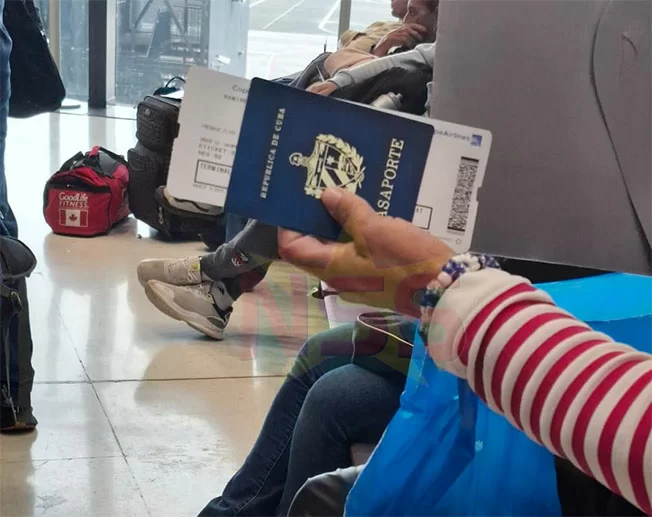
Since 2020, Suriname has recorded a net inflow of more than 40,000 Cuban migrants, a wave of relocation that has created unforeseen strains on the South American nation’s public education system and social cohesion. Most of these new arrivals lack formal residency documentation, and because official population registration remains incomplete, authorities cannot confirm exactly how many school-aged Cuban children are currently residing in the country. What is clear, local educators say, is that integrating large numbers of Spanish-only speaking migrant children into Suriname’s Dutch-medium education system has emerged as a major unaddressed challenge.
Merredith Hoogdorp, a primary school teacher and board member of the Surinamese teachers’ union Wi Sa Strei, explained that the first major obstacle begins with classroom placement. Without official school records or age verification documents to draw from, children are often placed into grades that do not match their actual developmental level. Hoogdorp cited the example of a 15-year-old Cuban boy who was assigned to a fifth-grade class – where all other students are between 9 and 10 years old – because he had no documentation to prove his age or prior education.
Beyond placement mismatches, many educators report widespread reluctance among Cuban migrant children to learn Dutch, the official language of instruction in Suriname. Hoogdorp described her repeated efforts to teach basic Dutch vocabulary to the 15-year-old student, only to be met with silence and disengagement. To date, the student has been held back a grade, as he only participates in mathematics lessons and cannot engage with other coursework taught in Dutch.
Not all public schools have adopted a passive approach: some campus in northern Paramaribo have taken it upon themselves to adapt curricula for Spanish-speaking students, translating lesson materials and administering assessments in Spanish to help migrant children keep up. Educators at these schools take on this extra workload voluntarily, but Hoogdorp argues that this ad-hoc solution is unsustainable. She notes that Surinamese teachers already receive inadequate pay, and there is no additional compensation for the extra work of translating materials or learning Spanish to support migrant students. Hoogdorp is calling on the Ministry of Education to implement a formal, coordinated strategy to address the crisis rather than leaving individual teachers to bear the burden.
In response to the gap in public education support for Spanish-speaking migrant children, a new independent facility, the Educational Center – Reparador de Sueños School, recently opened its doors. The school, accredited by Suriname’s Ministry of Education, Science and Culture, primarily serves primary school-aged children from migrant backgrounds. Director Lyolexis Vázquez confirmed that the largest student cohort comes from Cuba, with additional enrolled students from Venezuela, the Dominican Republic, Colombia and Peru. Currently, nearly 100 children between the ages of 3 and 13 attend the school, which delivers most core instruction in students’ native Spanish.
The new school also offers mandatory Dutch classes, as well as coursework on Surinamese geography and history, to support gradual integration. Vázquez explained that the school was founded to fill a critical educational vacuum created by the influx of migration: as Dutch is the official language of public education in Suriname, Spanish-speaking children face overwhelming barriers to accessing consistent learning in the public system. “Our model acts as a linguistic bridge, allowing children to continue their academic development in their mother tongue while they gradually acclimate to and integrate into Surinamese society,” Vázquez said.
The language barrier extends beyond the education system and has contributed to social tensions between long-term Surinamese residents and new Cuban migrants. Many Surinamese have expressed frustration that many Cuban arrivals appear unwilling to learn Dutch or the local creole language Sranantongo. Jose, a young Cuban fruit seller who has lived in Suriname for seven years with his entire family, is an outlier: he speaks fluent Sranantongo and Dutch. A Cuban nail technician in Paramaribo told reporters she is embarrassed by the behavior of many of her compatriots, saying “It is unacceptable to come to Suriname, enter Surinamese people’s homes and workplaces, and refuse to learn their language.”
Cultural differences, often exacerbated by language barriers and lack of context, have also created friction. One Surinamese business owner noted that many Cuban migrants are accustomed to throwing toilet paper in the trash rather than flushing it, a practice rooted in inadequate sewage and water infrastructure in Cuba that many Surinamers do not understand. This small cultural difference has already led to workplace irritation between colleagues.
Compounding these social and educational challenges is the absence of clear national policy for Cuban and other migrant groups. As a member of the Caribbean Community (CARICOM), Suriname allows free entry for citizens of other CARICOM member states, and integration courses are not mandatory for new arrivals. The government also lacks a centralized, complete system to track who enters the country, leaving authorities without accurate data on the full scope of migration.
Similarly, there is no official data on the share of crime in Suriname that can be attributed to Cuban migrants. Recent high-profile headlines have linked Cuban suspects to armed robbery, murder, and human trafficking cases, but the Surinamese Police Corps has not released any aggregated statistics on criminal activity among the Cuban migrant population, leaving public perceptions unmoored from verifiable data. This report was produced with support from the Suriname Journalism Stimulation Fund.