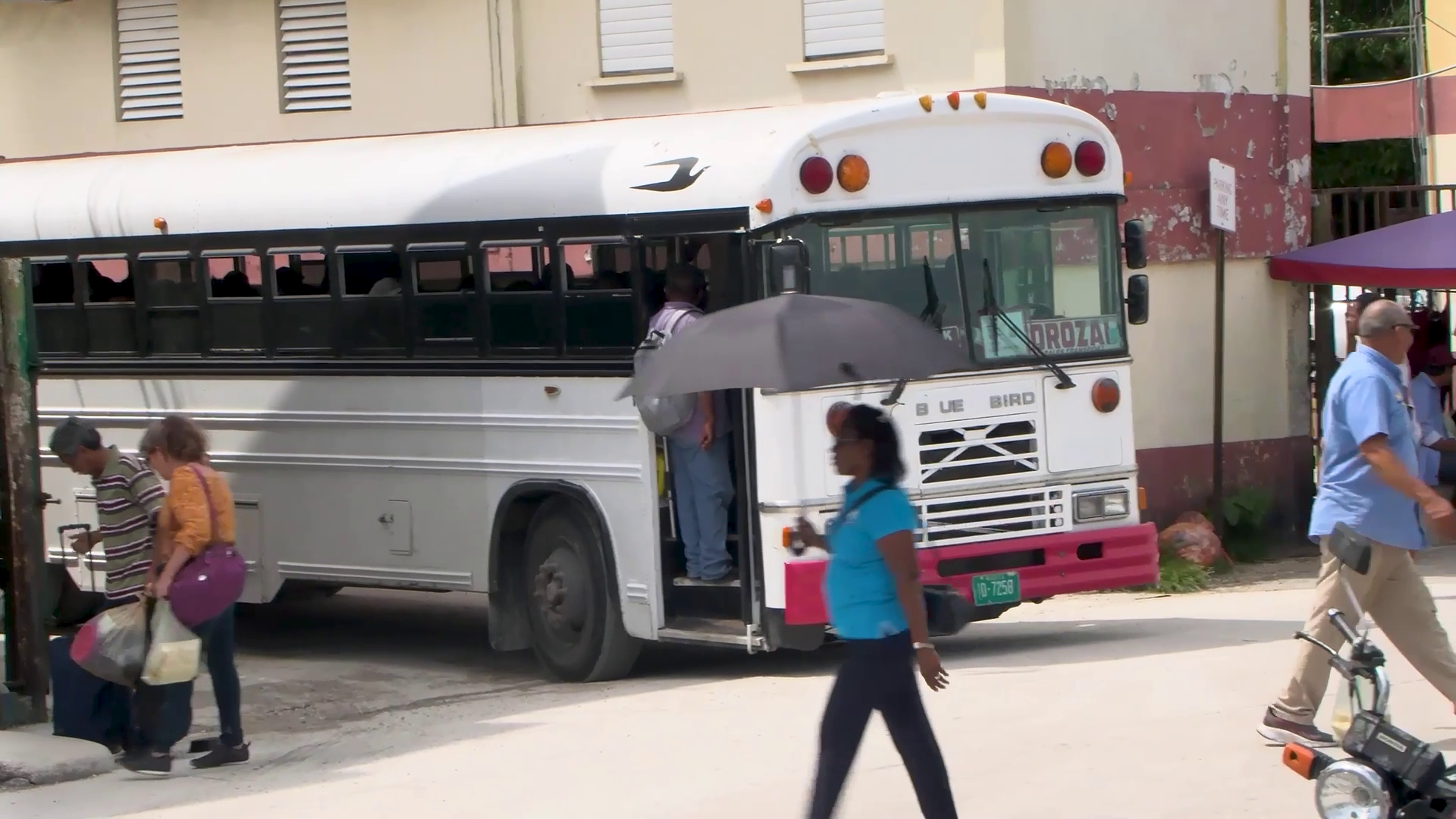
As Belize moves forward with its transition to electric public transportation, a growing rift has emerged between the national bus industry’s leading body and government transport officials over how local operators should be integrated into the country’s electric bus initiative.
The Belize Bus Association (BBA), which represents more than 50 operators spanning intercity highway routes, rural village services, tour routes, and school transportation, is calling on the government to give its members direct, hands-on access to the current electric bus pilot. Currently, the testing phase is limited to routes in Belize City and the western transportation corridor, and no BBA members have been permitted to operate the pilot vehicles themselves.
In an official letter addressed to the Ministry of Transport, BBA leadership argues that firsthand real-world experience is a non-negotiable prerequisite for operators to make informed long-term investment decisions. Without direct exposure to the vehicles, the association says, members cannot accurately measure key operational metrics including total cost of ownership, routine maintenance requirements, and performance across varying route types, from dense urban streets to long-distance national highways. To address this gap, the BBA is proposing a rotation system that would allow its members to test the electric buses on a diverse range of routes, a change the group says would not only strengthen the pilot’s data but also expand access to the new green technology for commuters across the country.
BBA president Phillip Jones emphasized that the association has sought inclusion since the project’s launch, when it was first developed under the auspices of the United Nations Development Programme (UNDP) and the United Nations. “From the inception of the EV program under the UNDP and UN we have wrote letters to the UNDP and the president and representatives in this area that we wanted to be a apart of the pilot project. However we were denied at that time,” Jones explained. “Hence the reason we find it prudent that we revisit that, because if you are saying you want the entire country to have the knowledge or use the service or go green in order for that to be the case, you need to have anyone involved and we are a major stakeholder in the bus industry. […] You can’t just be going based on analysis going second hand. We want firsthand experience.”
But government officials say the pilot phase has already concluded, and no test vehicles are available to reallocate for broader industry testing. Transport Minister Dr. Louis Zabaneh confirmed that the government is shifting its focus away from the trial period and toward a permanent structural transition to electric bus fleets, and laid out two clear paths for BBA members looking to join the electric future. Under the first option, independent operators can join the National Bus Company (NBC), a public-private partnership aligned with the government’s green transportation policy. The second option allows operators to remain independent by forming their own collective entities and investing directly in procuring their own electric buses, with the ministry offering full access to all lessons learned during the pilot to support the transition.
Zabaneh noted that the model of joining the National Bus Company is already gaining traction among BBA members, with recent signs of growing buy-in: after the last remaining holdout operator from southern Belize joined the NBC, two additional operators from the northern region have submitted applications to join. “So that is clearly, in my opinion, the preferred path because now you have a public private partnership that comprises government and reflects the policy of the government that they can benefit from. Or they can continue being independent operators and we can work together and share whatever knowledge we have with them,” Zabaneh explained. “The NBC is a private company, so whatever e-buses it buys is for the use for services to commuters who use NBC services. They would have to, as independent operators, organize, form a company and procure e-buses. Now, we as the ministry are very pleased to share with them what we have learnt in setting up the National Bus Company and we told them that already.”
This content is adapted from a transcript of an evening television newscast.