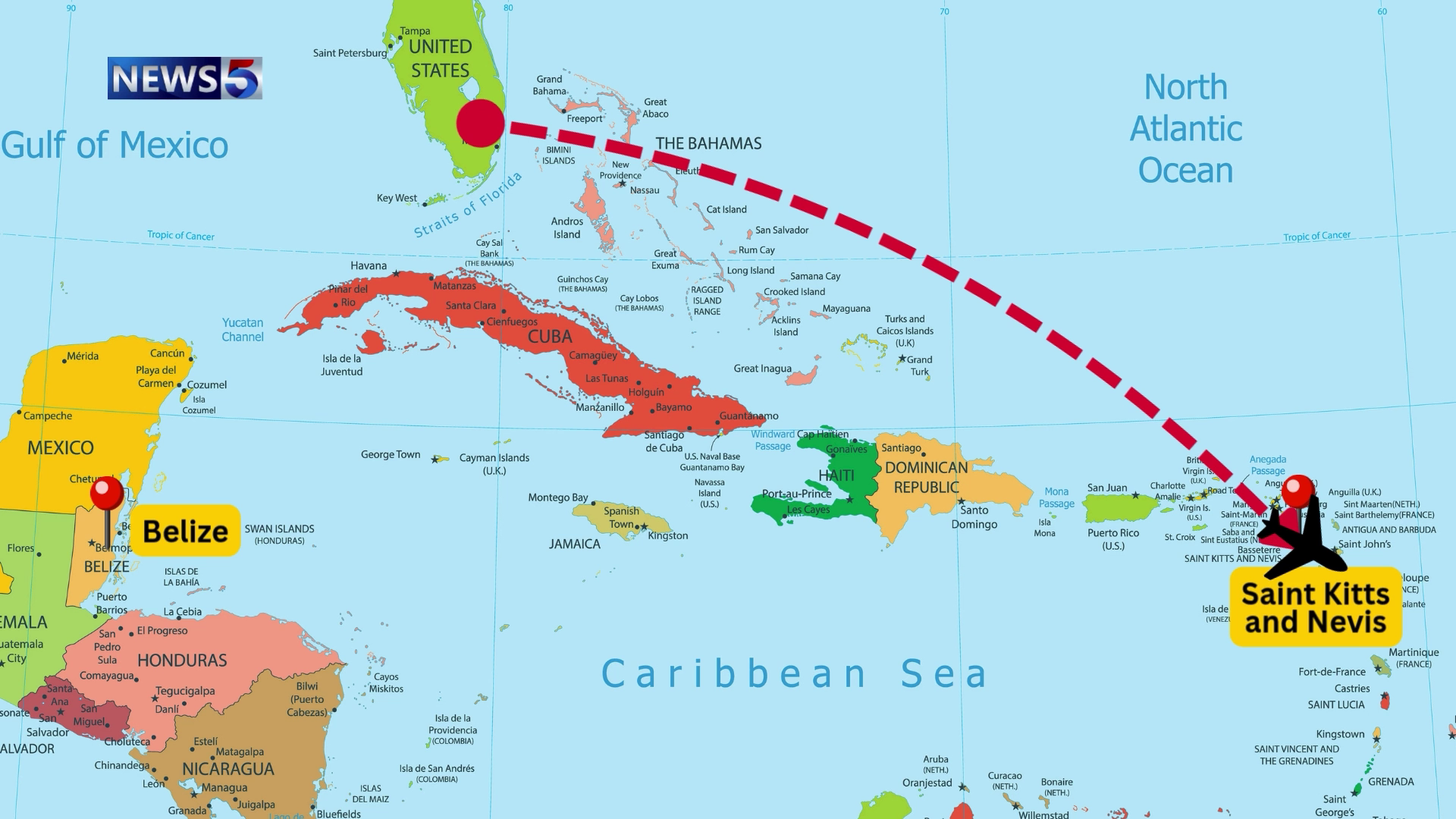
In a landmark, first-of-its-kind case for Belize, a national deported from the United States has made an unprecedented decision to reject repatriation to his home country, instead opting to resettle in St. Kitts and Nevis under a lesser-known U.S. “safe third country” deportation arrangement.
The unusual case has cast a new spotlight on the underdiscussed policy framework that allows certain deportees to select alternative destinations rather than returning to their country of origin, raising new questions about the scope of authority home governments hold over the final destination of their deported citizens.
Tanya Santos, Chief Executive Officer of Belize’s Ministry of Immigration, told local reporters that full details of the individual’s choice remain limited, but clarified that once a Belizean national elects deportation to a third country, the Belizean government has no legal standing to intervene or force their return. “One of the conditions of a safe third country agreement is that you can choose which country you want to go to and my understanding is that this person chose not to come to Belize. For whatever reason I do not know,” Santos explained in an interview with local journalist Paul Lopez.
When asked how Belizean authorities would handle the unprecedented scenario, Santos confirmed that the Belizean government cannot compel a deportee to return to Belize against their will. “If he does not want to come home, we can’t force him. He is free,” she said. Santos added that Belize’s Ministry of Foreign Affairs would work to ensure the individual receives appropriate safety and protection under St. Kitts and Nevis’ existing arrangements with the U.S. for people resettled through the safe third country program.
This case marks the first documented instance of a Belizean national being deported to a safe third country rather than direct repatriation, bringing long-overdue attention to a policy option that has rarely impacted Belize and its citizens until now. The situation opens new conversations about how deportation agreements work between the U.S., Caribbean nations, and how home governments navigate choices made by their deported nationals.