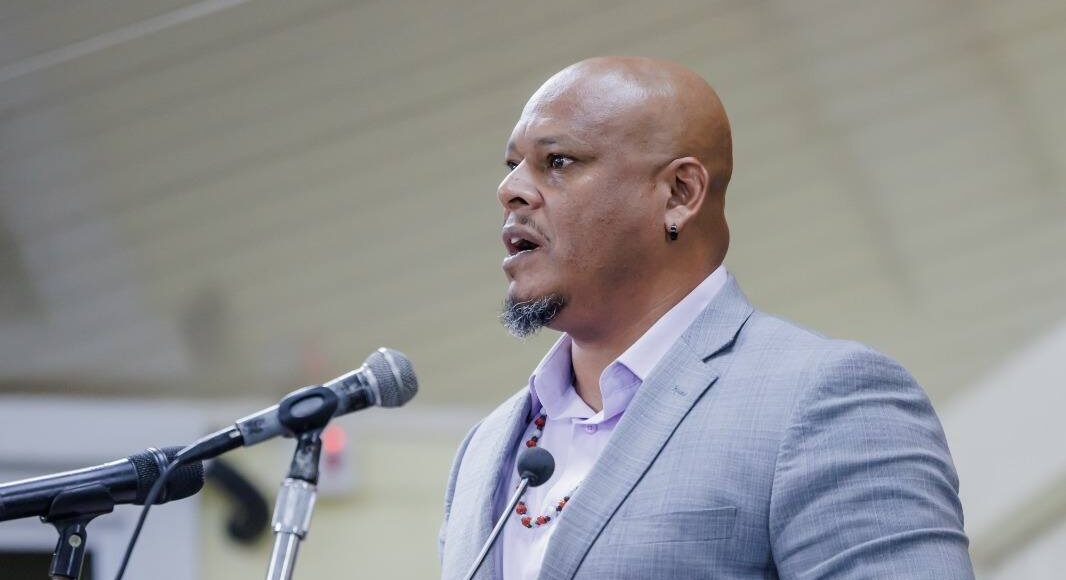
The Organisation of the Eastern Caribbean States (OECS) Council of Ministers for Environmental Sustainability has ushered in a new leadership era, with Dominica’s Environment Minister Cozier Frederick taking on the role of chairman and immediately pushing for expanded cross-state collaboration to tackle pressing environmental and climate challenges across the Caribbean region.
Frederick assumed the post during the 13th biennial meeting of the council, held this week at the Goodwill Parish Hall. The two-day gathering of regional environmental delegates drew to a close on Thursday, with Frederick’s address setting the policy and collaboration agenda for his upcoming tenure.
In his keynote remarks to attending delegates, Frederick pinpointed three core pillars that will guide regional progress on environmental protection and climate resilience over his term: expanded access to climate financing, targeted investment in local capacity building, and deeper public engagement in sustainability work.
“Cross-border climate action lives or dies by three things: accessible climate finance, trained personnel to carry out critical resilience work, and buy-in from the communities that these efforts serve,” Frederick told delegates. “These priorities align perfectly with the work we are already advancing here in Dominica to build our own climate resilience.”
The minister emphasized that while the region has built up a base of technical environmental expertise, a critical gap remains: there are not enough trained professionals and engaged community members to scale up climate adaptation and sustainability work across Eastern Caribbean states. To address this gap, Frederick revealed that Dominica has already pushed the University of the West Indies Five Islands Campus to develop new academic programs designed to attract young people to pursue environmental studies as a core field of research and professional development.
“This investment in the next generation is non-negotiable,” Frederick noted. “We need this growing skilled workforce to continue advancing environmental action both here in Dominica and across every OECS member state.”
As a small island nation on the front lines of accelerating climate change impacts, Frederick argued that Dominica’s decades of experience adapting to and recovering from climate-related disasters positions the country to lead regional efforts during his tenure. He stressed that the country’s proven track record of climate resilience makes it a valuable example for other vulnerable states across the region.
“We face climate change head-on, every single day. We have built the ability to bounce back again and again after extreme weather events, and that experience gives us unique insight to share,” he said. “This is a pivotal moment for Dominica, as I take on this chairmanship, to lead the regional conversation and demonstrate what effective climate resilience practice looks like for the entire Eastern Caribbean.”