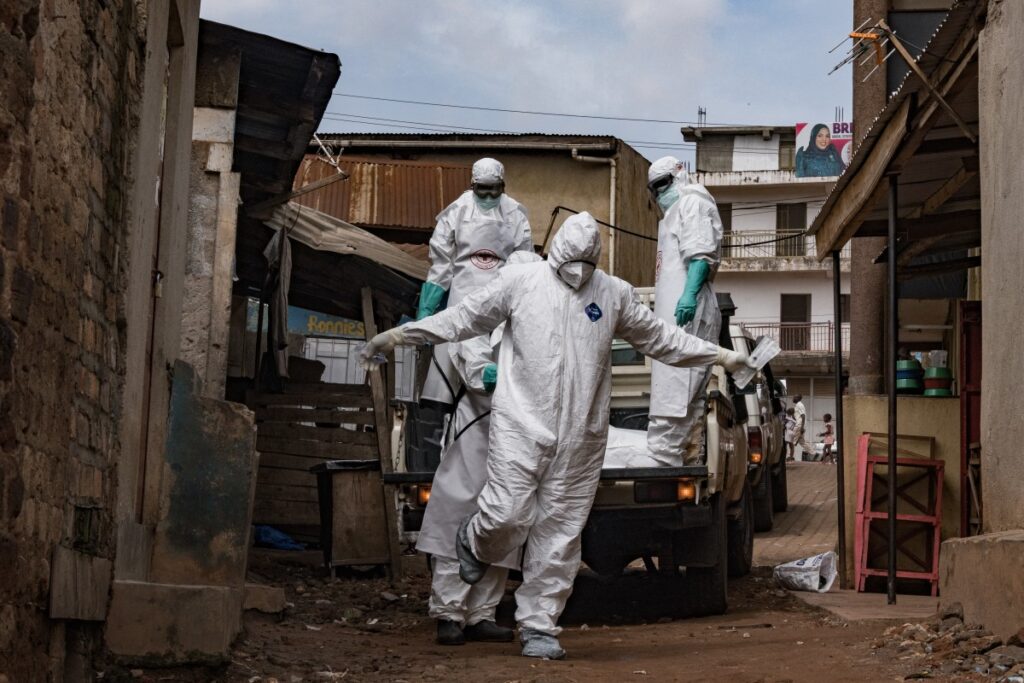
In a press announcement from Washington D.C. this Thursday, the United States has committed an additional $80 million in emergency funding to ramp up the global response to the spiraling Ebola outbreak spreading across the Democratic Republic of the Congo (DRC) and neighboring Uganda.
This new injection of resources brings the total American financial contribution to containment efforts to $112 million since the outbreak was first formally declared in mid-May, according to official statements from the US State Department. The allocated funding is earmarked for critical on-the-ground needs: it will cover the cost of personal protective equipment for frontline healthcare workers operating in high-risk zones, expanded border screening protocols across regional transit points, the distribution of rapid diagnostic test kits, and other urgent response requirements.
“The United States Government continues to carry out a comprehensive, coordinated strategy to contain this Ebola outbreak at its source, both to protect American citizens at home and stop further cross-border spread across the globe,” the State Department’s release noted. This pledge follows a commitment from Secretary of State Marco Rubio a day prior, who stated that the administration’s top priority is blocking the importation of Ebola into US territory.
The outbreak has already taken a severe toll on local communities: the World Health Organization (WHO) has documented 10 confirmed deaths and 223 suspected fatalities across the DRC, out of more than 1,000 combined confirmed and suspected cases recorded since May 15. Public health experts widely warn that the actual scope of the outbreak is far larger than official numbers reflect, due to limited surveillance and access to affected remote areas.
The Trump administration’s handling of the crisis has drawn sharp pushback in recent weeks from congressional Democrats and global public health non-governmental organizations. Critics point to the administration’s earlier decision to withdraw the US from the WHO and restructure and downsize key programs within the US Agency for International Development (USAID) as actions that have weakened global capacity to respond rapidly to emerging infectious disease threats, leaving the current response under-resourced in its critical early stages.