The Organization of Eastern Caribbean States (OECS) Commission has opened a second round of funding applications for Window 2 of its regional micro, small and medium enterprise (MSME) matching grants program, rolling out new collaborative growth opportunities for the blue economy across three Eastern Caribbean nations: Grenada, Saint Lucia, and Saint Vincent and the Grenadines.
Officially launched via a virtual event on May 22, 2026, this funding window is specifically tailored to support registered Value Chain Groups operating in three core blue economy sectors: fisheries, coastal tourism, and waste management. Eligible groups can access grants between $100,000 and $150,000 to scale operations, boost productivity, embed more sustainable practices, and expand inclusive economic opportunity across the region’s blue economy.
The initiative is implemented as part of the broader Unleashing the Blue Economy of the Caribbean (UBEC) project, and builds on the proven success of Window 1, which has already delivered tangible improvements to the operations and livelihoods of individual MSMEs across the OECS region.
Kyle Garnes, senior grants advisor at UBEC/OECS, emphasized that collective collaboration between small businesses is the cornerstone of the program’s design. “Value Chain Groups are central to the success of the OECS Regional MSME Matching Grants Programme because they empower MSMEs to collaborate, strengthen market linkages, and create greater value across the OECS Blue Economy,” Garnes explained. “By working together, MSMEs can improve competitiveness, build resilience, and unlock sustainable growth opportunities that no single enterprise could achieve alone. Collaboration is how we transform individual MSMEs into stronger, more connected blue economy ecosystems.”
For context, a Value Chain Group is defined as a coalition of three or more MSMEs operating within the same industry that partner to strengthen product offerings, improve service delivery, and expand access to regional and global markets. Practical examples include a fisher partnering with a seafood processor and a local restaurant or export business, a waste collection team joining forces with a recycler and a manufacturing firm that uses recycled inputs, or a coastal tour operator collaborating with a local boat captain and small accommodation provider to elevate visitor experiences and expand market reach.
Program organizers are urging eligible groups to begin preparing their applications without delay, noting that the funding has the potential to drive measurable business expansion, create new local jobs, and strengthen household livelihoods across target communities. Early participants from Window 1 have already shared tangible success stories from their grant support.
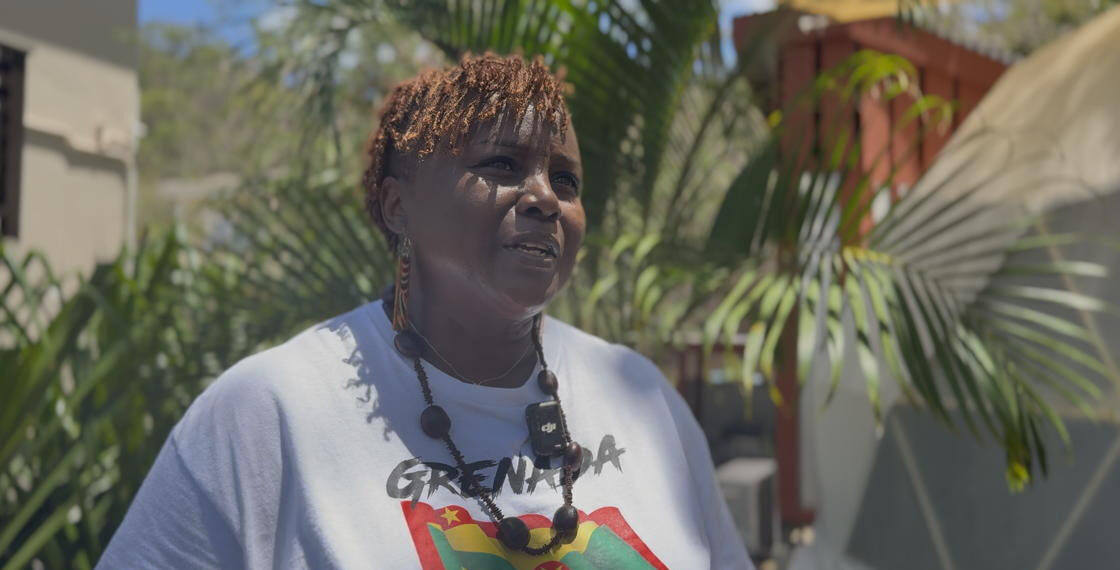
Kasha Ragbersingh, managing director of Glamping Grenada, a coastal tourism enterprise that received Window 1 funding, explained how the grant transformed her business’s sustainability efforts. “We operate in a very harsh environment and water conservation is a very important part of our operations,” Ragbersingh said. “The grant has allowed us to add capacity for an additional 2000 gallons of water – and it’s not just any water, we are literally harvesting rain water. This will allow us to service our pool and our garden area without putting extra strain on the public water system.”
Cenus Hinds, co-owner of Cariway, a kayaking and paddle board tourism business based in Saint Vincent and the Grenadines, reported similar benefits. Hinds noted that his small business lacked key safety infrastructure before receiving the grant: “One of the things that we did not have before is a support vessel that would follow the kayaks along or would follow the paddle boards, but when we got the grant that was one of the major things we wanted. The grant enabled us to get a 14 foot dingy and we were able to get an electric engine,” he said.
To qualify for Window 2 funding, applicant groups must meet a clear set of eligibility requirements. All groups must be legally registered and actively operating in one of the three eligible countries, structured as a Value Chain Group with a minimum of three member MSMEs, and active in the fisheries, coastal tourism, or waste management sectors. Additional requirements include official business registration documentation, a minimum two-year operating track record supported by two years of financial or bank statements, fewer than 50 total employees across the group, combined annual revenue below $1 million, a demonstrated commitment to growth, innovation, sustainability and job creation, verifiable market demand for their offerings, and no business activities that cause significant environmental harm.
Proposals will be evaluated based on criteria including alignment with program goals, innovative approaches, potential for scalability, long-term environmental and social sustainability, positive environmental impact, and projected benefits to the regional MSME sector.
The OECS Commission is specifically encouraging participation from a diverse range of stakeholders, including independent entrepreneurs, cooperative groups, women-led businesses, youth-led ventures, and emerging blue economy innovators, to take advantage of the opportunity to build stronger regional collaboration through value chain partnerships.
Full details on the second call for proposals, application guidelines, and submission instructions are available on the official Window 2 Matching Grants webpage at https://bit.ly/4dh0ZX9. General inquiries can be sent to [email protected], and completed applications should be submitted to [email protected].