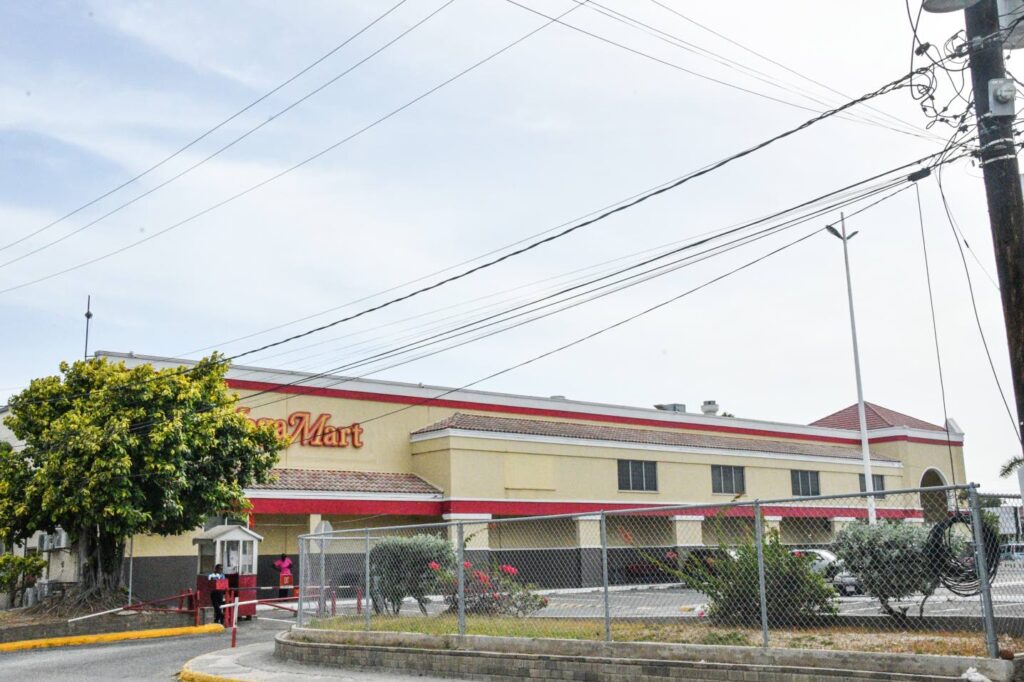
After nearly three decades serving shoppers across Jamaica, MegaMart’s original location in Portmore will permanently shut its doors on June 30, marking the end of an era for the retail chain and bringing uncertainty to roughly 200 local workers. The 75,000-square-foot store, which first opened its doors to customers in 1999 as MegaMart’s debut Jamaican outlet, has struggled with sustained losses for years, according to company chairman Gassan Azan.
In an exclusive interview with Jamaica Observer published Wednesday, Azan described the shutdown as an emotionally charged, extraordinarily difficult choice, noting that the location had long stayed afloat thanks to financial support from the chain’s Montego Bay branch. That safety net vanished late last year, when Hurricane Melissa made landfall in Jamaica on October 28, destroying the Montego Bay location and leaving the struggling Portmore store without critical subsidies.
The closure is part of a broader strategic restructuring plan launched by parent company Cost Club Limited, which is consolidating its operations across two remaining locations: one on Waterloo Road in St Andrew, and a second in Mandeville, Manchester. Company leaders say the consolidation is designed to shore up the health of the overall business and improve long-term financial sustainability. In an official statement shared with the Observer, Cost Club called the Portmore location a cornerstone of MegaMart’s history, and extended gratitude to both loyal customers and dedicated staff for their decades of support and contribution.
Azan explained that overlapping financial and structural factors pushed the company to finalize the shutdown decision. The Portmore and former Montego Bay properties are bound together under a single lease agreement with multiple pension funds, a structure established years ago through a sale-and-leaseback transaction. With this 15-year agreement set to expire in the near future, the company faced major uncertainty around future capital investments. Upgrading and modernizing the Portmore store to meet current consumer standards would require an estimated $3 million or more in capital to replace outdated equipment and update the space – an investment Azan said makes no sense with the lease’s expiration imminent. In fact, the chain already enacted preliminary cost-cutting measures at the location, cutting closing time from 10:00 pm to 8:00 pm to reduce operating expenses.
Of the 700 total people employed across the MegaMart network, 200 work at the Portmore location. While Azan confirmed the company plans to reassign some Portmore staff to other locations across the chain, the exact number of workers who will be offered new roles has not yet been finalized.
Contrary to widespread speculation that the 2023 entry of membership retailer PriceSmart into the Portmore market drove the shutdown, Azan pushed back against that narrative. He noted that PriceSmart caters to a distinct consumer segment and has not had a meaningful impact on MegaMart Portmore’s sales numbers. Instead, he pointed to shifting local retail dynamics: over the past decade, dozens of new neighborhood shopping centers have opened across Portmore, eliminating the need for residents to travel to a single large-format outlet for most of their purchases.
Azan added that broader national and global retail shifts have also put massive pressure on large-format stores like those in the MegaMart network. The rise of online shopping and the growth of direct consumer imports, particularly in non-food product categories, have eroded the core sales that large-format stores depend on to cover high operational costs. The chain’s large-store model relies heavily on non-food product margins to offset the cost of maintaining a 75,000-square-foot space, and falling non-food sales have left the business model unviable for the Portmore location.
Azan noted that many other Jamaican retailers are facing identical pressures, even if most are hesitant to discuss their struggles publicly. “It’s primarily the non-food areas that are suffering,” he explained. “MegaMart’s operational costs are much higher than your average supermarket because of the amount of square footage that you’re operating and you’re expecting certain sales from your non-food area. And if those sales don’t materialise, you really don’t get the extra margin to cover the cost of running a store of that size.”
Looking ahead, Azan said he still holds out hope to reopen a smaller-format MegaMart location in Montego Bay to replace the store lost to Hurricane Melissa, though no firm timeline for reopening has been set. Reflecting on the Portmore shutdown, Azan called the moment bittersweet: “It’s very bittersweet for me to have to deal with this. But I guess it’s part of what’s going on. The advent of online shopping has a lot to do with it — more so than PriceSmart.”