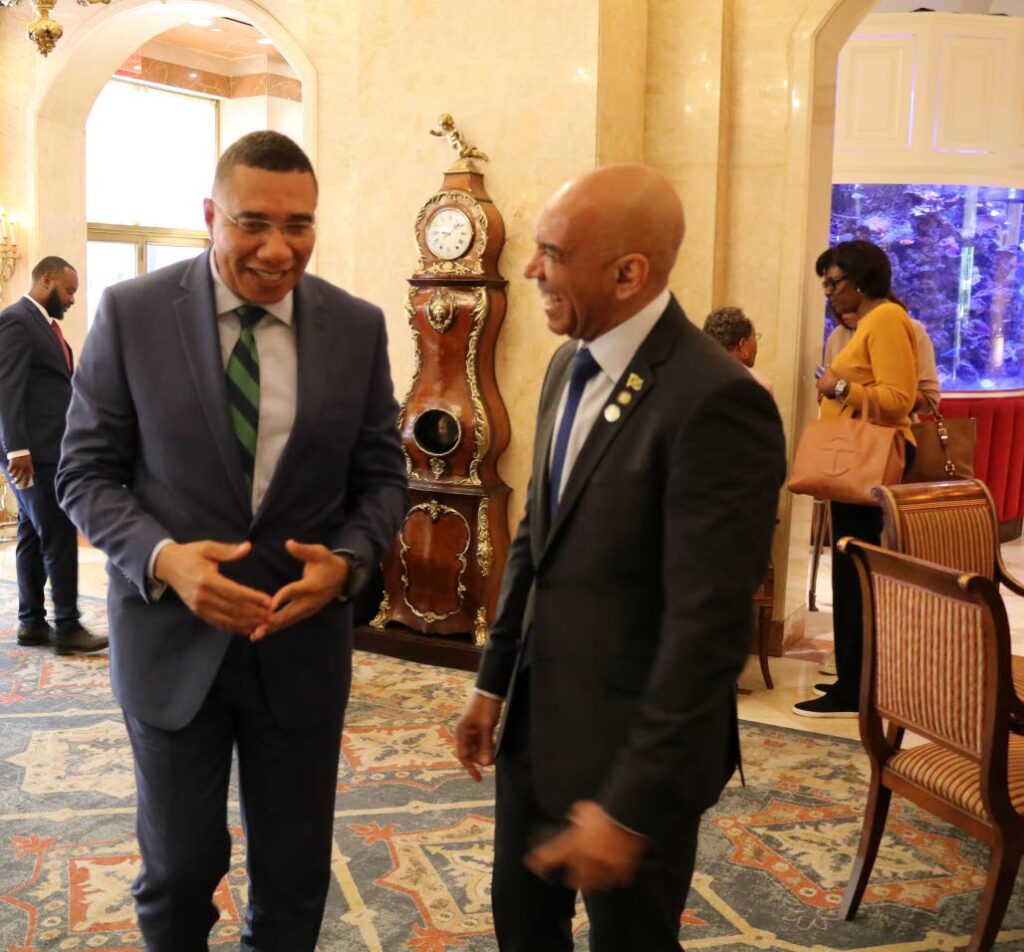
Nearly eight months after Category 5 Hurricane Melissa carved a path of destruction across Jamaica, the island nation’s government has tapped a decorated veteran public servant to lead its long-awaited recovery and resilience-building effort, drawing measured praise and cautious scrutiny from private sector and civil society leaders.
Prime Minister Dr Andrew Holness announced the appointment of Major General (Ret’d) Antony Anderson as the inaugural chief executive officer of the National Reconstruction and Resilience Authority (NaRRA) during a special post-Cabinet media briefing at Jamaica House on Wednesday, confirming the retired military leader will officially take up his post on June 1. The announcement comes just days after the NaRRA Bill was signed into law, formalizing the new agency’s mandate to coordinate and accelerate the island’s post-storm reconstruction while strengthening national capacity to withstand future climate disasters.
With more than 40 years of public service spanning multiple critical national leadership roles, Anderson brings an unparalleled resume of crisis management and institutional leadership to the new position. His career began with a 34-year tenure in the Jamaica Defence Force, where he rose to the top post of chief of defence staff. He went on to become Jamaica’s first national security advisor to the prime minister, later served as commissioner of the Jamaica Police Force, and most recently held the role of Jamaica’s ambassador to the United States. Now, he is tasked with delivering a timely, transparent and accountable recovery for communities devastated by the October 2024 storm.
In his remarks Wednesday, Holness emphasized that Anderson’s appointment comes at a make-or-break juncture for Jamaica’s recovery program. The government is moving to scale up reconstruction work while embedding strict frameworks for accountability, transparency and fiscal stewardship over billions in recovery funding.
“Major General Antony Anderson brings to NaRRA the discipline, integrity, and operational command required for this moment,” Holness said. “Jamaica is entering a period of reconstruction that must be defined by speed, but also by transparency, proper planning, and accountability. His experience leading national institutions, responding to crises, and strengthening disaster risk management systems makes him well-suited to drive this mandate.” The prime minister added that NaRRA’s core mission is to build stronger, more disaster-resilient communities across the island, and that his administration will ensure every dollar of recovery funding advances long-term national development, productivity and economic growth.
Early reactions from Jamaica’s leading private sector bodies have been overwhelmingly positive, with leaders pointing to Anderson’s proven track record of integrity and leadership as exactly what the high-stakes role demands. Patrick Hylton, president of the Private Sector Organisation of Jamaica, called the appointment a welcome choice for the critical post.
“From my personal knowledge of him, as well as his track record, he is the consummate professional, very experienced, very knowledgeable, with a good sense of judgement and great personal and professional integrity,” Hylton told the Jamaica Observer. He added that Anderson’s decades of public service, deep understanding of Jamaica’s local context, extensive professional networks and broad public respect make him uniquely positioned to deliver results for the recovery effort.
Kathryn Silvera, president of the Jamaica Manufacturers and Exporters Association (JMEA), echoed Hylton’s assessment, noting that past challenges with relief fund management make disciplined, ethical leadership non-negotiable for NaRRA. “His track record of integrity and results gives confidence that he will act with transparency, resist undue influence, and ensure accountability in this critical role,” Silvera said.
Not all stakeholders have offered unqualified endorsement, however. While civil society leaders universally praised Anderson’s qualifications and decades of distinguished service, many have retained cautious reservations about the structural transparency of NaRRA itself, calling for clearer public disclosure of the agency’s mandates, timelines and budget allocations ahead of its launch.
Dr Gavin Myers, principal director of national anti-corruption watchdog National Integrity Action, noted that Anderson’s career across the military, law enforcement and diplomacy leaves no question about his qualifications for the role. But he emphasized that Jamaica’s longstanding culture of low public trust means proactive transparency is essential to build public confidence in the recovery effort.
“We would value information up front rather than things coming out trickle by trickle,” Myers said. He called for full public disclosure of Anderson’s core duties, key operational milestones and allocated recovery budgets ahead of the June 1 launch, so Jamaican citizens can hold agency leadership accountable from day one. “It would be good to know these from early so that we the citizens can work with and watch with Major Anderson,” he added.
Emile Leiba, president of the Jamaica Chamber of Commerce, echoed that wait-and-see approach, affirming confidence in Anderson’s capabilities but noting that the proof of NaRRA’s success will be in its operational performance. “Based on his track record in his leadership positions prior to this, I think he would be a good pick because the role does require significant organisational skills to monitor and keep track of the large-scale projects outlined in the NaRRA legislation,” Leiba said. “However, it’s very early days yet, so we’ll have to see how it all works out in practice.”
Leiba extended well wishes to Anderson and the government, noting that the entire nation has a stake in NaRRA’s success. “For the sake of the country, we certainly hope it’s a viable venture. If it’s not, then that has very serious implications. But the country needs NaRRA to succeed, and so we should all make reasonable efforts for that success to happen,” he said. “It’s one thing to legislate, it’s quite another for it to be operationalised, and so we have to wait and see how it operates from a functional perspective and then we take it from there.”