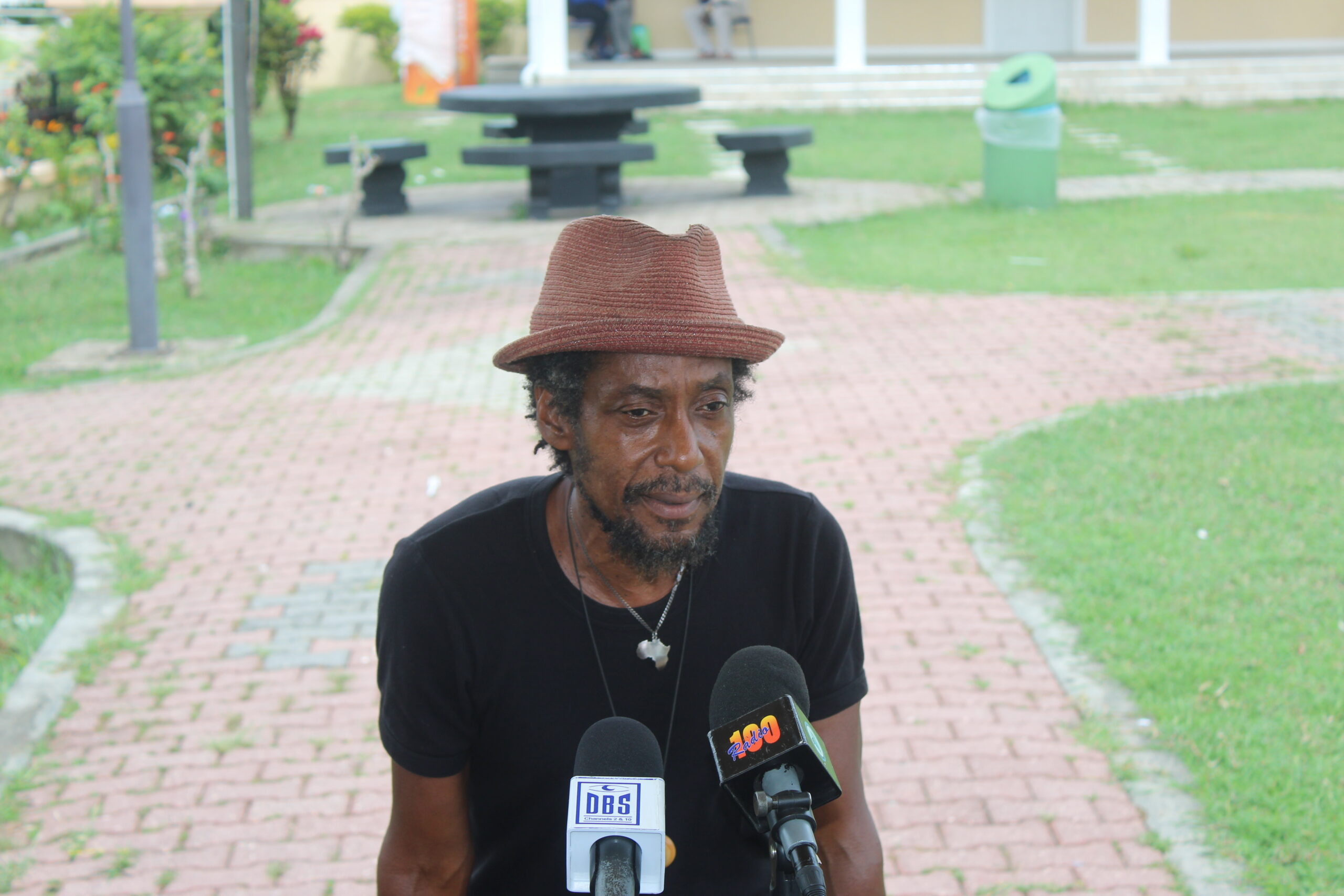
Known internationally as a Grammy-nominated reggae musician and dedicated social philanthropist, Taj Weekes has spent years advocating for marginalized communities across the Caribbean through his non-profit TUCO Foundation. After decades living abroad across the United States, Cuba, and multiple regions of Africa, Weekes made the choice to return to his home country of Saint Lucia earlier this year, settling into a quiet, isolated property tucked into the wooded coastline of Mon Repos on the island’s southeastern shore. What he expected to be a peaceful, reclusive life of quiet gardening and community-focused work was shattered dramatically last Sunday night, when four masked, armed intruders accessed his remote property.
In a first-hand public account of the incident shared earlier this week, Weekes detailed the disorienting encounter that unfolded around 10:15 p.m. He had left his doors open — a habit he developed in the secluded, low-crime area he called home — and was speaking with his wife on the phone when he spotted four bright lights moving down his private driveway. Initially, he assumed the visitors were friends or family with access to the property, so he walked out casually to greet them, not raising his guard.
As he drew closer, Weekes realized the figures were four adult men dressed in tactical military-style gear and fully masked to hide their identities. Two of the men held their flashlights pointed directly at Weekes, while the other two kept their lights aimed at the ground. When Weekes challenged them to state their purpose for being on his land, the men remained completely silent, only staring him down. After several seconds of tense silence, one of the intruders shifted his flashlight away from Weekes to reveal a loaded handgun he was carrying.
Weekes recounted that he stood his ground, telling the intruders he had no fear and they could act if that was their plan. After a long, tense standoff, the group did not attack or rob him; instead, they silently moved past Weekes toward the back beach bordering his property. Moments later, Weekes said he heard what he is confident was a single gunshot. While Weekes’ wife — who remained on the phone throughout the entire encounter — alerted local family members, Weekes immediately contacted the Micoud District Police Service, which he confirmed arrived at the property within minutes to launch an investigation.
When asked if the incident could have been a case of mistaken identity, Weekes rejected the possibility entirely. His remote home is not marked on most casual maps, and accessing the private driveway requires intentional navigation through unmarked back roads. “You don’t stumble on this place by accident,” Weekes explained. “This was pre-planned. The whole point was to intimidate me. But I want to be clear: we will not be intimidated, and we are not leaving.”
Weekes, who now spends most of his time growing food to feed local food-insecure families and tending to trees on his property, says he has no personal conflicts that would explain the attack. “I haven’t harmed anyone. All I do now is dig in the dirt, plant, and spend time with my dogs. I’ve done nothing to anyone,” he said.
The incident comes amid a documented surge in violent crime across Saint Lucia, a trend Weekes called deeply disappointing for returning residents. “I’ve lived all over the world, and I’ve never had an encounter like this,” he said. “To come back home to do good work and face this? It’s devastating. But I also count my blessings — so many other people across the island haven’t survived similar encounters, so I’m grateful I’m here to talk about it today.”
As someone who has spent decades running social programs for vulnerable and marginalized Saint Lucian communities, Weekes said that quick law enforcement crackdowns will never solve the country’s crime crisis. Long-term, holistic change that brings together government, civil society, faith groups, and local communities is the only path forward, he argued.
Weekes stressed that people who commit crime are not outsiders to Saint Lucian society — they are members of our communities, shaped by the systems and gaps we all collectively allow to exist. “They didn’t come from another planet. They are us,” he said. “We can’t keep pointing fingers and blaming isolated neighborhoods. Crime is a national problem that we all share responsibility for fixing. When a child grows up without support, that’s our failure as a society, not just the failure of one community.”
Even though the incident has left him feeling less secure than when he first returned home, Weekes says he has no plans to leave the country he has spent his career advocating for. “Home is where the heart is. I did all my work for Saint Lucia from abroad for decades — why would I leave now that I’m back?” he said. “Being here on the ground lets me speak to these issues firsthand, in a way I never could when I was living overseas.”
Weekes acknowledged that he does not have a single step-by-step plan to end crime, but he remains optimistic that collective action can reverse the current trend of rising violence. “It’s not naive to believe we can build a Saint Lucia free of violent crime. It can happen — we just have to commit to working together to make it real,” he said. He pointed to intergenerational change as the core of any long-term solution, noting that the old African proverb “it takes a village to raise a child” still holds true. “I was raised by a whole village that looked out for me. Today, that village doesn’t function like it used to,” he said. “We have to rebuild that support system if we want to stop children from growing into people who commit violence. If we don’t put a long-term plan in place now, by 2030 this crisis will be far worse than it is today. We can’t keep ignoring the problem and repeating the same failed approaches.”