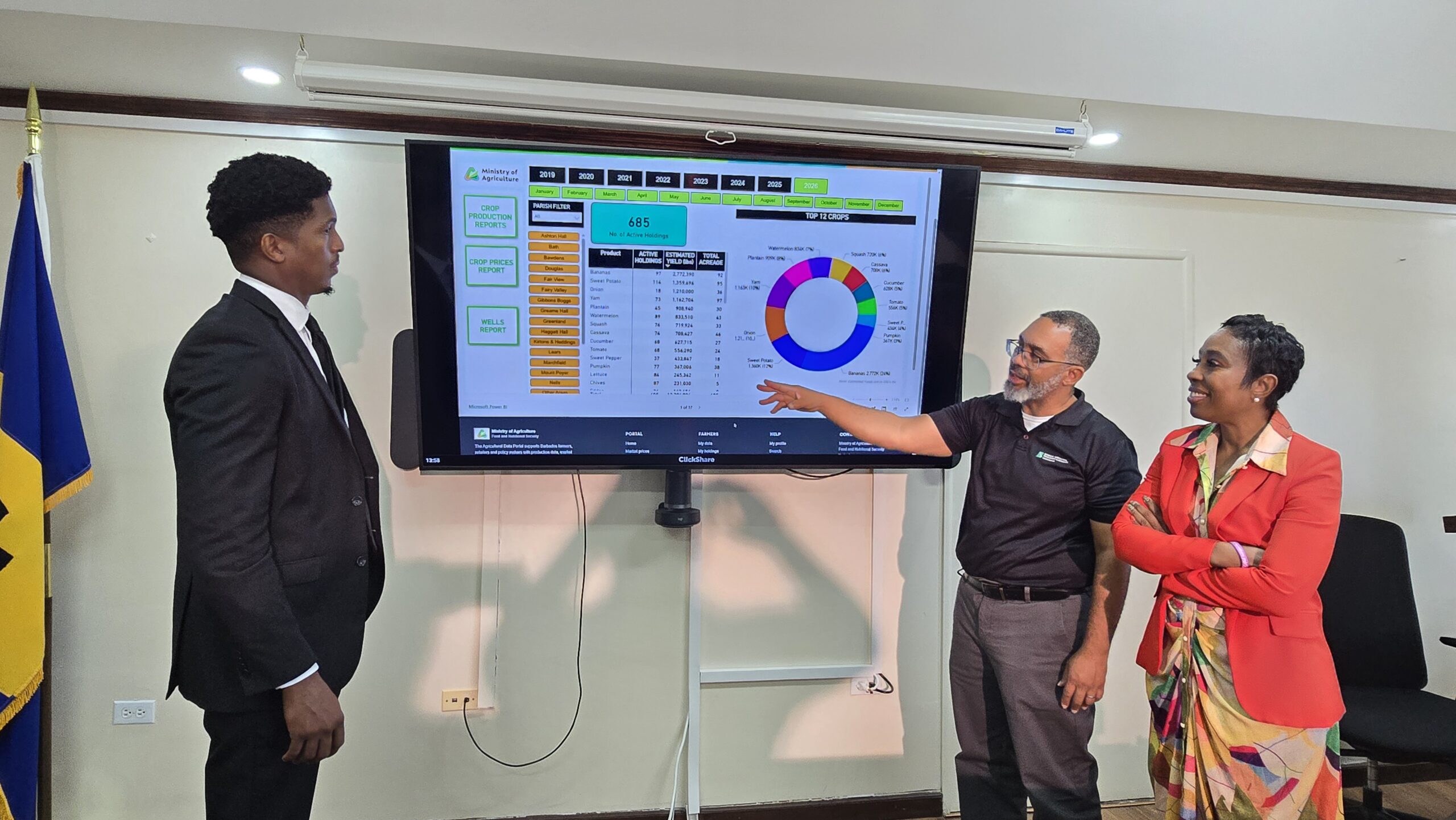
Barbados’ agricultural sector is grappling with an escalating crisis of rampant monkey raids on commercial and small-scale farms, pushing the country’s Ministry of Agriculture to pursue cross-regional knowledge sharing and cutting-edge artificial intelligence interventions to curb mounting farmer losses. Agriculture Minister Dr. Shantal Munro-Knight openly admitted Wednesday during a press briefing at the ministry’s Graeme Hall headquarters that there is no silver bullet for this decades-long problem, which has plagued local farming alongside persistent praedial crop larceny for generations.
Calling both issues systemic challenges that have undermined agricultural productivity for decades, the minister emphasized that neither monkey-related crop destruction nor crop theft can be resolved with a single, quick intervention. To build a context-appropriate solution, Dr. Munro-Knight has spent recent months researching mitigation strategies used across neighboring Caribbean and South American nations, including on official visits to Guyana and Suriname. She found that monkey crop raids are a shared struggle across the region: no country has yet developed a one-size-fits-all definitive solution, with territories testing a range of differing approaches to manage the problem.
Currently, the Barbados Ministry of Agriculture is evaluating a suite of technology-driven mitigation tools, with artificial intelligence at the core of its exploratory work. Existing AI-powered options already deployed in other regions include AI-integrated drone monitoring, smart perimeter fencing that sends real-time alerts of intruding primates, and non-lethal deterrent systems that fire low-impact pellet sprays to scare monkeys away without causing harm. The minister stressed that cost accessibility is a non-negotiable factor during the evaluation process, noting that any effective solution must be affordable for working farmers to deliver real benefit.
To advance this work, the ministry will convene a closed expert stakeholder meeting in the second week of June, bringing together internal ministry teams, external agricultural partners, environmental experts and other relevant stakeholders to review existing mitigation measures and hash out new potential solutions that address both monkey damage and praedial larceny simultaneously.
Dr. Munro-Knight also addressed widespread public debate surrounding monkey culling, noting that while the government has already increased the financial bounty for approved culling operations, Barbados remains committed to balancing crop protection goals with humane wildlife management. She added that even with expanded culling, the current approach cannot address the scale of the primate population that is driving widespread crop damage across the island.
In a step to build better data for evidence-based policy, the ministry launched a new agricultural data collection platform on Wednesday in partnership with the state-owned Barbados Agricultural Development and Marketing Corporation (BADMC). Right now, officials lack the comprehensive data needed to accurately calculate the total economic loss that monkey raids inflict on the local agricultural sector each year. The new platform is designed to fix this gap by enabling systematic, comprehensive data collection in collaboration with local farming communities, giving officials clear figures to guide future strategy and resource allocation.
Monkey raids often leave crops damaged beyond recovery, forcing many local farmers to absorb significant, uncompensated financial losses year after year. Closing out her remarks, Dr. Munro-Knight underlined that solving the crisis cannot fall to the Ministry of Agriculture alone. Long-term sustainable solutions will require coordinated cross-agency collaboration with the Ministry of Environment, local academic institutions, and international development partners to deliver results that work for both farmers and wildlife.