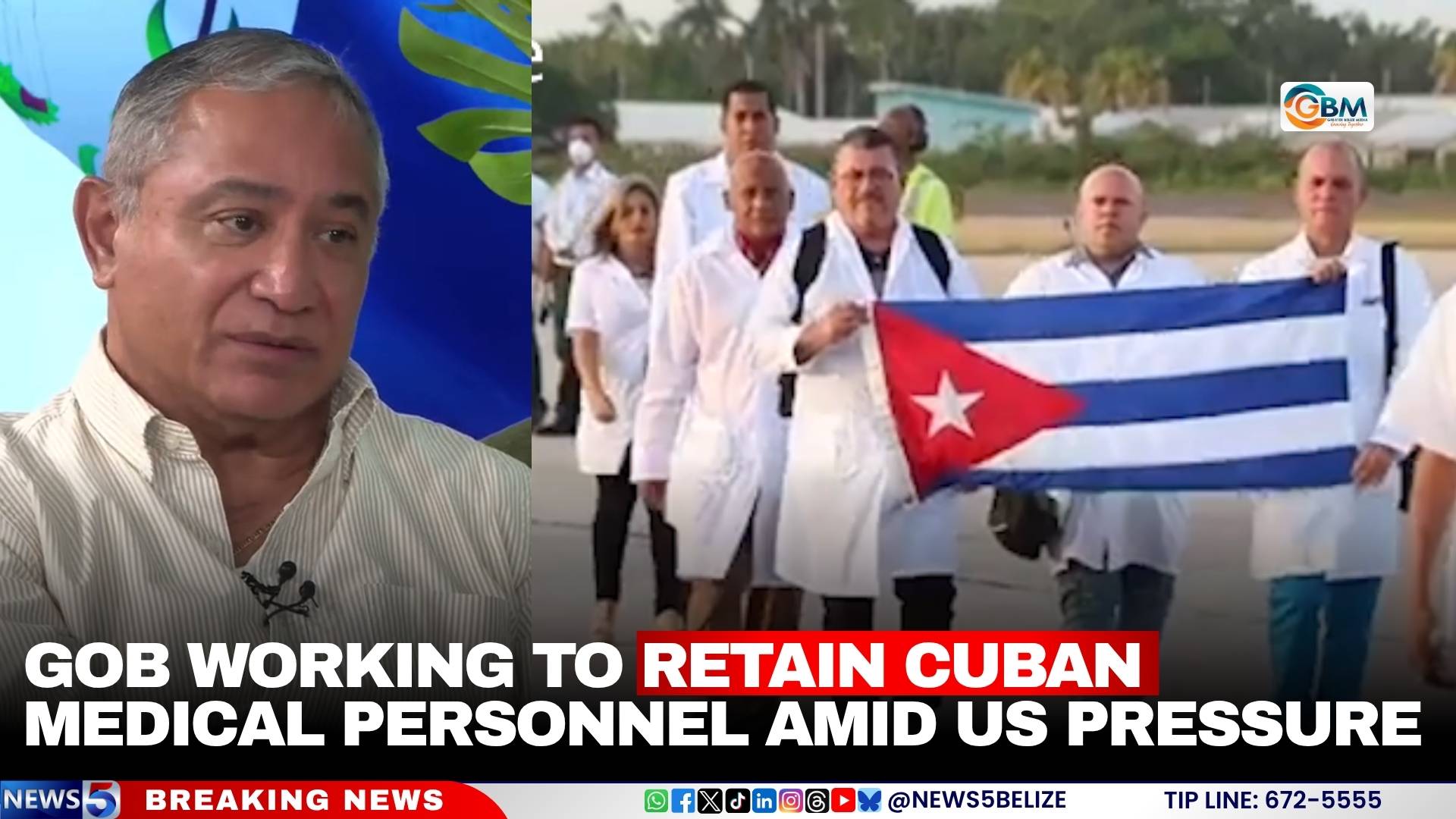
Facing mounting pressure from the United States that threatens the future of Cuba’s long-running medical cooperation program in Belize, Prime Minister John Briceño has outlined a two-pronged strategy to shore up the country’s healthcare system, confirming the government is both pursuing alternative recruitment channels and negotiating to keep willing Cuban medical staff in the country.
In an interview with the local morning program *Open Your Eyes*, Briceño confirmed that Belize’s Ministry of Health has already launched global recruitment drives to prepare for any potential workforce gap that could open if Cuban personnel are forced to leave. The ministry is actively sourcing qualified nurses and physicians from a range of Latin American and Asian nations, including the Philippines, El Salvador, Honduras and Nicaragua, to backfill any sudden vacancies across the country’s public health facilities.
Briceño emphasized that his administration remains committed to retaining Cuban medical workers who have expressed a desire to continue their service in Belize, and is currently working to craft a revised working arrangement that would satisfy Washington’s demands. The United States has drawn widespread criticism for labeling Cuba’s state-organized international medical missions as a form of human trafficking, a characterization that Belize has implicitly pushed back against through its longstanding implementation of direct payment policies.
Notably, Briceño clarified that Belize has directly compensated individual Cuban medical personnel since the program’s inception, rather than routing payments through the Cuban government, a structure that aligns with US demands for proof that medical workers participate voluntarily. The government’s current goal is to formalize this arrangement in a way that meets US requirements, allowing willing Cuban staff to stay on.
“We’re working to craft a framework that convinces the Americans that every medical worker here is present of their own free will,” Briceño stated, adding that he remains optimistic about reaching a workable compromise. “I’m hopeful that we’ll be able to work through this issue. I’ve always been a very optimistic person.”
The standoff highlights the tricky diplomatic balancing act small Caribbean nations like Belize must navigate, as they seek to maintain beneficial bilateral cooperation agreements while avoiding punitive measures from the United States over its long-running sanctions and political pressure campaign against Cuba.