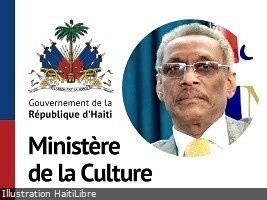
Haiti’s Minister of Culture and Communication (MCC) Emmanuel Ménard has laid out a sweeping multi-faceted action plan targeted for full implementation by the close of the 2025-2026 fiscal year on August 31, 2026, as part of the broader national push for state institutional reform and modernization. The plan centers on four core pillars that tie institutional overhaul, cultural preservation, public engagement, and economic growth into a unified vision for strengthening Haiti’s national identity and governance.
The first pillar focuses on internal institutional modernization, designed to embed core values of transparency, administrative efficiency, and closer citizen engagement across the ministry’s operations. Key reforms include updating the ministry’s outdated legal framework, establishing new dedicated legal and internal audit units, strengthening existing accountability and oversight mechanisms, and expanding the ministry’s physical and operational presence across all of Haiti’s regional departments. These structural changes are intended to eliminate bureaucratic bottlenecks and bring government cultural services closer to communities across the country.
A second and central priority of the plan is restoring culture to its rightful place as a core driver of national development, through targeted investments in preserving Haiti’s rich collective memory. The ministry has outlined concrete initiatives to safeguard both tangible and intangible cultural heritage, rehabilitate deteriorating historical sites, restore critical national cultural infrastructure, and elevate the legacies of iconic figures in Haitian history. Standout projects in this area include the full restoration of Anténor Firmin’s historic house, the conversion of Jacmel’s existing School-Workshop into a national Artistic Restoration Center, and a series of upgrades to national museums and protected historical monuments across the country, all designed to preserve the nation’s heritage for coming generations.
The plan also takes an inclusive approach to centering the foundational roots of Haitian national identity, with dedicated protections for grassroots and traditional cultural practices that form the soul of the nation. Minister Ménard’s agenda prioritizes official recognition and protection for traditional Lakou communal encampments, mystical societies, folk traditions, and community-held heritage, framing these practices as irreplaceable components of Haitian culture. Planned interventions at multiple historic Lakou sites, most notably in Gonaïves, and the development of the Lakou Bwakayiman project, mark a deliberate step toward honoring the value of traditional knowledge and ancestral practices that have long shaped Haitian life.
Beyond cultural preservation, the ministry is set to modernize its public communication and citizen outreach functions to bridge the gap between government and the Haitian public. Key upgrades include expanding the operational capacity of Radio Télévision Nationale d’Haïti (RTNH), relaunching the official State Journal with a new digital-first format, launching regular publications of the MCC Review, and establishing a new national Information and Communication Center that includes a 24/7 public call center for citizen inquiries.
Finally, the plan includes comprehensive measures to support cultural workers and unlock growth in Haiti’s domestic creative economy. Reforms here range from conducting the first-ever general census of the country’s cultural sector, issuing standardized professional identification cards for cultural workers, providing streamlined administrative support for independent cultural operators, establishing a dedicated national cultural development fund, and organizing the inaugural Haitian Creativity Festival. These measures are designed to professionalize the cultural sector, spur artistic innovation, and create new sustainable economic opportunities for artists, artisans, writers, musicians, and cultural professionals across every region of Haiti.
Minister Ménard’s agenda ties all these priorities together into a clear, forward-looking national vision: by strengthening institutional governance, revitalizing cultural heritage, and empowering cultural creators, Haiti can build a more confident, connected, and resilient nation proud of its unique identity and ready for future growth.