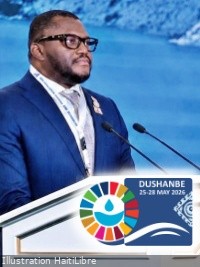
From May 25 to 28, 2026, the capital city of Tajikistan, Dushanbe, is hosting the 4th High-Level International Conference focused on the 2018-2028 Decade of Action for Water and Sustainable Development. Representing Haiti at the invitation of the conference, Environment Minister Valéry Fils-Aimé is participating in the gathering under instructions from Haiti’s Prime Minister, aligning his delegation’s participation with the Haitian government’s core strategic priorities: integrated water resources management, enhanced climate resilience, and strengthened national environmental governance.
This landmark global conference convenes senior delegation leaders, national government representatives, leaders of multilateral international institutions, and development partners from across every continent. The core agenda centers on pressing, shared challenges: advancing inclusive water governance, building systemic climate resilience, and embedding water security into long-term sustainable development strategies. For Haiti, the conference represents a critical opportunity to expand technical collaboration and open new cooperation channels for two key national projects: the revitalization of the National Institute of Hydraulic Resources (INARHY) and broader efforts to improve sustainable water resource management across the Caribbean nation.
On May 26, Minister Fils-Aimé delivered an address to the plenary assembly that outlined major progress Haiti has achieved in its water sector over the 2005-2015 decade. Key milestones he highlighted included the establishment and institutional strengthening of the National Directorate for Drinking Water and Sanitation (DINEPA), which consolidated a national governance framework for water access. He also noted the completion of targeted water infrastructure projects across dozens of rural and urban municipalities, the rollout of community-led hygiene and sanitation public awareness campaigns, and the development of durable technical and financial partnerships with the global community to address long-standing structural vulnerabilities in Haiti’s water system.
Central to Fils-Aimé’s address was the argument that no climate-vulnerable nation can tackle the interconnected crises of water insecurity and accelerating climate change in isolation. He called for a new era of strengthened global solidarity rooted in equitable knowledge sharing, open technology transfer, and expanded access to climate finance for the world’s most vulnerable countries.
Outlining Haiti’s specific policy asks, Fils-Aimé emphasized four core priorities: expanded access to climate finance and dedicated support mechanisms for low-income and vulnerable nations; accelerated technology transfer and capacity building in sustainable water management, national hydrological monitoring, and climate resilience infrastructure; cross-border collaborative action to protect critical water ecosystems and transboundary watersheds; and increased international backing for local community initiatives that boost adaptive capacity for marginalized populations facing environmental crises.
As part of the global 2018-2028 Decade of Action framework, Fils-Aimé also presented Haiti’s upcoming domestic initiatives to strengthen water governance and climate resilience. Key national priorities set out by the minister include the finalization and rollout of the National Water and Sanitation Plan (PHAN), the formal establishment of the revitalized National Institute of Hydraulic Resources (INARHY), the mainstreaming of water security concerns into national climate adaptation policy, and the validation of the National Integrated Water Resources Management Plan (IWRM 2025–2050), which is currently in the final approval stage.
In closing his remarks, Fils-Aimé highlighted the critical importance of inclusive, community-centered water management projects that center the participation of women, youth, and Indigenous local stakeholders in long-term sustainable water resource governance, echoing the conference’s core focus on leaving no community behind in the global push for water security.