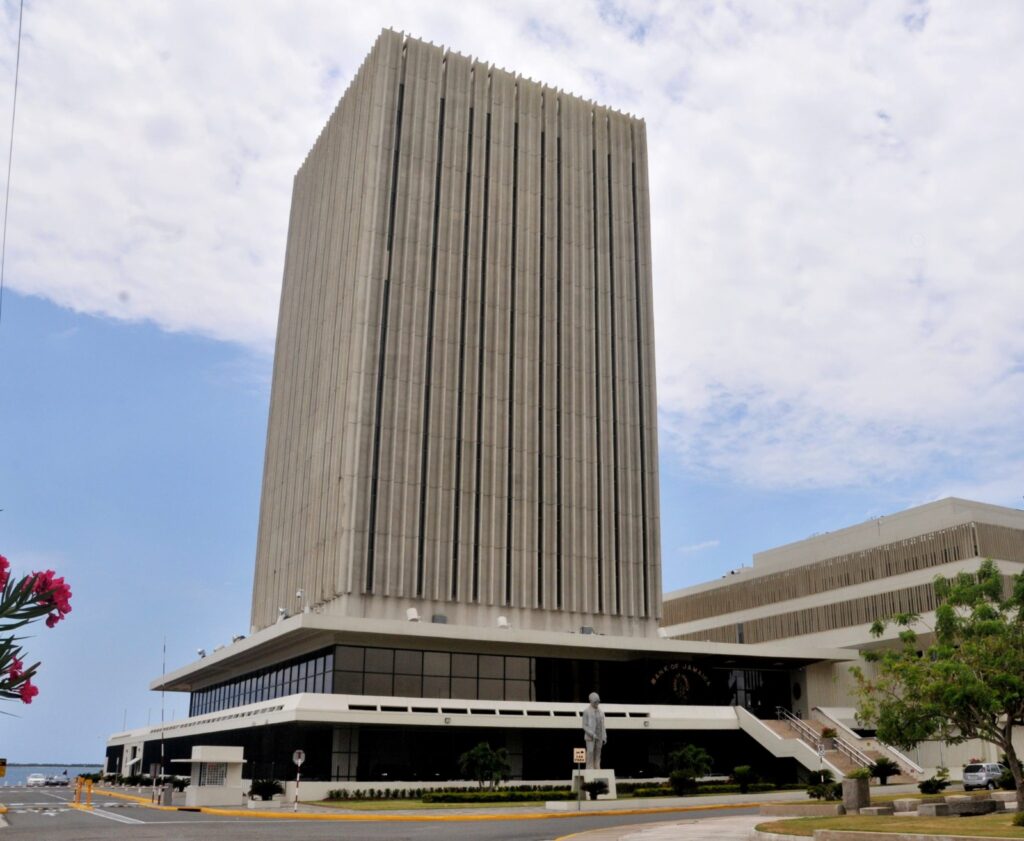
The Bank of Jamaica (BOJ) has issued a cautious inflation forecast, warning that consumer price growth is on track to exceed the upper bound of the nation’s 4-6% target range during the second and third quarters of 2026. The primary driver of this projected overshoot, central bank officials confirm, is the steady climb in global crude oil prices, which has already begun pushing up costs for Jamaican electricity providers and transportation operators. Domestic fuel prices have already absorbed these increases, traced directly to persistent geopolitical volatility roiling key global energy markets. BOJ Governor Richard Byles emphasized during a recent public press briefing that the magnitude of the target range breach will hinge entirely on how intense and long-lasting the ongoing Middle East conflict proves to be.
Economic forecasting experts at the central bank have flagged that risks to the inflation outlook remain at heightened levels. On the upside, two key additional threats stand out: El Niño-driven weather patterns that could disrupt domestic agricultural output and push food prices higher, and stronger-than-expected consumer and business demand stemming from post-hurricane reconstruction efforts across the island. On the downside, the BOJ warns that extended periods of elevated energy costs could erode household disposable income, dragging down broader consumer spending on non-essential goods and services.
Current data shows inflation remains well-contained for the moment: headline inflation hit 4.3% in April 2026, holding firmly within the BOJ’s official target range. Once geopolitical tensions de-escalate and global oil markets stabilize with normalized supply levels, the central bank projects headline inflation will gradually cool back into the target range.
Against this backdrop, the BOJ’s Monetary Policy Committee (MPC) voted unanimously to leave the benchmark interest rate unchanged at 5.50%. The central bank will also continue its targeted special foreign exchange interventions, designed to preserve stability in Jamaica’s domestic currency market. Byles noted that the current monetary policy stance remains appropriate even with the projected 2026 target breach, explaining that the central bank’s priority is limiting what economists term ‘second-round effects’ — a cycle where higher fuel and transport costs spill over into broad-based price increases across every sector of the economy.
“Recent geopolitical tensions have injected significant uncertainty and new challenges into Jamaica’s economic outlook,” Byles stated. “That said, the Bank of Jamaica remains fully committed to its core mandate of preserving price stability for the Jamaican people.”
During the post-briefing question-and-answer session, Byles pushed back against calls for the BOJ to adjust its official inflation target range to account for mounting global economic uncertainty. The current 4-6% range was set by the Jamaican government following technical recommendations from the BOJ, and Byles argued it remains well-suited to the needs of the domestic economy, with no adjustments planned in the near term. He explained that shifting the range lower would require aggressive monetary tightening, pushing interest rates higher and dampening economic growth, while raising the target range would allow looser policy and lower rates — only to generate higher persistent inflation that would place an unfair burden on Jamaican households.
Jamaica first adopted the 4-6% inflation targeting framework in 2017. The framework was codified into law with 2020 amendments to the Bank of Jamaica Act, which also strengthened the central bank’s operational independence and formalized its inflation-targeting mandate. While the BOJ has not kept inflation within the target band consistently over the past nine years, central bank leadership assesses the framework as largely successful overall. Past target breaches include inflation spikes in 2017 and 2018, when extreme rainfall and widespread flooding pushed agricultural prices above normal levels. The most significant recent overshoot occurred between 2021 and 2023, during the post-pandemic global inflation surge, driven by skyrocketing shipping costs, elevated global energy and food prices, widespread supply chain disruptions, and the spillover effects of the Russia-Ukraine war. BOJ data shows inflation peaked at roughly 11.8% in April 2022, one of the highest annual inflation readings recorded in Jamaica in recent decades.