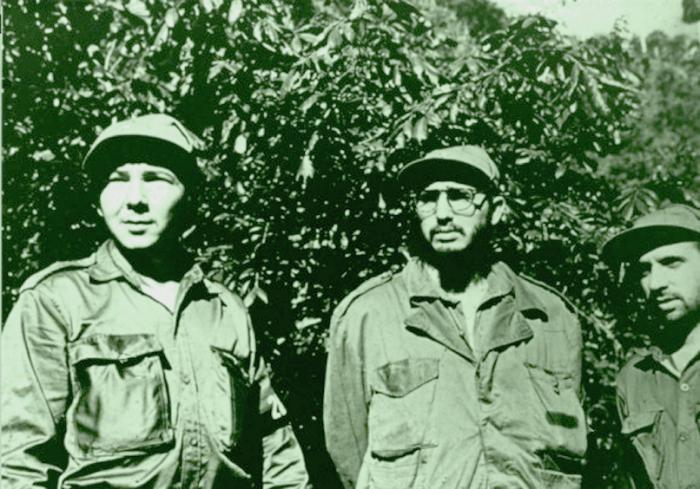
Nearly seven decades after the triumph of the Cuban Revolution on January 1, 1959, the enduring character of Raúl Castro remains a steady, defining force in the legacy of the island’s revolutionary struggle. This retrospective reflection, originally published by Granma in 2006 and republished to mark Raúl Castro’s birthday, traces the revolutionary leader’s journey from his childhood in Birán to his pivotal role as a commander in the mountains of eastern Cuba, capturing the unwavering spirit that has defined his lifelong commitment to Cuba’s people.
The story opens in the thick of the 1958 revolutionary war, anchored in a moment of quiet exhaustion that reveals the grit of the guerrilla movement. In the damp highlands of the Sierra Maestra, a young Raúl Castro allows himself only a fleeting moment of rest, his mind flooding with memories stitched together from a lifetime already steeped in struggle: the scent of orange blossoms in his family’s groves back in Birán, the sharp tap of his father Ángel’s cane on wooden floorboards, the overlapping sounds of a life forged in rebellion — train whistles pulling into Santiago, the rustle of priestly cassocks in the corridors of his strict religious school, the thunder of crowds marching, the crackle of gunfire outside the Moncada Barracks, the roar of enemy aircraft over guerrilla territory. Disoriented by fatigue, he cannot immediately place whether the exploding shrapnel echoing in his memory comes from the harassment after the Battle of Alegría de Pío or air raids targeting his column as they advanced toward the Second Eastern Front. Yet after only minutes of sleep, he jolts awake and returns to his urgent work.
For hours, Raúl had written tirelessly, forearms braced against rough mountain planks, after days of marching, ambushes, reconnaissance, combat and enemy bombings. In his message to revolutionary leadership, he laid out a clear strategic assessment: following Fidel Castro’s decisive defeats of Fulgencio Batista’s army offensive in the Sierra Maestra, the shaken dictatorship — reeling from the arrest of American citizens on the Second Front, rising troop desertions and plummeting morale among Batista’s ranks — would be desperate to score a symbolic victory to cling to power. The lightly armed Second Eastern Front, he warned, would almost certainly be the target. He closed the urgent dispatch with a request for critical reinforcements: “If they would send us the 159 Springfields and the M-2s that are over there, we could do many things, at least prevent them from penetrating our lines; they must send them here urgently. I had to sleep for a while, lying on the same table where I’m writing to you, so I could finish this. Vilma is writing next to me in the same condition, so please forgive me that this isn’t as long as I’d like; in any case, it’s better this way for you, since all we do is ask for weapons!!”
That letter, dated July 5, 1958, captures the urgency and resolve that marked Raúl’s leadership from the earliest days of the revolution. Barely 27 years old when revolutionary forces descended from the mountains to claim victory in 1959, Raúl had already spent half his young life fighting for a transformative vision for Cuba. Born June 3, 1931, in the sweltering midday heat of rural Cuba, he was the fourth child of Ángel Castro and Lina Ruz, the youngest son his father affectionately nicknamed “My little calf.” In the small village of Birán, he was remembered as a quick-witted, mischievous, warm-hearted boy who prioritized his family above all else.
After leaving the strict, discipline-bound Jesuit school Belén, where he bristled at mandatory prayers and confessions, Raúl returned to work on his father’s farm until Fidel encouraged him to pursue university study in Havana, either in law or public administration. When he submitted his application in April 1950 and moved to the capital, he unknowingly stepped onto a path that would write him into the history books. Fidel introduced him to Marxist texts, which opened Raúl’s eyes to a new vision of social justice, and he embraced these ideals with the unshakable focus of a compass and the fiery passion of a young man fighting for what is right. His courage became legendary during the 1953 attack on the Moncada Barracks, when he was detained by guards at the Palace of Justice — only to disarm his captors, save his small contingent of fighters, and lead them to safety.
That bold action cemented a truth that would define Raúl’s role in the revolution for decades to come: where Raúl was present, the impossible became achievable. Years later, after the Granma landing and the devastating dispersal of revolutionary forces at Alegría de Pío, when Fidel had lost many comrades and thought Raúl may have fallen, his relief at seeing Raúl alive turned to unshakable confidence: “Now we will win the war!”
To the Cuban people, Raúl has always been known for much more than his strategic skill on the battlefield. They remember his rebellious temperament, his sharp good humor, his approachable simplicity, his unwavering rectitude, his austere work ethic and his warm, jovial demeanor. Above all, he is celebrated for his unyielding loyalty and the singular courage that earned him his place as the revolution’s second-in-command through his own merit, not by circumstance. Alongside Ernesto “Che” Guevara and Celia Sánchez, he was Fidel’s most trusted right hand, a steady anchor rooted deeply in the struggle, a testament to the personal virtues that would carry him through decades of service building the revolution, developing Cuba’s armed forces and shaping the nation’s political and social life. Beside him through every step was his partner Vilma Espín, a fellow guerrilla fighter; their decades-long revolutionary love story revealed the quiet tenderness and sensitivity that lay beneath his tough public resolve.
As the reflection concludes, marking the anniversary of the revolution and Raúl’s life of service, the core truth of his legacy remains unchanged: Raúl remains the same man who joined the struggle as a young idealist, bringing the same boldness, simplicity, unshakable faith in Cuba’s youth, complete selflessness and restless, joyful, profound spirit to every chapter of the nation’s journey. He always believed the revolution could transform Cuba, and time has proven him right again and again. Firmer than ever in his convictions, he has earned the enduring respect and affection of the Cuban people, who have seen his steady leadership through every trial and recognize him as an eternal brother in the struggle. Bound by shared sacrifice and shared vision, Fidel and Raúl together forged the generous, unyielding, foundational legend of the Cuban Revolution — a legacy that endures, anchored in the unchanging character of the man who never stopped fighting for a better, happier homeland.