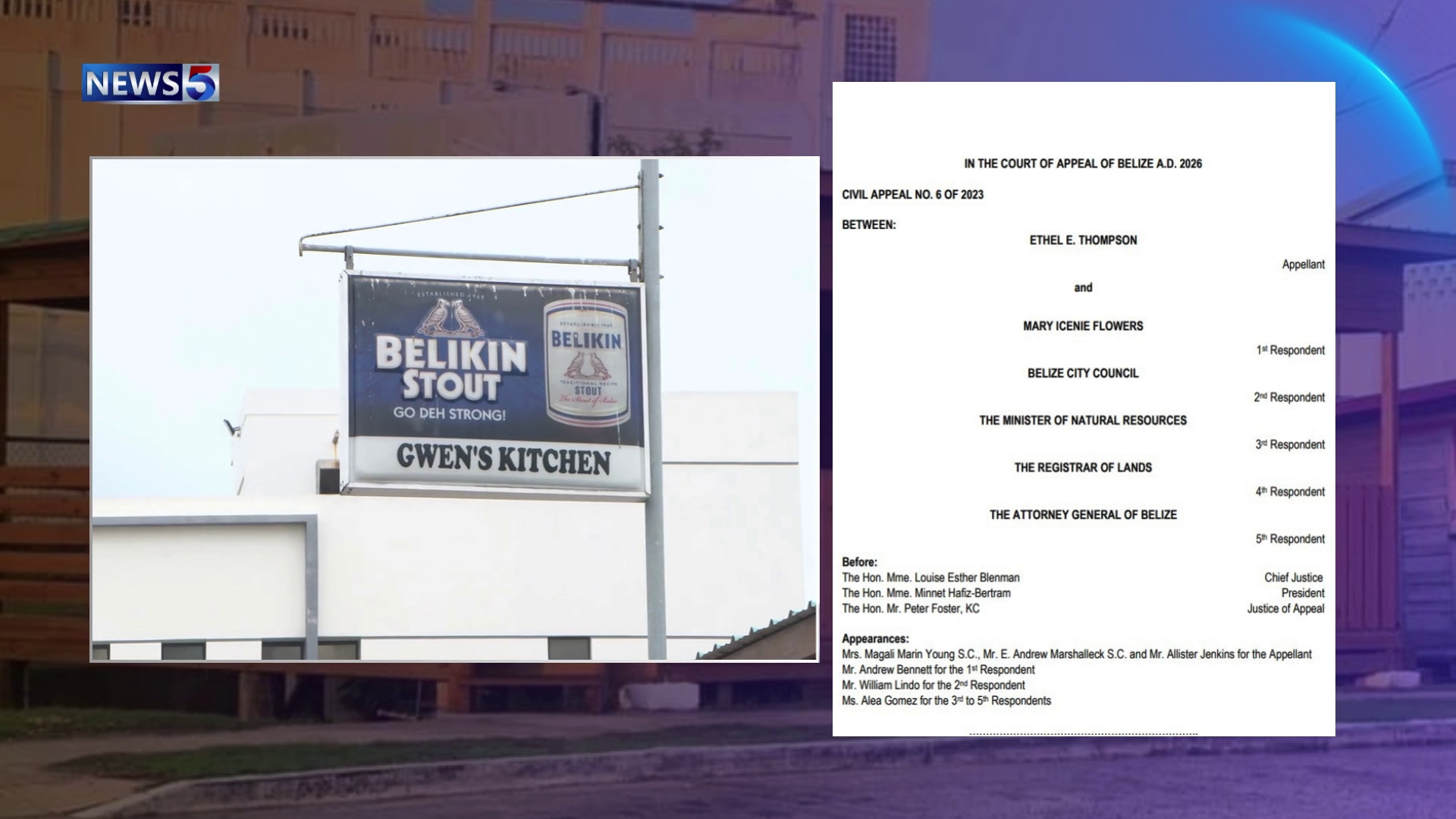
A long-running legal conflict over a small parcel of public land in Belize City has delivered a split verdict that has reignited broader conversations about property rights, governmental overreach, and the balance of legal protections for landowners in the Caribbean nation.
At the center of the dispute is a narrow stretch of road reserve land positioned along Coney Drive, directly adjacent to private property owned by Ethel Thompson. Years ago, the Belize City Council and the national Ministry of Natural Resources took the extraordinary step of leasing, then selling, this public road reserve parcel to a third party. Thompson launched a legal challenge against the transaction, arguing that the sale of the land blocked her only accessible route to the main road, directly violating her fundamental rights as a registered property owner.
On May 25, 2026, the Court of Appeal issued its much-anticipated ruling, siding with Thompson on a core point: the court confirmed that both the city council and the natural resources ministry had exceeded their legal authority when arranging the lease and sale of the public road reserve. The judges explicitly found that Thompson’s property rights as a landowner had been negatively impacted and unlawfully breached by the government entities’ actions. The court also awarded Thompson financial compensation from the two governmental bodies and ordered that she be granted a portion of her legal costs stemming from the appeal.
However, the ruling stopped far short of fully reversing the transaction. The existing registered land title for the parcel, held by restaurant owner Ms. Flowers, remains fully valid, and Gwen’s Kitchen — the popular local business that has been operating on the site for years — will continue its operations uninterrupted.
Andrew Bennett, the attorney representing the case, explained that the split outcome leaves Thompson only partially successful in her appeal. Thompson’s primary goal had been to secure a court order to alter the official land registration for Parcel 5116, the plot where Gwen’s Kitchen sits, to revert the land to public use and restore her full access rights. Bennett noted that the court declined to grant that extreme remedy because of long-standing legal protections enshrined in Belize’s Registered Land Act, which draw from foundational common law principles.
One of the core principles of the act is the “curtain principle,” which holds that a registered land title is considered definitive: registered property owners do not need to investigate or challenge prior claims to their land, and the state guarantees the validity of a properly registered title. Absent proven fraud or a clear administrative mistake in the registration process, courts cannot legally alter or revoke a valid registered title. In this case, because Flowers holds a legitimate registered title to the land, she is protected by constitutional property rights that may not be interfered with unless following procedures explicitly laid out in national law.
Beyond the immediate dispute between Thompson and Flowers, the ruling has raised pressing questions for other commercial operators in the area. Dozens of other businesses along Coney Drive and kiosk owners on nearby Mahogany Street hold land arrangements with the Belize City Council that carry similar legal structures to the one challenged in this case. Legal observers are now watching closely to see if the court’s rebuke of governmental overreach will open the door to future legal challenges that could reshape land tenure across the city.
This report is adapted from a transcribed evening television news broadcast.