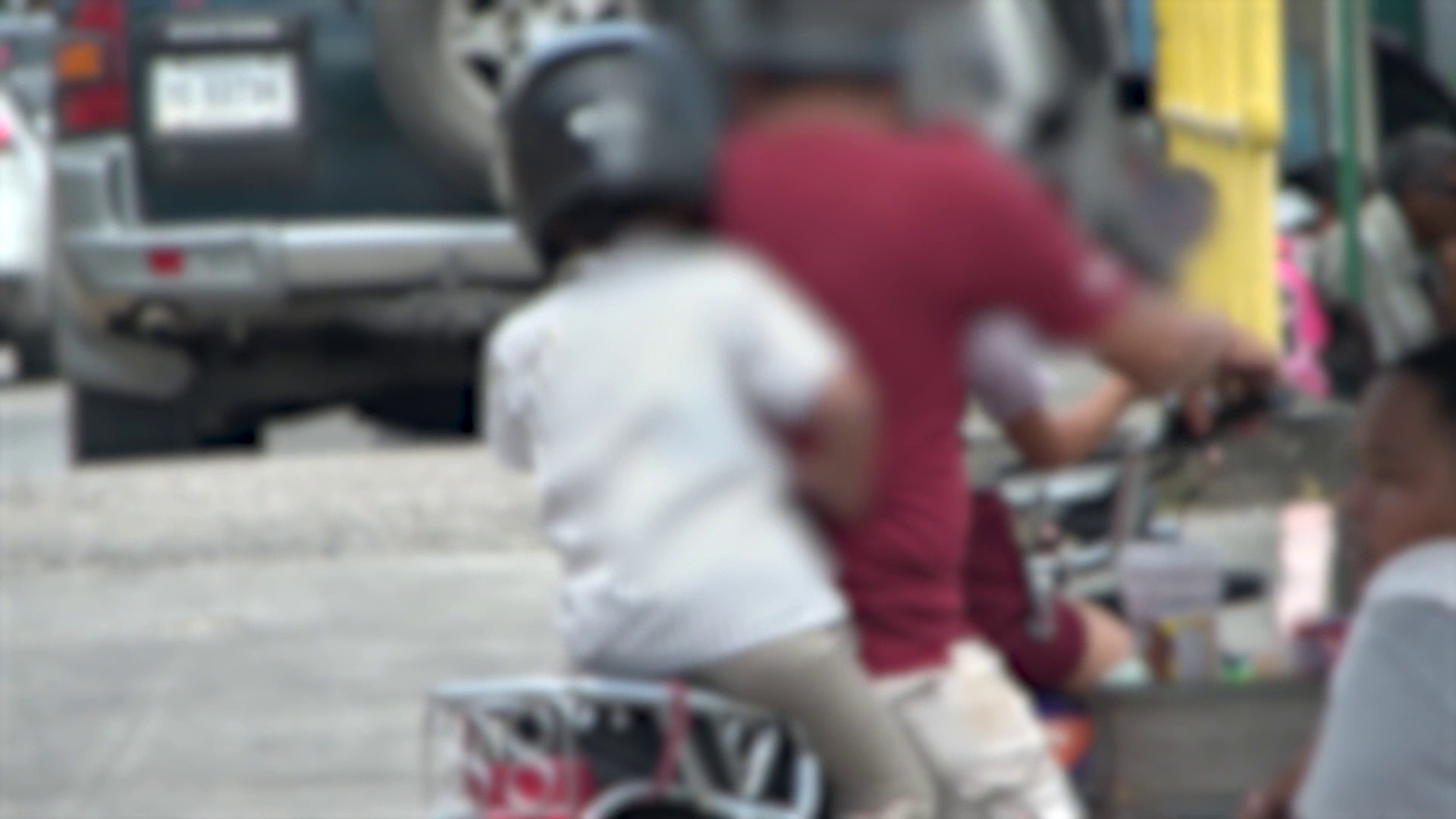
In the busy afternoons outside primary schools across Belize City, a dangerous daily routine has become normalized, and long-time traffic safety advocates are sounding the urgent call for regulatory action before a preventable tragedy claims a young life.
For years, commuters and parents have relied on affordable, nimble motorcycle services – and in many cases, informal “runman” drivers – to beat rush-hour gridlock when picking up children from school. What has raised alarm among safety experts and educators is the widespread lack of basic safety precautions: young children as young as 6 or 7 are routinely squeezed between adult drivers or balanced on motorcycle fuel tanks, school bags strapped to overloaded handlebars, and in the vast majority of cases, no helmets are worn by the children or sometimes even the drivers.
Veteran traffic safety advocate Philip “Fawda” Henry, who has spent more than 20 years teaching pedestrian and road safety to students across Belize City, calls the trend a quiet public health disaster waiting to happen. “When you send a 7 or 8-year-old child home with a motorcycle driver who speeds and weaves through traffic, you are essentially sentencing your child to death,” Henry emphasized in an interview with local outlet News Five. He added that parents who dismiss established safety guidance that children under 9 should not be transported on public motorcycles bear direct responsibility for putting their children at grave risk.
Concern over the crisis is not limited to safety advocates. Administrators at Holy Redeemer Primary School, one of the city’s local primary institutions, confirmed that the problem has been a top safety priority for years – particularly after a 2024 accident that left one of their students severely injured when the child’s father lost control of his motorcycle while picking the student up from school. Since the incident, school leaders have repeatedly issued warnings to parents about the dangers of unregulated motorcycle transport for children, but the dangerous practice continues unabated outside the school gates every afternoon.
For many low-income Belize City households, motorcycle transport remains the only accessible and affordable option to get children to and from school amid limited public transit options and chronic rush-hour congestion. But Henry argues that convenience cannot come at the cost of children’s lives, and is calling on Belize’s transport department, senior leadership, and elected officials to introduce targeted new regulations to crack down on unsafe practices. He is pushing for strict new enforcement measures against unlicensed child transport and mandatory helmet requirements for all motorcycle passengers, regardless of age, that would hold reckless drivers and non-compliant parents accountable.
As the community debates the trade-off between accessibility and safety, the question remains: will policymakers act before more children are harmed, or will this dangerous routine go unaddressed until it is too late?