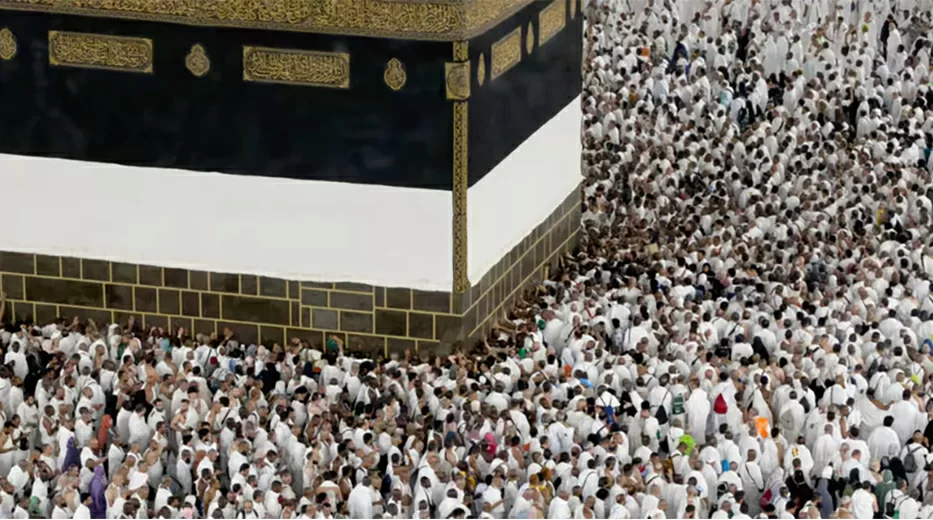
Against the backdrop of ongoing armed conflict across the Middle East and sweltering desert temperatures, the annual Islamic Hajj pilgrimage to Mecca, Saudi Arabia, has drawn a larger number of international pilgrims than in 2025, defying security and logistical challenges that many feared would disrupt the sacred ritual.
Hajj, one of the five fundamental pillars of Islam, requires every physically and financially able Muslim to complete the journey at least once in their lifetime. This year, the ritual has unfolded against unprecedented regional turmoil: a conflict that erupted in late February following U.S. and Israeli strikes on Iran sparked retaliatory attacks from Tehran targeting sites across Saudi Arabia and the broader Gulf region. The escalation triggered widespread airspace closures and massive flight cancellations across the Middle East, throwing early travel plans for thousands of pilgrims into disarray.
Yet major Gulf air carriers from the United Arab Emirates, Qatar and Bahrain moved rapidly to restore full flight operations, prioritizing pilgrim travel to ensure the religious gathering could proceed as scheduled. As of the latest update from Saudi security authorities, the total number of international pilgrims who have arrived in the kingdom stands at 1,518,153 – already surpassing last year’s total international count of 1,506,576. Saleh Al-Murabba, commander of the Hajj Passport Forces, confirmed the figure during a press briefing, noting that final numbers are expected to rise further in the coming days as last-minute arrivals complete entry procedures. Last year’s overall Hajj attendance totalled 1,673,320 pilgrims, including both domestic and international worshippers.
Beyond regional security tensions, pilgrims are facing a second major test: extreme summer heat that has pushed temperatures in Mecca above 45 degrees Celsius throughout the pilgrimage period. These soaring temperatures carry significant health risks, including dehydration and life-threatening heatstroke for pilgrims trekking between sacred sites across the arid region. To address the threat, Saudi authorities have rolled out expanded public safety measures, including additional shaded rest areas across ritual routes, more than 10,000 free water distribution points, and mobilized hundreds of mobile medical teams positioned at key sites to respond to heat-related emergencies.
Images captured from the Grand Mosque in Mecca show thousands of worshippers circling the Kaaba, Islam’s holiest site, dressed in the traditional white ihram garments worn by pilgrims. Despite the difficult conditions, pilgrims across the camp have expressed unwavering resolve to complete their sacred obligations. For the global Muslim community, the 2026 Hajj stands as a powerful demonstration of spiritual commitment, with the annual gathering long revered as a core symbol of unity among Muslims from across the world.