Two separate deadly violent attacks targeting civilians and law enforcement in northern Honduras have killed at least 16 people, sending fresh shockwaves through a region long grappling with rampant gang violence and land-related conflict. The incidents, which unfolded on the same day in two different departments, have renewed scrutiny of the Central American nation’s ongoing crackdown on organized crime.
The first attack was reported Thursday on a remote palm oil plantation located in Rigores, a community within the municipality of Trujillo. Local law enforcement confirmed that at least 10 plantation workers were fatally shot in the assault, though officials have warned the death toll could climb as investigators continue processing the scene. Witness accounts indicate armed assailants opened fire indiscriminately on workers, including a group that had gathered at a nearby local church. Three sisters are among the identified victims, according to local reports. Graphic images from the crime scene show bodies, many still wearing their work boots, scattered across the plantation grounds.
While authorities have not yet established a clear motive for the massacre, northern Honduras has faced decades of recurring, deadly agrarian conflict over fertile land. Human rights researchers have long warned that armed groups seeking control of productive agricultural territory regularly use violence to displace smallholder farmers and agricultural workers, a pattern that has spawned hundreds of unresolved killings in the region for years.
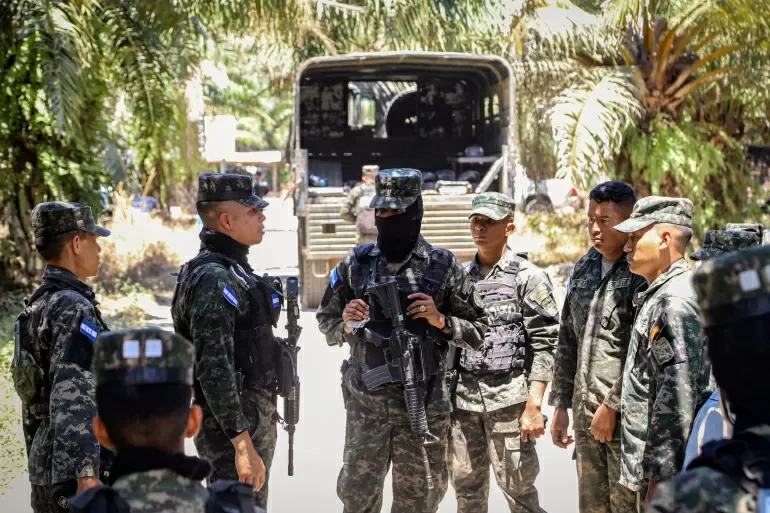
In the wake of the Trujillo attack, Honduran military chief Hector Benjamin Valerio Ardon announced that the armed forces would deploy all necessary logistics support and personnel to track down the perpetrators and bring them to justice.
The same day as the plantation massacre, a second deadly incident unfolded in the department of Cortes, just a short distance from Honduras’ border with Guatemala. A team of specialized anti-gang police officers had traveled from the national capital of Tegucigalpa to the border town of Omoa to carry out a targeted operation against local criminal organizations, but the unit was ambushed by armed suspects. Six officers, including deputy commissioner Lester Amador, were killed in the ambush. All of the fallen officers were members of Dipampco, Honduras’ elite special police unit tasked with combating gangs and transnational organized crime. Authorities have confirmed that several assailants are also believed to have been killed or wounded in the ensuing shootout, though full details have not yet been released.
Following the back-to-back attacks, Honduras’ National Police issued a statement reaffirming that it would immediately deploy additional resources to the affected regions, adding that the state would take aggressive action to arrest all those responsible, protect vulnerable communities, and deliver legal justice for the families of all victims.
The violence comes at a key moment for Honduran security policy. From 2022 until January 2026, the country operated under a national state of emergency designed to curb surging gang-related criminal violence. The policy drew widespread criticism from human rights groups and domestic opponents, who argued that the emergency measures granted excessive authority to police and military forces, restricted core civil liberties, and enabled systemic human rights abuses against vulnerable communities.
The state of emergency was allowed to expire in January following the inauguration of right-wing president Nasry “Tito” Asfura, a close political ally of former U.S. President Donald Trump. Despite ending the formal emergency declaration, Asfura has maintained a hardline security agenda, doubling down on aggressive crackdowns against criminal groups. In March, Asfura took part in Trump’s “Shield of the Americas” security conference held in Florida, an event centered on coordinating regional security policy to counter transnational organized crime across Central America.