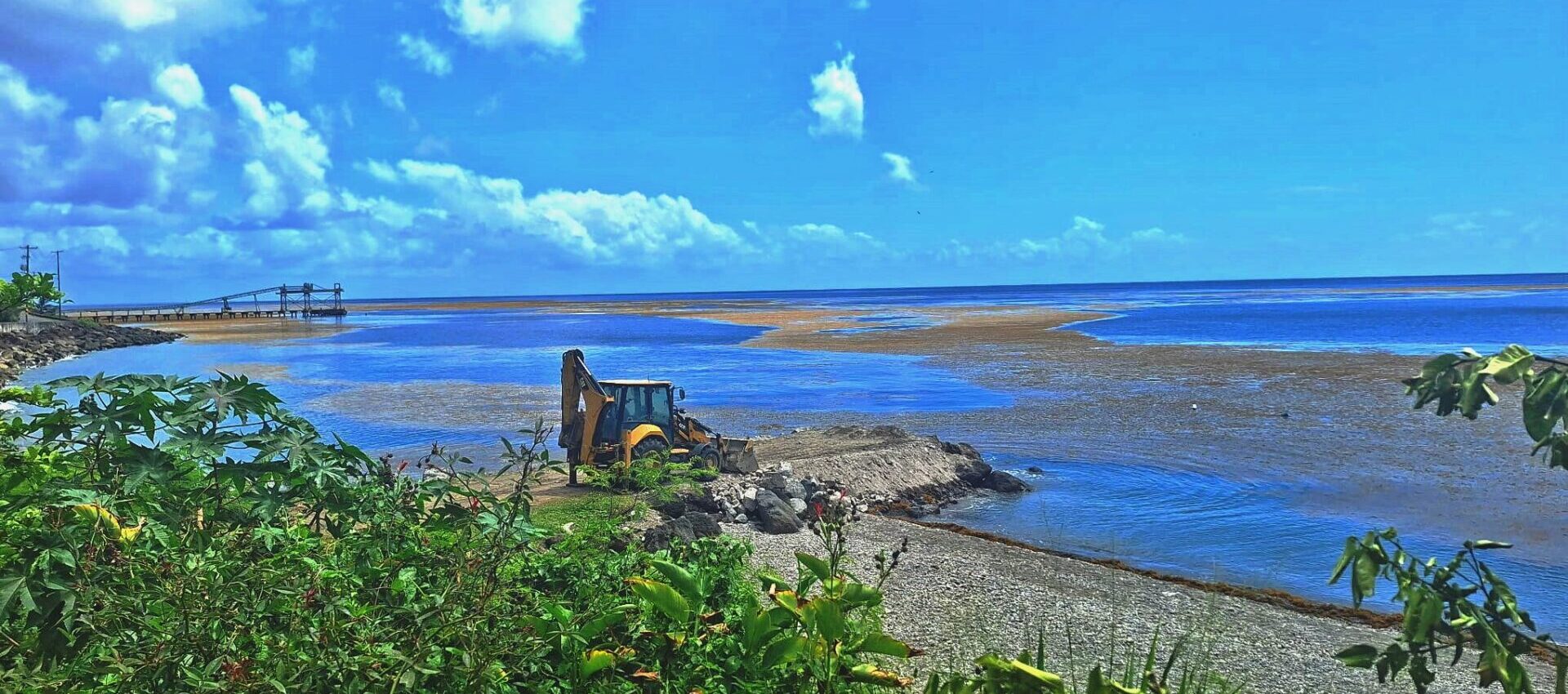
The Caribbean region, long plagued by annual massive influxes of invasive sargassum seaweed that devastate coastal ecosystems, public health, tourism revenues and local livelihoods, has taken a major step forward in coordinated action: Expertise France and the Guadeloupe Regional Council have formally signed a Memorandum of Understanding (MoU) to align their existing anti-sargassum initiatives for more impactful, region-wide progress.
The partnership brings together two of the Caribbean’s largest ongoing sargassum management projects: the SARSEA project, funded by the Agence Française de Développement and executed by Expertise France, and SARG’COOP II, a regional program headed by the Guadeloupe Region and backed by European Union INTERREG grant funding. Combined, the two initiatives represent a total pooled investment of €11 million, all dedicated to advancing sargassum monitoring, cleanup, processing and long-term management across Caribbean territories.
Speaking after the signing, Ms. Gustave-Dit-Duflo, Vice-President of the Guadeloupe Region’s Environmental Commission, underscored that collaboration rather than siloed competition is the only path to meaningful change. “Our two programs bring nearly €11 million in collective investment to this crisis, and we have committed to this partnership to ensure these resources work in synergy, not against each other, to build robust, actionable solutions,” she explained.
Under the terms of the agreement, the partners have outlined clear shared commitments: eliminating duplicated work through full transparency, pooling open access to research, data and project deliverables to strengthen consistent regional action, co-hosting regional and international advocacy and knowledge-sharing events, providing coordinated support to local stakeholders including private businesses, non-governmental organizations and public authorities, and embedding two critical priorities—socio-economic impact assessment and women’s inclusion—across all program activities.
Officials note the core purpose of the MoU is to strengthen technical and institutional coordination between the two organizations, while facilitating the exchange of scientific data, technical expertise and innovative management strategies. The partnership also includes provisions for joint research into new commercial and practical uses for harvested sargassum, turning a harmful invasive species into a potential economic resource for local communities.
The overarching mission of the aligned effort is to cut the environmental, social and economic harm sargassum inflicts on Caribbean communities, while advancing scientific understanding of the growing sargassum phenomenon and strengthening evidence-based public policy responses across the region.
Mathilde de Williencourt, Deputy Director of the Sustainable Development Department at Expertise France, reaffirmed her organization’s long-term commitment to Caribbean nations and French overseas territories facing the sargassum crisis. “Through the SARSEA project, and in close coordination with the Guadeloupe Region under the SARG’COOP framework, Expertise France is proud to support the rollout of integrated sargassum management, help build a resilient, connected regional sargassum value chain, and advance cross-regional scientific cooperation to deepen our understanding of this crisis and inform research-backed policy,” de Williencourt said. “This partnership strengthens our commitment to the Caribbean and its overseas territories, by leveraging the deep French institutional expertise already present in the region.”
To keep the partnership aligned, the two organizations will put in place shared governance structures, including regular coordination meetings and intentional alignment with other existing regional sargassum initiatives. Leaders behind the new agreement believe this collaborative model will pave the way for more effective, sustainable and unified action across the entire Caribbean.
By pooling technical expertise, financial resources and on-the-ground regional knowledge, the partners aim to turn the shared challenge of sargassum into a catalyst for deeper Caribbean cooperation, innovative solutions and long-term regional resilience to future sargassum influxes.