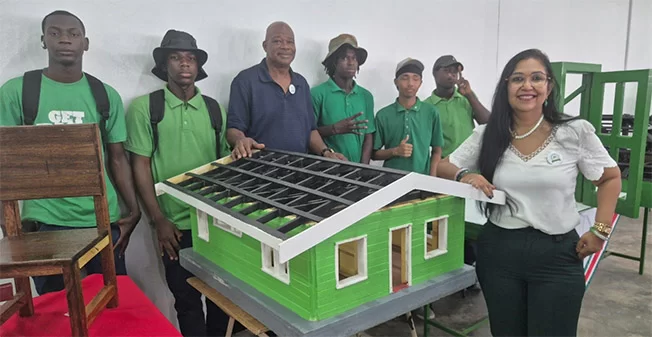
To mark its 45th year of service, the Stichting Arbeidsmobilisatie en Ontwikkeling (SAO), Suriname’s largest public vocational training institution, hosted a one-of-a-kind Skills Expo on its own grounds on May 21, showcasing dozens of vocational programs and hands-on skill demonstrations to hundreds of visiting students and community members.
The compact skills fair drew heavy public interest to exhibits covering high-demand trades: refrigeration technology, automotive assembly, construction, nursing, and tailoring stood out as the most popular stops for attendees, most of whom were secondary school students from neighboring VOS and VOJ institutions. Current SAO trainers and enrollees led live skill demonstrations, answered questions about program curricula and career pathways, and even staged an educational sketch for visiting officials including Deputy Minister Raj Jadnanansing. The performance, centered on a labor inspection visit to an employer violating Suriname’s labor laws, ended with a clear educational takeaway: a formal fine for the non-compliant business owner, highlighting SAO’s role in advancing fair labor practices across the country.
As the nation’s leading public provider of foundational training, upskilling, reskilling, and retraining services, SAO has carved out a critical niche supporting vulnerable groups in the labor market, SAO Director Joyce Lapar told attendees at the expo. The institution prioritizes youth and high school dropouts, but also welcomes adult learners seeking a career change later in life. It currently offers programming across more than a dozen in-demand fields, including nursing assistance, residential electrical installation, welding, automotive body repair, defensive driving, information and communications technology, and textile trades. Programs start at the foundational assistant level, with pathways for advanced learners—such as welding students—to progress all the way to specialized Level 4 certification.
While Lapar emphasized that SAO has more than proven its public value over its 45 years of operation, she also outlined pressing unmet needs that are holding the institution back from expanding its impact. The hands-on, practical focus of SAO’s training comes with high ongoing operational costs, she explained: daily use of electricity, specialty chemicals, raw textiles, and other training materials drives expenses that far outpace current public funding. Government subsidies currently cover only staff salaries and core day program costs, allowing SAO to keep monthly tuition for day students at just 200 Surinamese dollars, a rate accessible to low-income learners. To close the funding gap, SAO has pursued alternative revenue streams including external project partnerships, private donor support, and market-priced evening training programs, which can cost up to 60,000 Surinamese dollars depending on the field of study.
Beyond funding, Lapar highlighted two longstanding policy priorities for the institution: the standardization of vocational curricula across Suriname’s training sector, and formal legal recognition for most SAO programs. Currently, only SAO’s nursing assistance program holds official recognition from the Ministry of Public Health, Welfare and Labor, leaving graduates of other high-demand trades without formal credentialing that would allow them to access higher-wage jobs and further education. The 45th anniversary expo served as both a celebration of SAO’s decades of service and a call to action for policymakers and private stakeholders to step up support for the critical work the institution does to build Suriname’s skilled workforce.