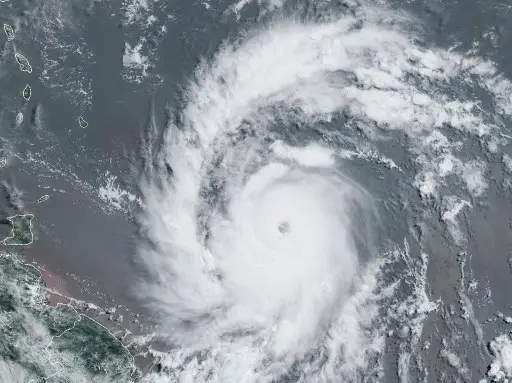
US weather researchers have delivered an early forecast for the 2026 Atlantic hurricane season that offers cautious optimism, but with a clear warning for coastal communities: even a mild season can bring catastrophic destruction. In an official briefing Thursday, National Oceanic and Atmospheric Administration (NOAA) leadership announced that forecasters project a below-normal year for storm activity in the Atlantic, driven largely by an expected El Niño climate pattern. Meanwhile, the eastern and central Pacific basin is facing a 70% probability of above-normal storm activity this coming season, according to NOAA data.
Neil Jacobs, NOAA administrator, explained that El Niño, a natural cyclic climate phase, shapes this forecast through its well-documented global weather impacts. The phenomenon generates strong vertical wind shear across the Atlantic, a disruptive force that can tilt or tear apart developing tropical systems before they have the chance to strengthen into large hurricanes. This dynamic typically suppresses overall storm counts in the Atlantic. For the Pacific, however, El Niño has the opposite effect, creating more favorable conditions for tropical storm development that puts at-risk regions including Hawaii and Mexico at higher likelihood of storm impacts.
Even with the projected below-normal season, NOAA officials stressed that preparation remains non-negotiable. Jacobs noted that a mild Atlantic season would still bring between 8 and 14 named storms, with 1 to 3 of those expected to strengthen into major hurricanes—storms packing sustained wind speeds of more than 111 miles per hour (178 kilometers per hour). Unlike many storm systems that form out at sea, Atlantic hurricanes disproportionately threaten populated coastal areas, putting more lives and infrastructure at risk of severe damage. “Don’t let words like below average… change the way you’re prepared,” urged Ken Graham, director of the National Weather Service. Officials also added that the early forecast does not include predictions on whether any storms will make landfall, emphasizing that all at-risk communities should maintain standard preparedness protocols ahead of the June-to-November Atlantic season. The Pacific hurricane season, by comparison, begins in mid-May and also runs through November. This early forecast marks the first time NOAA has released a similar pre-season projection since 2015.
The forecast comes with an added layer of uncertainty rooted in human-caused climate change, experts note. Rising global temperatures driven by fossil fuel emissions have pushed Atlantic sea surface temperatures to consistently higher levels, which could offset some of El Niño’s suppressing effect on storm development. Graham highlighted this uncertainty in a post-briefing statement, noting that “there is still uncertainty in how each season will unfold.”
The projection also follows on the heels of a devastating 2025 Atlantic season, which brought four major hurricanes including Category 5 Hurricane Melissa. The storm made landfall in Jamaica as one of the most powerful tropical systems ever recorded in the region. Fueled by abnormally warm Caribbean sea surface temperatures, Melissa rapidly intensified to Category 5 strength and moved across the island at a slow, walking pace, extending the exposure to deadly rain, storm surge and wind that left a trail of catastrophic damage. A study from Imperial College London later confirmed that human-caused climate change made Melissa four times more likely to form. Climate scientists have repeatedly documented that rising global temperatures are increasing the frequency of both rapid storm intensification and slow-moving stalled storms, two traits that drastically increase the destructive potential of Atlantic hurricanes.