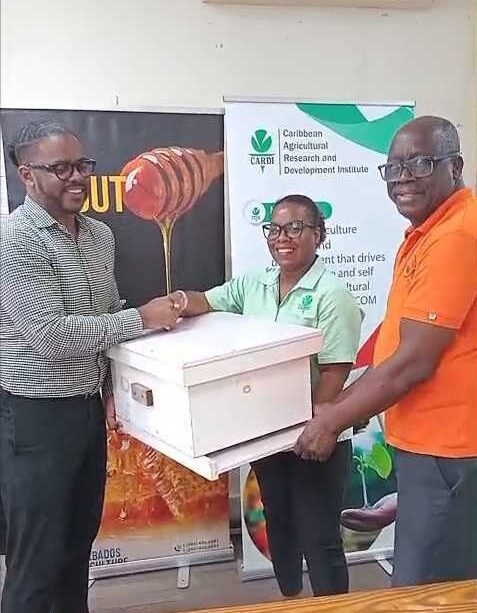
Against a backdrop of mounting challenges to global food systems and local apiculture, two Barbadian agricultural organizations have launched an ambitious six-month pilot initiative aimed at integrating professional managed honeybee pollination services into the island nation’s mainstream farming practices. Unveiled to coincide with World Bee Day, the collaborative project between the Caribbean Agricultural Research and Development Institute (CARDI) and the Barbados Apiculture Association (BAA) will conduct rigorous, data-focused scientific trials across a one-acre dedicated agricultural site. Over the duration of the program, researchers will quantify the exact impact of managed pollination on crop yield, produce quality, and overall crop performance, with initial research focused on high-value cucurbit crops including cucumbers, squash, and pumpkins. The launch of this initiative comes at a make-or-break moment for Barbados’s apiculture sector, which is currently battling multiple interconnected threats: soaring import costs for essential beekeeping equipment, widespread praedial larceny of hives, and the growing disruptions of a changing climate. The crisis deepened recently when extensive wildfires swept across the island, destroying dozens of managed hives and eliminating large swathes of the natural foraging habitat that wild and managed bees depend on for survival. At the official launch ceremony, BAA president Graham Belle framed the project as a strategic turning point for Barbadian agriculture, positioning it as a shift toward data-informed, sustainable farming that directly protects the livelihoods of the island’s smallholder and commercial farmers. “Gathering here on World Bee Day, we are reminded that pollinators are far more than just wild insects moving through our landscape,” Belle noted in his address. “They are foundational to Barbados’s economic, nutritional, and environmental infrastructure. This research is not centered solely on increasing honey output. Instead, it aims to quantify the economic and ecological value that apiculture delivers as a critical support service for mainstream agriculture. By investing in our local beekeeping sector today, we are paving the way for smarter, more sustainable farming, reducing our reliance on imported food and agricultural inputs, and building the foundation for Barbados’s native honey to establish itself as a premium global brand.” Under the partnership structure, CARDI is providing full financial and administrative backing for the pilot, while BAA contributes on-the-ground technical expertise and hands-on management of the trial site. CARDI’s country representative for Barbados, Christina Pooler, emphasized that the trial will act as a critical proof of concept to demonstrate the concrete, measurable benefits that pollinator integration brings to the island’s entire food system. Beyond just tracking crop yields, the project will also monitor long-term hive health and track key environmental stressors impacting bees, including local wind patterns and pesticide drift from adjacent farmland and residential areas. “Around the world, there is an urgent growing need to expand both the population and diversity of pollinator species to make our global food systems more resilient, productive, and adaptable to climate change,” Pooler explained. “This project will act as a catalyst to document the economic and ecological value of apiculture here in Barbados, with the empirical data we collect set to guide future research and shape evidence-based policy recommendations for the island’s beekeeping sector. By pairing rigorous scientific research with public outreach and training, we aim to strengthen the critical connection between academic science and on-the-ground agricultural practice, empowering both farmers and beekeepers to take action to protect our shared food security.” A core, often overlooked component of the six-month initiative is hands-on public outreach and practical logistical training for both crop producers and new beekeepers. This training program is designed to bridge the long-standing communication and collaboration gap between Barbados’s crop farming community and its beekeeping sector, while also working to reduce widespread public fear and misinformation about bees. The collaborative, community-centered approach of the project has earned widespread acclaim from local agricultural leaders. James Paul, chief executive officer of the Barbados Agricultural Society (BAS), noted that the island’s farming community has been calling for exactly this type of targeted, applied research to address pressing on-the-ground production challenges for years. “One of the top requests our sector has made consistently in recent years is for more applied research, where research institutions work directly alongside our farming community to solve the problems we actually face,” Paul explained. “It’s incredibly encouraging to see researchers stepping up to partner with farmers, learn firsthand about the challenges we navigate, and work collaboratively to improve outcomes. When this trial concludes, hundreds of local beekeepers across the country will be able to draw on its findings to grow and strengthen their own operations.” As the trial enters its initial implementation phase, both CARDI and BAA have shared long-term ambitions: they hope the empirical data collected through the pilot will lay the groundwork for a permanent, national framework to embed managed pollination services into Barbados’s official national agricultural strategy, creating a more resilient and food-secure future for the entire island.