Nestled at the end of the decommissioned E.T. Joshua Airport runway, a transformative healthcare infrastructure project is steadily taking shape in St. Vincent and the Grenadines: the Arnos Vale Acute Care Hospital (AVACH), a landmark initiative born from 45 years of diplomatic partnership between Taiwan and the Caribbean nation, rooted in the shared values of interconnected development and people-centered progress.
This new acute care facility is far more than a construction project—it is a tangible demonstration of Taiwan’s longstanding commitment to advancing mutual progress alongside St. Vincent and the Grenadines, a partnership that has already delivered critical connectivity infrastructure ranging from Argyle International Airport to the modernization of Kingstown Port. Once fully completed, AVACH will deliver comprehensive acute care and expand access to specialized allied health services, fundamentally reshaping how routine healthcare is delivered across the country.
For generations of Vincentians, accessing advanced specialized care required costly, burdensome travel to other regional medical hubs. That reality is set to change with the opening of AVACH, which will bring life-saving care within the country’s borders, eliminating the financial and logistical barriers that have long limited access. Beyond expanding service access, the hospital will also strengthen St. Vincent and the Grenadines’ overall public health capacity, boosting the nation’s resilience to respond to domestic health crises and cross-border global health emergencies.
AVACH is not the only example of the two nations’ deep collaborative work in public health. The Public Health Emergency Response System Enhancement Project, a four-year joint initiative, has delivered tailored training in emergency response and public health safety to more than 200 local police officers, firefighters, and medical professionals. Trained personnel from the program have already provided critical medical support for major international events hosted by St. Vincent and the Grenadines, including the CELAC Summit and the Cricket World Cup, serving both local residents and visiting global leaders while strengthening the country’s capacity to engage with the international community.
As the 79th World Health Assembly (WHA) gets underway in Geneva, Switzerland from May 18 to 23 under the official theme “Reshaping Global Health — Shared Responsibility,” Taiwan is highlighting its proven track record as a capable, willing partner ready to share its public health expertise and experience with the global community. Leveraging its world-leading information and communications technology sector, Taiwan has built a world-class domestic healthcare system anchored by its comprehensive National Health Insurance program, cloud-based MediCloud infrastructure, widespread adoption of electronic medical records (implemented in 2010), a national telemedicine program launched in 2020, and a fully developed smart healthcare ecosystem that the country is eager to share with partners across the globe.
The COVID-19 pandemic underscored a universal truth: real-time, cross-border information sharing is irreplaceable in the fight against transboundary emerging infectious diseases that do not recognize national borders. Despite being wrongfully excluded from the World Health Organization (WHO) and the WHA due to political pressure, Taiwan has leveraged its technological strengths to build a comprehensive, responsive infectious disease surveillance system. The country has consistently been among the first to detect and report new emerging cases to the WHO, sharing full viral gene sequences promptly to enable the global public health community to prepare and respond rapidly.
At this year’s WHA opening, WHO Director-General Dr. Tedros Adhanom Ghebreyesus affirmed that the highest attainable standard of health is “not as a luxury for some, but a right for all.” Yet Taiwan remains locked out of participation in this year’s assembly, a contradiction that undermines the WHO’s stated core values. Taiwan is calling on the WHO to uphold its founding commitments to professional neutrality and allow Taiwan’s meaningful participation in all WHO meetings, activities, and formal mechanisms. Including Taiwan would strengthen the comprehensiveness and effectiveness of the global health architecture, letting this responsible, trusted global contributor fulfill its shared responsibility in reshaping the future of global public health.
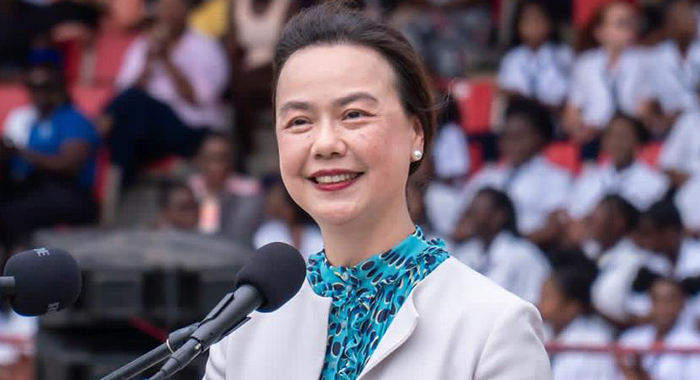
This op-ed is written by Fiona Huei-Chun Fan, Taiwan’s ambassador to St. Vincent and the Grenadines. The views expressed are solely those of the author and do not necessarily represent the official editorial stance of iWitness News.