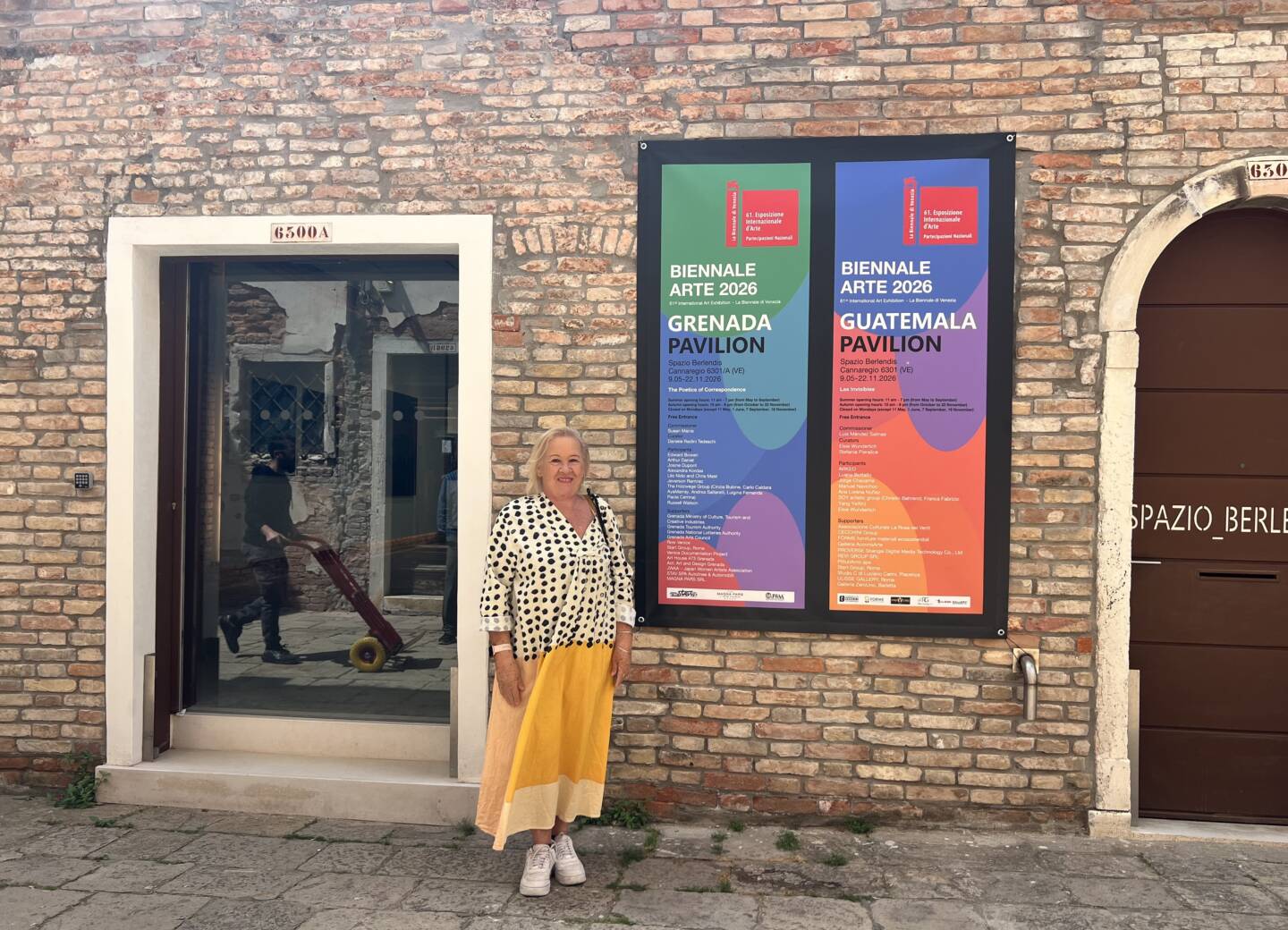
On May 8, 2026, the opening day of the 2026 Venice Biennale, four regional artists gathered in the Grenada Pavilion to share their transformative experiences bringing Caribbean creativity to one of the world’s most prestigious contemporary art stages. Curated by commissioner Susan Mains, this iteration of the Grenada Pavilion marked a deliberate shift toward cross-regional collaboration, inviting creators from Grenada, Barbados, and Trinidad to share space, narrative, and creative energy with a global audience of artists, curators, and visitors.
Across every conversation, a unified thread of excitement, gratitude, and purpose emerged: the opportunity to center Caribbean artistic voices on an international platform has not only validated the region’s creative output but also sparked profound personal and professional growth for each participating creator. All four artists expressed deep pride in representing their home nations and the broader Caribbean community, while highlighting how the biennale’s global context has renewed their creative vision.
Russell Watson, a multidisciplinary artist based in Barbados, brought a longstanding connection to the Grenada Pavilion’s Venice Biennale journey. Having attended the very first Grenada Pavilion presentation in 2015, he recalled his shock at seeing the small Caribbean nation claim space at the global event, and has followed the pavilion’s work ever since. When Mains extended an invitation to join the 2026 cohort, he jumped at the chance to participate in the pavilion’s new regional inclusion initiative.
For Watson, the experience affirmed that his creative practice aligns with key global contemporary art movements. Walking through the biennale’s hundreds of exhibitions, he noted a widespread, shared preoccupation among global creators with humanity’s fractured relationship with the natural world, and the growing intersection of environmental themes and spiritual inquiry – a thematic overlap that mirrors his own work. He also pointed to the widespread embrace of video as a fine art medium at the biennale, echoing his own longstanding interest in the format and confirming that video has firmly secured its place in top-tier contemporary practice. Watson emphasized that the pavilion’s commitment to regional integration sends a powerful message: Caribbean nations do not need to be separated by the waters that define them, but rather can share space, build community, and amplify their collective voices. He expressed hope that this collaborative model will continue and expand to include deeper support for creators from more Caribbean states in future editions.
Jeverson Ramirez, a celebrated Grenadian steelpan virtuoso and recording artist, marked his first visit to Venice with the 2026 pavilion. He described the experience as unexpectedly welcoming, saying the warm energy of the global art community made the far-off European city feel like home. For Ramirez, the greatest honor was bringing the distinct cultural flavor of Grenada and the Caribbean to a new audience, sharing his love of traditional steelpan music with visitors from across the globe.
Like Watson, Ramirez praised the pavilion’s collaborative regional model, echoing the idea that Caribbean waters connect rather than divide the region’s islands and their peoples. Sharing exhibition space with artists from across the Caribbean and even other nations, including Guatemala, has created rich opportunities for cultural exchange, he said. Ramirez highlighted the shared historical experience of Caribbean nations – from the legacy of colonial slavery and plantation economies focused on cocoa, sugar, bananas, and nutmeg – that shapes shared cultural values, perspectives, and creative themes today. Bringing these connected voices together in one pavilion, he argued, makes their collective message even stronger.
Edward Bowen, a veteran painter based in Trinidad, called the invitation to join the Grenada Pavilion a life-changing surprise. As an artist with 40 years of painting experience, he said the opportunity to engage with thousands of global artworks and perspectives at the biennale has been an unparalleled creative reset, comparing himself to a sponge absorbing new ideas and inspiration that will fuel his future work.
Bowen stressed that the Grenada Pavilion’s choice to open its doors to cross-regional Caribbean participation is a bold, necessary step for the art world. Inclusivity is far more common in music than in visual arts, he noted, making this initiative all the more important. He called for less territorial thinking around national artistic representation and a more democratic, thoughtful approach to lifting up regional Caribbean creators. Back home in Trinidad, he plans to leverage his Venice experience to support more local artists in accessing international opportunities like this.
Arthur Daniel, a Grenadian photographer and videographer, said he arrived at the biennale with an open mind and no expectations of the scale and impact of the event – and left deeply transformed. Grateful to Mains, sponsors, and supporters for the opportunity, Daniel described wandering Venice’s canals and pavilions as a profoundly spiritual experience, where every interaction with art and fellow creators opens up a new dimension of understanding.
For Daniel, the most meaningful takeaway has been witnessing how his own photographic work connects with global audiences in deeply personal, unexpected ways. Walking 16,000 steps a day through the biennale grounds left him physically energized rather than tired, he said, because his spirit was being fed by constant inspiration. The experience has accelerated his growth as an artist, expanding his understanding of the global art ecosystem exponentially, and he said he has grown tenfold across every dimension – mental, physical, emotional, and spiritual. For Daniel, the greatest reward is not seeing his work displayed, but gaining the experience to educate and lift up other emerging creators in Grenada and across the Caribbean, helping them understand what global art practice entails. He emphasized that the Venice Biennale’s greatest magic lies in slowing down, opening one’s mind, and letting the art and energy of the space speak for itself.
For this cohort of Caribbean creators, the Grenada Pavilion at the 2026 Venice Biennale is more than an exhibition opportunity: it is a landmark step toward more inclusive regional collaboration and a powerful confirmation that Caribbean creativity holds an essential place in the global art conversation.