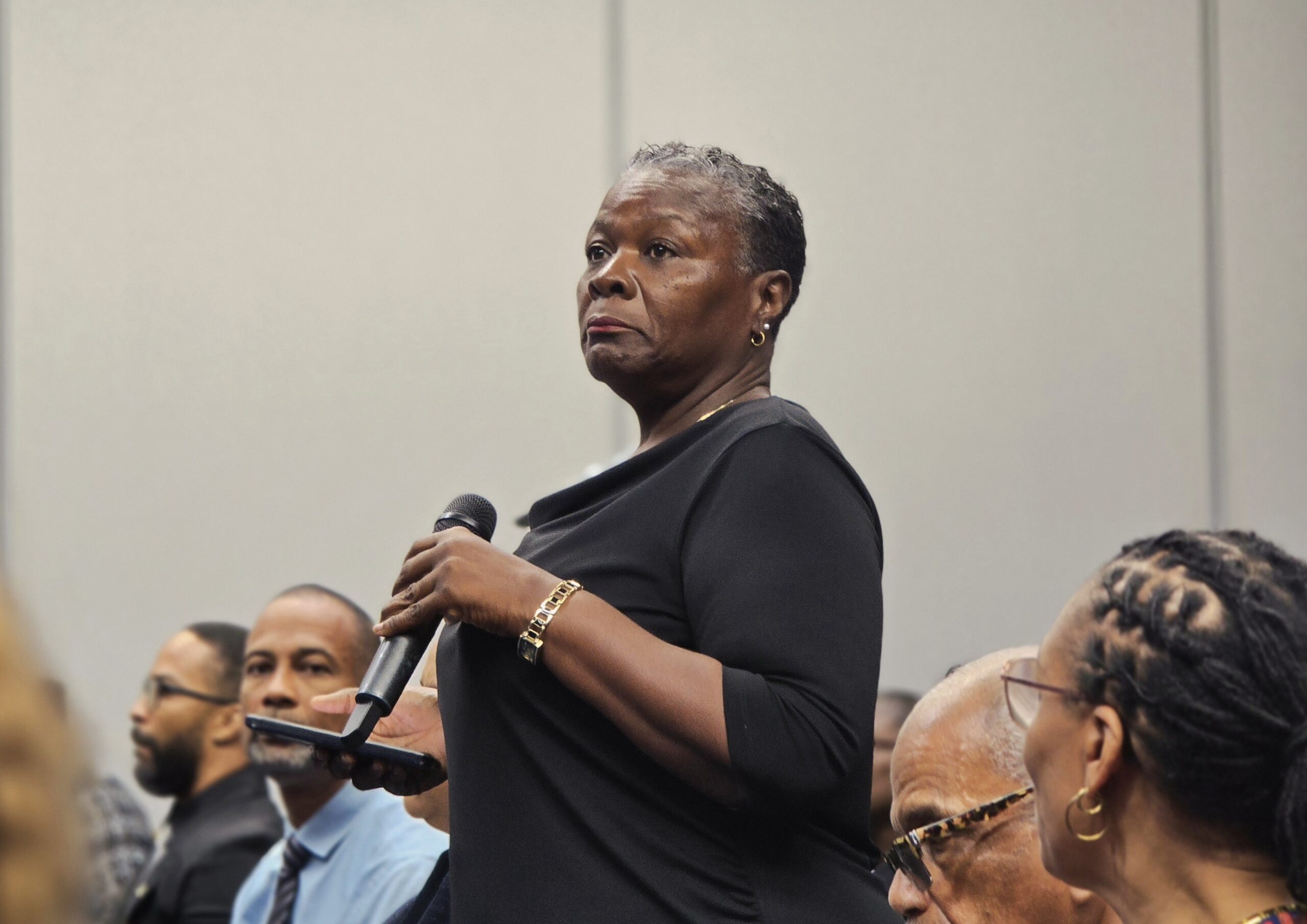
On a Monday focused on advancing Saint Lucia’s new Draft National Gender-sensitive Migration Policy, prominent local activist Catherine Sealys, head of advocacy organization Raise Your Voice Saint Lucia, confronted a panel of senior government and law enforcement representatives with hard questions over the recent remand of 28 Haitian migrants to the island nation’s maximum-security Bordelais Correctional Facility.
Sealys has spent months speaking out against what she identifies as systemic, race-based inconsistencies in how Saint Lucia authorities handle different groups of vulnerable migrants. In a pre-briefing social media post, she laid out a stark pattern of unequal treatment: local government agencies including immigration, law enforcement, social services and the Ministry of Home Affairs regularly reach out to her organization for support when undocumented, trafficked or otherwise at-risk migrants are white. But when the vulnerable migrants in question are Black Haitians, Sealys says no outreach to civil society partners ever happens.
During the open panel discussion, she doubled down on this accusation, noting: “We are inundated every day from immigration, from home affairs, from major crimes, from everybody – ‘Can you help this person, can you help this person?’ – but when 28 Haitians landed here, nobody called us.”
Law enforcement officials have confirmed that all adult members of the group of Haitian migrants who arrived in Saint Lucia were charged with illegal entry to the country and ordered remanded to custody at Bordelais. Minors who were part of the migrant group were separated from their parents and are not being held in prison, with police confirming the children are in stable condition, declining to share further details on the case.
Responding to Sealys’ questioning during the panel was Southern Division Immigration Supervisor Inspector Ken Charlery, one of the government stakeholders who helped shape the draft migration policy. Charlery acknowledged that he shared many of Sealys’ concerns about gaps in current migration management, but emphasized that his team acted strictly within the bounds of existing Saint Lucian law when handling the Haitian group.
“At this time, we’re guided by the Immigration Act and therefore, when we are faced with situations relating to migrants, that is the legislation that guides our operation,” Charlery explained. “The act does make provisions that if there’s an investigation and there’s need to deem an individual a prohibited migrant, there is provision for them to be housed at a police station or the prison. That is what we currently have in our legislation.”
Sealys also used the high-profile briefing to draw attention to a longstanding gap in Saint Lucia’s migration framework: the small Caribbean nation is not a signatory to the 1951 UN Refugee Convention or its 1967 Protocol, meaning it has no formal, standardized process for assessing refugee status for people fleeing instability in neighboring countries like Haiti. This absence of clear humanitarian protocols leaves vulnerable migrants in legal limbo, she argued, highlighting the urgent need for a updated, compassionate national migration policy that centers humanitarian needs.
Aiasha Jn Baptiste, Legal Officer at the Ministry of External Affairs, responded to Sealys’ intervention by confirming that policymakers are already working to address gaps in the country’s migration and refugee framework. She noted that accession to the Refugee Convention is under active consideration, particularly in light of the case of the 28 Haitian migrants, and thanked Sealys for elevating the issue.
Julian Dubois, Saint Lucia’s Ambassador for Diaspora Affairs, echoed that sentiment, saying the controversy underscored the critical need for the new gender-sensitive migration policy, which requires coordinated buy-in from all government agencies and a whole-of-government approach to be effective. “It brings to the fore the importance of what we’re doing now, you know, the necessity for this policy with buy-in from all agencies and a whole-of-government approach. So hopefully, all agencies could keep their hands on deck and realise that it’s a sad situation,” Dubois said.
Once public consultation is complete, the Draft National Gender-sensitive Migration Policy will be submitted to the Saint Lucian Cabinet for a final vote on its adoption and implementation timeline.