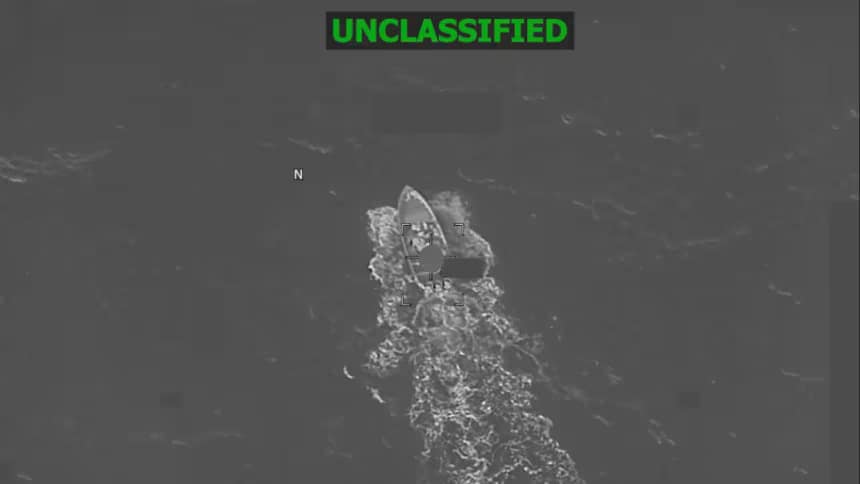
The U.S. Defense Department’s independent internal oversight body has announced it is opening a formal evaluation of counter-drug operations carried out by U.S. Southern Command (SOUTHCOM), a major military command responsible for operations across the Caribbean and Pacific. These operations, which have involved lethal airstrikes against vessels suspected of carrying drug shipments, have faced growing backlash and legal scrutiny from multiple stakeholders since the campaign launched last fall.
According to a May 11 correspondence from the Pentagon’s Office of the Inspector General (IG), the core goal of the probe is to verify whether SOUTHCOM adhered to formally authorized targeting protocols when planning and executing these strikes. Since the start of the campaign, codenamed Operation Southern Spear, U.S. military forces have targeted nearly 60 suspected drug trafficking boats, resulting in the deaths of more than 190 people, official records show.
An IG spokesperson confirmed to CNN that the review covers the full interagency targeting process for suspect vessels within SOUTHCOM’s area of responsibility, as a core component of the broader Operation Southern Spear initiative. The oversight body also clarified that the review was self-initiated, growing out of its continuous routine assessment of ongoing Pentagon operations, rather than being ordered by external stakeholders. As of press time, CNN has reached out to both the Pentagon and SOUTHCOM to request additional comment and details on the evaluation, with no immediate response.
The Trump administration has defended the lethal campaign since it launched in September last year, framing the operations as part of a formal “armed conflict” against transnational drug cartels and classifying all people killed in the strikes as enemy combatants. As CNN first reported in October 2025, the administration’s legal justification rests on a classified Department of Justice legal opinion that argues the president has inherent authority to approve deadly force against a wide range of cartel operatives, on the grounds that these groups pose an imminent security threat to U.S. citizens.
Concerns over the legality of the strikes have circulated within the military establishment for months. CNN previously reported that senior U.S. military leaders held serious reservations about the campaign’s legality. Adm. Alvin Holsey, the former head of SOUTHCOM, publicly clashed with Defense Secretary Pete Hegseth over the pace and scope of the operations just weeks before Holsey announced his retirement, just 12 months after he took up his command post. Two anonymous sources familiar with the conflict confirmed at the time that Hegseth argued Holsey was not moving aggressively enough to dismantle drug trafficking networks operating in the Caribbean, and repeatedly complained that the command was not sharing sufficient operational data with his office.
Scrutiny on Capitol Hill intensified late last year after news emerged that U.S. forces had carried out a secondary strike targeting survivors of an initial attack on a suspected drug boat. Multiple lawmakers, particularly congressional Democrats, raised urgent alarms over the strike, with several going so far as to argue the action could meet the legal definition of a war crime.
In recent months, the public has seen a slowdown in the frequency of confirmed strikes, a shift that followed the U.S. military’s capture of former Venezuelan President Nicolas Maduro. Despite the slowdown, however, operations have continued: the most recent confirmed strike, carried out on May 8, resulted in two deaths, according to official SOUTHCOM statements.