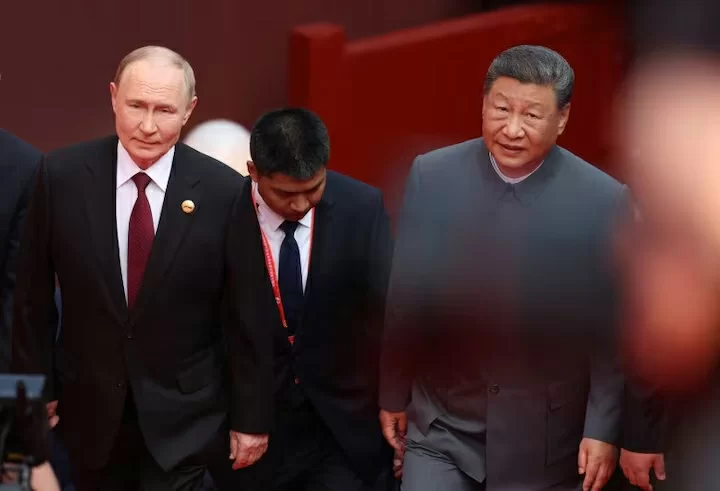
Ahead of his two-day official state visit to Beijing starting May 19, Russian President Vladimir Putin has hailed the bilateral relationship between Moscow and Beijing as having reached a truly unprecedented level, marking this trip as his 25th official visit to China. The high-profile meeting comes hot on the heels of a recent visit to China by U.S. President Donald Trump, underscoring the shifting dynamics of great power diplomacy in 2026.
In a pre-visit video address, Putin emphasized that regular top-level summits and reciprocal visits between the two leaders are critical to unlocking what he described as the boundless potential of bilateral cooperation. He added that the Russia-China partnership is rooted in three core principles: mutual trust, equal respect for one another’s interests, and a shared commitment to upholding national sovereignty and territorial integrity for both states.
Widely framed as an all-weather strategic partnership, Russia and China’s alliance has persisted and deepened despite sustained diplomatic and economic pressure from Western capitals. While China has maintained its public stance as a neutral peace broker in the ongoing Russia-Ukraine conflict, both leaders have repeatedly reaffirmed mutual backing on core foreign policy priorities, expanding collaboration across political, economic, and humanitarian spheres in recent years.
Regional security analysts, including Ian Storey from Singapore’s ISEAS-Yusof Ishak Institute, project that the Beijing summit will send a clear, unmistakeable message that long-running U.S. efforts to drive a wedge between Moscow and Beijing are doomed to fail. For China, the meeting also serves a key diplomatic goal: positioning the country as a stable, predictable global power at a time of widespread global uncertainty marked by escalating trade disputes, protracted regional conflicts, and ongoing global energy crises.
Economic ties between the two nations have grown dramatically in recent years, with bilateral trade volume surpassing the $200 billion threshold, a milestone Putin highlighted as tangible proof of the strength of the bilateral economic bond. Today, nearly all bilateral trade transactions are settled in Russian rubles and Chinese yuan, a shift that aligns with both countries’ efforts to reduce dependence on Western-dominated reserve currencies. High on the summit’s agenda is progress on major cross-border energy infrastructure projects, most notably the continued expansion of the Power of Siberia 2 gas pipeline, a landmark project that remains in active negotiations over final pricing agreements.
Power of Siberia 2 is designed to redirect large volumes of Russian natural gas that were previously exported to European markets eastward to meet China’s growing energy demand, a strategic reorientation of Russia’s energy trade following its 2022 invasion of Ukraine.
Beyond energy and trade cooperation, the two countries are also deepening cultural and educational ties. Recent initiatives such as the Russia-China Year of Education have strengthened academic and people-to-people links, while a newly implemented reciprocal visa-free travel regime has removed barriers to tourism, business exchanges, and cross-border civilian interactions.
Against a backdrop of the U.S. grappling with ongoing challenges to de-escalate conflicts in Ukraine and the Middle East, Beijing is leveraging this high-profile diplomatic summit to reinforce its global image as a reliable pillar of global stability. The talks will also cover enhanced coordination and cooperation within multilateral frameworks that both countries belong to, including the United Nations, the BRICS bloc of emerging economies, and the Shanghai Cooperation Organization.
Closing his pre-visit remarks, Putin expressed confidence that the deepening partnership between Russia and China will not only deliver greater prosperity and security for both of their peoples, but also contribute to broader stability across the entire globe.