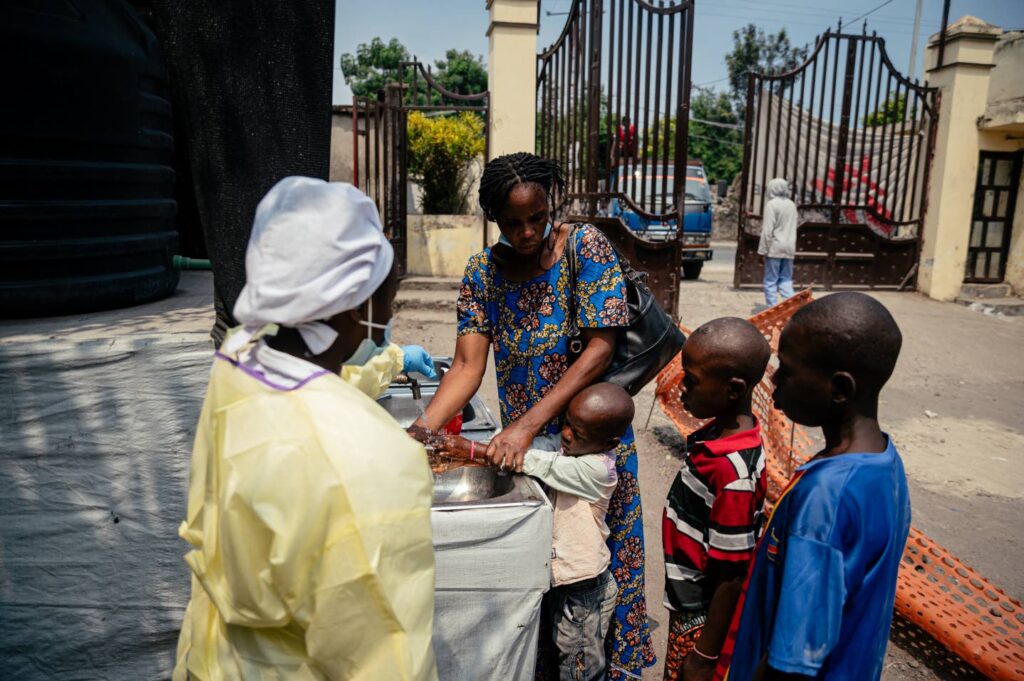
In a high-stakes announcement that has triggered global public health alert, the World Health Organization has designated the spiraling Ebola outbreak in the northeastern region of the Democratic Republic of the Congo as a Public Health Emergency of International Concern (PHEIC), the body’s second-highest global alert level. As of the latest official update from Congolese Health Minister Samuel-Roger Kamba released Sunday, the outbreak has already been linked to 91 suspected deaths and roughly 350 suspected cases, with a disproportionate impact on working-age adults and women: most infected individuals fall between 20 and 39 years old, and over 60% of all cases are female. Notably, most of these cases remain unconfirmed by laboratory testing, as only a small number of samples have been processed for formal verification to date.
The epicenter of the current outbreak is the DRC’s Ituri Province, a mineral-rich region bordering Uganda and South Sudan that hosts dense, high-volume cross-border population movement driven by widespread artisanal gold mining. This constant flow of people has raised urgent alarms among regional health bodies: the Africa Centres for Disease Control and Prevention has repeatedly warned that the virus carries a severe risk of spreading to neighboring East African nations, a scenario that could exponentially expand the scope of the crisis.
What makes this outbreak particularly challenging for global health responders is the specific strain of Ebola driving transmission: the Bundibugyo variant, a strain for which no licensed vaccines or targeted antiviral treatments currently exist. Unlike the Zaire strain that caused the largest Ebola outbreaks in recorded history, which can be prevented with existing approved vaccines, Bundibugyo leaves public health teams relying on basic infection control measures: rapid case detection, rigorous contact tracing, and strict adherence to personal protective protocols to slow transmission. This is not the first time the Bundibugyo strain has caused an outbreak; it was previously detected in limited outbreaks in Uganda in 2007 and the DRC in 2012, with historical mortality rates ranging between 30% and 50% of confirmed cases. Over the past half-century, Ebola outbreaks across Africa have claimed more than 15,000 lives total, underscoring the ongoing threat the virus poses to vulnerable, high-mobility frontier regions.