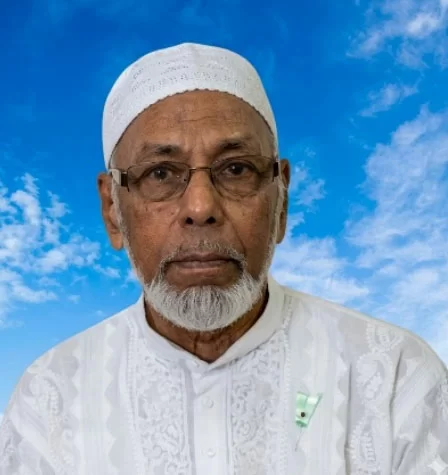
On May 17, 2026, Suriname lost one of its most prominent public figures: Toyabali “Hadji Toyab” Ahmadali, a former parliamentarian, government minister and respected Islamic community leader, passed away at the age of 95. Born on January 21, 1931, Ahmadali built a decades-long legacy that bridged Suriname’s political landscape and multi-religious civil society, leaving an enduring mark on the nation’s development.
Ahmadali’s educational and early career path laid the foundation for his future public service. After completing studies at the Suriname Law School, he moved to the Netherlands in 1958 to pursue higher education, graduating from the Amsterdam Social Academy in 1962. He returned to his home country shortly after, taking a position at Suriname’s Ministry of Justice and Police. There, he focused his work on parole reform and prison administration, eventually rising to lead the nation’s Delinquent Care Service.
His formal political career began in 1967, when he was elected to the Estates of Suriname, the country’s national legislative body. He won re-election in late 1969, and was quickly appointed Minister of Social Affairs in the cabinet led by Prime Minister J. Sedney, a post he held through the cabinet’s 1969 to 1973 term. Following the 1973 and 1977 general elections, he returned to parliament to continue his legislative work. In the early 1980s, he served first as an advisor to the Council of Ministers, and later as a member of the President’s Advisory Council.
One of Ahmadali’s most landmark policy contributions came during his tenure as Social Affairs Minister. He championed a critical shift in how Dutch development aid was allocated in Suriname, ensuring that not just the Surinaamse Islamitische Vereniging (SIV, Suriname Islamic Association) qualified for funding to build a children’s home and school complex, but also non-Islamic community organizations including the SMA and Sanatan Dharm. Before this policy change, which Ahmadali championed into implementation, almost all international development aid in Suriname was reserved exclusively for Christian organizations—an inequity he worked successfully to dismantle.
Beyond his political career, Ahmadali was a central and deeply respected leader within Suriname’s Muslim community, holding multiple key roles within the SIV for decades. He served as chairman of Imdadia Isha’at Islam, chaired the SIV Advisory Council, and acted as imam of Imdadia Isha’at Islam from 2004 through 2025. Throughout his life, he worked tirelessly to spread Islamic teachings, foster unity across all Surinamese communities, and provide spiritual guidance to people of all ages. His wisdom, dedication, and commitment to collective well-being earned him widespread respect across ideological and religious divides.
In recognition of his far-reaching contributions to public life and faith communities, Ahmadali was awarded numerous high honors, including being named a Knight of the Order of the Netherlands Lion and an Officer of the Order of the Yellow Star. He is survived by his wife, four children, four step-children and eight grandchildren. In a statement announcing his passing, his family noted that the loss of Ahmadali will be deeply felt for generations by his loved ones, the SIV community, and the entire nation. While his passing leaves a gap that cannot be filled, his legacy of service, inclusive policy-making, and intercommunity unity will continue to live on in the hearts and minds of all who knew him.