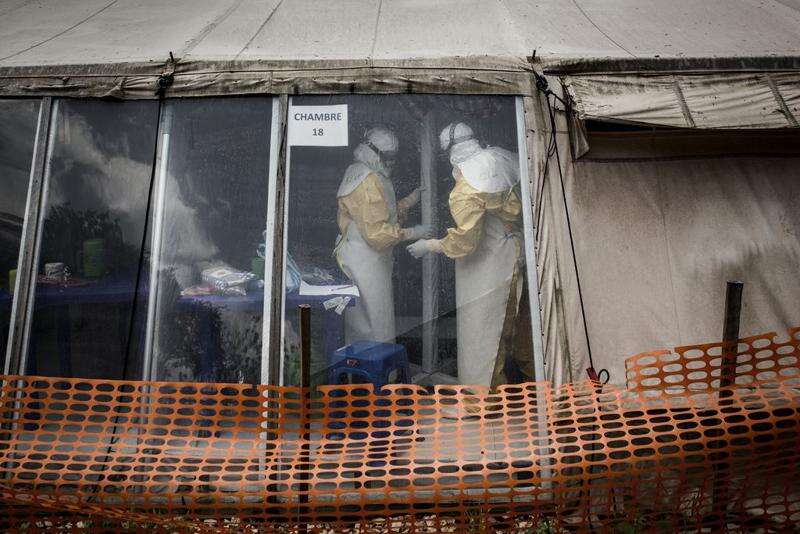
On Monday, the U.S. Centers for Disease Control and Prevention (CDC) announced that an American citizen working in the Democratic Republic of the Congo (DRC) has tested positive for Ebola, marking the first confirmed infection among U.S. personnel during the region’s current viral surge.
According to Satish Pillai, the CDC’s incident manager for the Ebola response, the infected individual developed symptomatic infection over the weekend and returned a positive diagnosis in late-stage testing Sunday. Evacuation plans are already in motion to transfer the patient to a specialized medical facility in Germany for advanced care. Alongside the evacuation of the confirmed case, U.S. authorities are also arranging to move six other people out of the DRC for mandatory close health monitoring, Pillai added.
Currently, around 25 U.S. personnel are based at the CDC’s field office in the DRC, and the agency is moving to deploy an additional senior technical coordinator to reinforce outbreak response operations per an official request. In a formal public statement, the CDC noted that as of Monday, it assesses the immediate risk of Ebola spread to the general U.S. public remains low. However, agency representatives emphasized that public health guidelines and risk assessments will be updated continuously as new data on the outbreak emerges, with precautionary measures adjusted if needed.
The current Ebola outbreak in the DRC is driven by a viral strain for which no licensed vaccine or targeted therapeutic treatment exists. The highly contagious hemorrhagic fever has already claimed dozens of lives in the region: per the latest data released Sunday by Congolese Health Minister Samuel-Roger Kamba, 91 deaths are already linked to the current surge in infections, and roughly 350 suspected cases have been documented across affected areas. Demographic breakdowns of the outbreak show most cases occur among adults aged 20 to 39, and more than 60% of confirmed and suspected cases are women.
The outbreak response unfolds against a shifting backdrop of U.S. global health policy: earlier this year, the administration of former President Donald Trump completed the formal withdrawal of the U.S. from the World Health Organization (WHO), a key global coordinator for pandemic and outbreak response. In recent days, senior U.S. officials have declined to address questions about how deep cuts to the U.S. Agency for International Development (USAID) — an agency that played a central role in containing previous Ebola outbreaks in Central Africa — have weakened current monitoring and containment efforts for the 2024 surge.
Despite these policy shifts, CDC officials have reiterated that the agency remains committed to collaborative response efforts, working closely with international public health partners and local health authorities in the DRC. The new public health measures outlined Monday include the continued deployment of additional CDC personnel to support outbreak containment work in high-risk regions, as well as targeted support for contact tracing operations and on-the-ground laboratory testing to confirm suspected cases quickly.