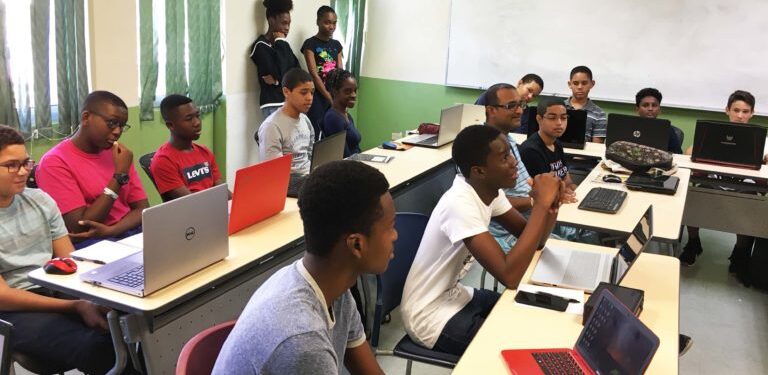
Against a backdrop of a rapidly shifting global economy that increasingly values digital expertise, the Caribbean Science Foundation (CSF) has launched a transformative new initiative: the Caribbean Computer Coding Workshops (C3W). The program was developed to address two pressing interconnected needs: the rising global importance of computer programming literacy and the urgent demand to expand and strengthen the Caribbean’s local digital workforce.
Workshop organizers emphasize that coding has evolved from a specialized technical skill to a foundational competency for entry-level employment across many sectors, mirroring the universal requirement for proficiency in word processing and spreadsheet tools today. As global economies continue their transition to knowledge-based industries, this shift has placed new pressure on regional education systems to adapt.
While many other developing regions have already scaled up investment in advanced digital training — covering high-demand areas from website development and mobile app creation to machine learning — the Caribbean has faced persistent barriers that have left it working to catch up. Significant existing skills gaps and uneven access to information and communications technology (ICT) education have put the region behind global competitors. In a public statement on the initiative, CSF acknowledged that “the Caribbean continues to lag in this race” for digital readiness.
To reverse this trend, the C3W initiative is intentionally designed to nurture a future-ready regional tech workforce, with a deliberate focus on including marginalized and underrepresented groups. Specifically, the program prioritizes low-income and at-risk youth, girls and young women, and people with disabilities — groups that have historically faced limited access to tech training opportunities in the region.
Beyond building basic coding skills, the program carries a set of broader strategic goals for the Caribbean’s digital ecosystem. It aims to grow the overall pool of skilled ICT workers across the region, spark early interest in science and engineering career pathways, and encourage more students to pursue advanced studies in computer science. It also seeks to stimulate a culture of local innovation and lay the groundwork for the growth of technology-focused entrepreneurship across the Caribbean.
CSF frames the long-term mission of C3W as twofold: to prepare local students for advanced study in STEM (science, technology, engineering, and mathematics) disciplines, and to strengthen the region’s overall ability to compete in the fast-growing global digital economy.
CSF has outlined a wide range of anticipated long-term benefits from sustained delivery of the C3W program. These include raising public awareness of STEM career pathways and expanding opportunities for more people to enter science and engineering fields. The workshops will also equip students with the foundational skills needed to succeed in university-level STEM programs. Over time, the initiative is expected to build a more well-trained knowledge-based workforce, equipping more graduates — particularly at-risk youth — with the enhanced skill sets and qualifications needed to secure entry-level tech positions.
Another key outcome organizers expect is the growth of technology-focused entrepreneurship, creating more self-employment opportunities for young people across the region. In the long run, the program aims to support the development of more globally competitive Caribbean ICT companies that can generate increased foreign exchange for local economies. It also sets the regional economy on a clear path to close the ICT gap with more developed nations. Most ambitiously, C3W seeks to ignite and nurture the innate inventiveness of Caribbean youth, creating the conditions that could one day see the next global tech giant, like Google, launched from the region.
For more information on the Caribbean Computer Coding Workshops and the Caribbean Science Foundation’s broader work, interested parties can visit the official CSF website.