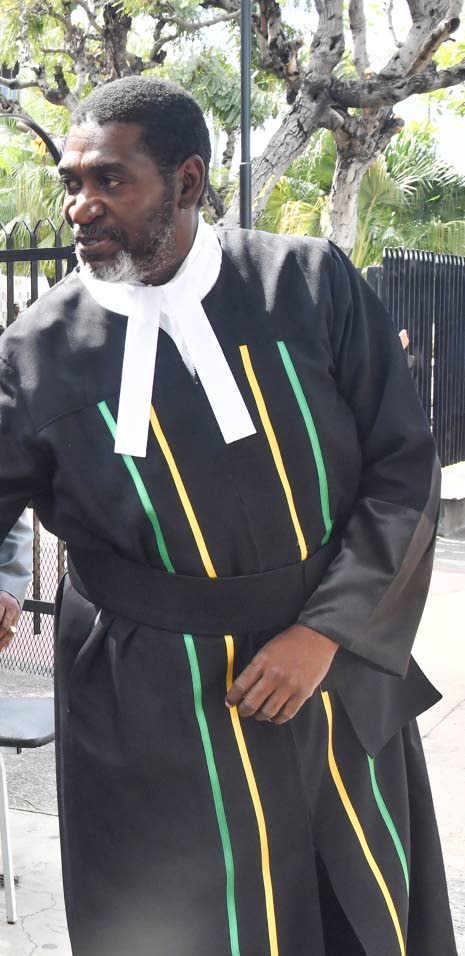
Eight months after Supreme Court Justice Leighton Pusey issued a sharp public warning to both prosecution and defense legal teams demanding they secure every required document ahead of an April 13, 2026 trial for eight accused members of the so-called Ronko Gang, the high-profile criminal proceeding remains in procedural limbo.
The eight defendants — seven men and one woman — have been tied up in the Jamaican court system since 2022, and already two scheduled trial start dates have been scrapped due to repeated delays from legal teams. The first scheduled trial, set for September 16, 2025, was vacated in July 2025, in large part because multiple defense attorneys were absent from pre-trial hearings and other counsel confirmed they would not be prepared to proceed on that timeline. It was at that July hearing that Justice Pusey adjusted the timeline, pushing the trial to April 2026 to give all parties sufficient time to get their materials in order.
In his stern address to legal teams at the time, Pusey emphasized that the extended window was a one-time accommodation. “For all the counsel in this matter, I want you to listen very carefully. All the attorneys in this matter, I have done matters with them and I have had the joy of being in the middle of the matter and being told that there is something that they didn’t realise wasn’t there or they want some document or something like that… so please ensure that everything that you need, you have now so that when the trial starts — whether it is me or some other poor unfortunate judge — you have every single, striking piece of paper that you need. That especially goes for the Crown,” Pusey stated.
The April 13 start date was expected to carry proceedings through to a planned conclusion on June 15, 2026. However, after a January 2026 trial readiness hearing was adjourned until February, the second scheduled trial date was also vacated. The case was reassigned to case management review in April 2026, still before Justice Pusey.
When the matter came up for a routine mention on April 30, court officials confirmed that no prosecutor from the Office of the Director of Public Prosecutions had been formally assigned to the case. In response, Justice Pusey gave the prosecution until May 14 to submit both a structured trial timeline and a complete witness list.
When the case was called again before Justice Pusey at the Supreme Court Home Circuit Division on the May 14 deadline, prosecution representatives informed the court that their case files were still incomplete. Taking advantage of the prosecution’s continued unpreparedness, defense attorneys filed a formal request with the judge to grant bail to four of the defendants currently being held in pre-trial detention. They argued that it is fundamentally unfair to keep the accused in custody solely because state prosecutors have failed to complete their required case preparations.
All eight defendants face joint charges under Jamaica’s Criminal Justice (Suppression of Criminal Organisation) Act, widely known as the national anti-gang legislation. The Ronko Gang, which authorities allege includes multiple active law enforcement officers among its members, has been connected to 17 separate criminal incidents across Jamaica between 2019 and 2021. The alleged offenses range across multiple parishes including Clarendon, Manchester, St Elizabeth, St Catherine, St Mary, Trelawny, Kingston, St Andrew, and St James, and include charges of shootings, burglary, aggravated robbery, illegal firearm possession, shop-breaking, conspiracy to murder, and abduction.
After reviewing written and oral submissions from all participating defense counsel, Justice Pusey announced that he would hold formal hearings on the bail applications for the four detained men: Tafari Silvera, Tehneil Francis, David Henry and Tevin Henriquez. The remaining four accused — Jasette Brown, Daneilio Barnes, Ovilgo McKenzie and Rajay Morrison — are already out on bail ahead of trial. The defense team includes lead counsel Ovilgo McKenzie, alongside Denise Hinson, Tamika Harris, Andrea Whyte-Walters, Donahue Martin and Richard Lynch.