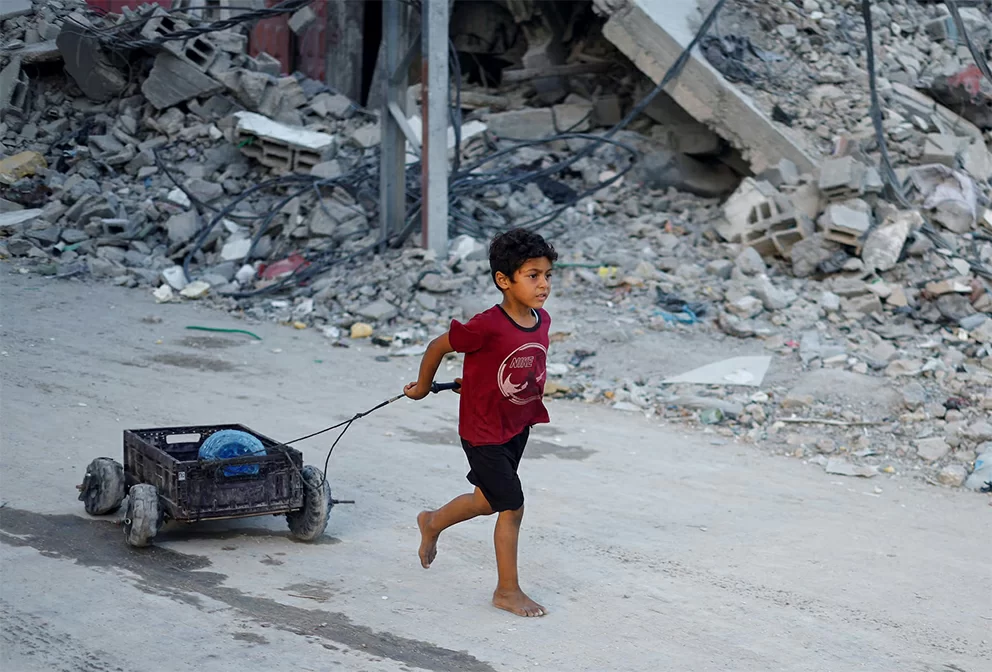
Across the globe, ordinary people are enduring unthinkable hardship that leaves even the most hardened observers shaken. In the Gaza Strip, families dig frantically through the rubble of flattened homes, clinging to the faint hope of pulling loved ones alive from the destruction. In Ukraine, civilians go about their daily lives under constant threat of bombardment, watching as artillery and missiles reduce their homes, communities, and lifelong possessions to ash. In Sudan, escalating armed violence has torn apart entire communities, forcing thousands of people to flee their homes in search of safety from unpredictable, ever-present threats. On the border of the Democratic Republic of Congo and Uganda, the Ebola virus continues its relentless spread, claiming new lives even as frontline responders work to contain the outbreak. These are not isolated tragedies—they are just a handful of the crises that leave the world bending under the weight of widespread pain, uncertainty, and irreversible loss.
Rarely does this suffering emerge from nowhere. Its roots run deep, embedded in long-running armed conflicts, bitter political power struggles, stark global economic inequality, and centuries-old historical divisions that continue to fuel division today. In some cases, competing geopolitical interests and external intervention have exacerbated tensions, while in others, systemic domestic injustice has pushed vulnerable communities to the breaking point. But no matter the underlying cause, one brutal, unavoidable truth remains: it is ordinary, everyday people who pay the highest price. They lose their lives, their homes, their livelihoods, and the hope for a better future that many take for granted.
This widespread, unrelenting pain forces the world to confront a haunting, unavoidable question: How much suffering can one human being endure? Is there a hard limit to human resilience, a breaking point even the strongest among us cannot cross? How many losses, how many sleepless nights of fear, how many tears can a heart hold before it shatters? Even more pressing than that question is another: What are we, as a global community, doing to ease this pain and stop the cycle of suffering?
Yet even in the darkest of these crises, glimmers of extraordinary resilience emerge. Stories abound of people who continue to love, to care for their neighbors, and to hold onto dreams of peace and justice, even when they have lost almost everything. They stand in solidarity with one another when all hope seems lost, proving that human connection can survive even the most devastating circumstances. But this inherent resilience is not infinite. Long-term, unrelenting suffering can break even the most resilient people, and there is a very real danger that despair will eventually take hold if the world continues to stand by.
As global citizens, we cannot and must not look away. Every story of pain is a call to uphold our shared humanity, a demand for meaningful action. Change does not come from empty words of sympathy—it requires tangible action that makes a real difference in the lives of those suffering. It is our collective responsibility to ease suffering, to bring light to places shrouded in darkness, and to nurture hope where despair threatens to take over.
There may be no simple, clear answer to the question of how much suffering the human heart can bear. But meaningful change begins with recognition: recognition of the pain that exists, empathy for those who endure it, and acceptance of our shared responsibility to uphold human dignity for all people, regardless of where they live. For as long as there is hope, there is a future—and as long as there are people suffering, we can never afford to stay silent.
How much suffering can a human being endure? Perhaps the answer is this: as long as the rest of the world fails to act to ease that pain, it is always more than any person should ever have to bear.