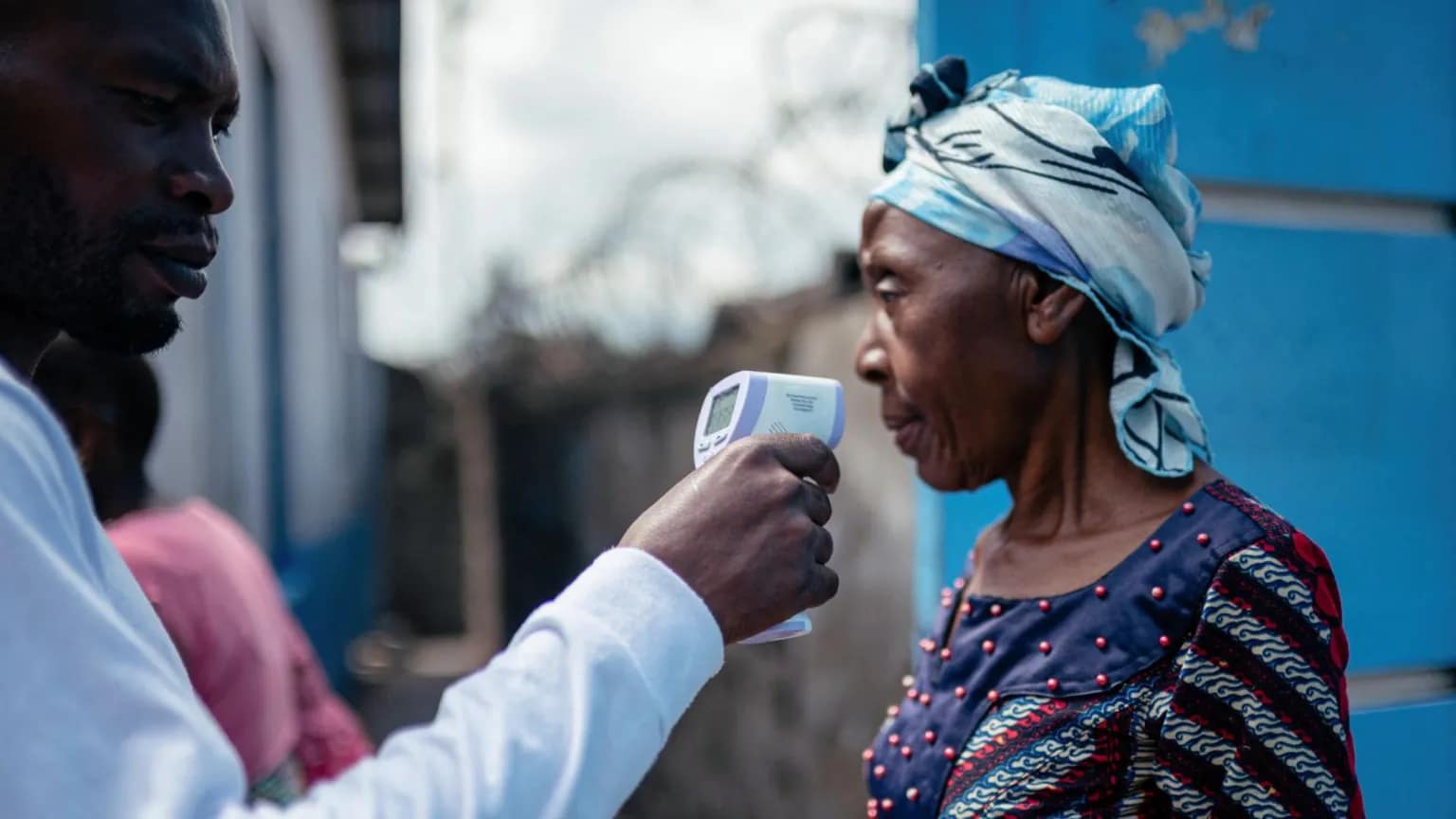
In a high-stakes announcement, the World Health Organization (WHO) has formally designated the ongoing Ebola outbreak in the eastern Democratic Republic of the Congo (DRC) a Public Health Emergency of International Concern (PHEIC), the global health body’s highest level of alert. While the current outbreak, centered in Ituri province, does not meet the strict criteria to be classified as a pandemic, the WHO has issued urgent warnings that undetected transmission could allow the virus to grow far beyond the currently confirmed and suspected case counts, with major risks of local and regional expansion.
The outbreak is caused by the Bundibugyo strain of Ebola, a pathogen for which no specifically approved vaccines or antiviral treatments currently exist. As of the latest update, health authorities have logged eight laboratory-confirmed cases, with 246 suspected cases and 80 reported deaths across three high-risk health zones: Bunia, the provincial capital of Ituri, and the gold-mining hubs of Mongwalu and Rwampara. One confirmed case has already reached the DRC’s national capital, Kinshasa, linked to a patient who had traveled from the outbreak zone. The virus has also crossed international borders, with two confirmed cases recorded in neighboring Uganda; one of those cases, a 59-year-old Congolese man, died last week, and his remains have been repatriated to the DRC. Separately, AFP has confirmed that an additional Ebola case has been detected in Goma, a city in eastern DRC currently held by M23 rebel forces, complicating response efforts.
Multiple overlapping factors have amplified the risk of widespread transmission, the WHO explained. Decades of ongoing conflict in eastern DRC have created a severe humanitarian crisis, paired with high rates of population movement, an outbreak epicenter located in an urban area, and a large network of unregulated informal health facilities. These conditions make monitoring and controlling the virus particularly challenging. Neighboring countries are classified as high-risk due to constant cross-border trade and travel flows.
To curb the outbreak, the WHO has advised both the DRC and Uganda to immediately activate emergency operations centers to coordinate surveillance, contact tracing, and infection prevention protocols. The agency recommends confirmed cases be placed in immediate isolation, with release only after two negative virus-specific tests collected at least 48 hours apart. Countries bordering affected regions have been instructed to boost routine surveillance and mandatory health reporting. Critically, the WHO has urged nations outside the affected zone to refrain from closing borders or imposing unnecessary travel and trade restrictions, noting that such actions are typically driven by fear rather than scientific evidence.
WHO Director-General Dr. Tedros Adhanom Ghebreyesus emphasized that major uncertainties remain around the true scale of the outbreak, including the actual number of infected people and how far the virus has already spread geographically. First identified in 1976 in what is now the DRC, Ebola is believed to originate from bat populations, and this current event marks the 17th outbreak the country has faced since the virus was first discovered. The virus spreads through direct contact with bodily fluids or broken skin, triggering symptoms that progress from early fever, muscle pain, fatigue, headache, and sore throat to vomiting, diarrhea, rash, and internal or external bleeding, often leading to organ failure and death. The WHO records an average fatality rate of roughly 50% for Ebola, and no universally proven cure exists for the disease.
The Africa Centres for Disease Control and Prevention (Africa CDC) has previously echoed these concerns, noting that the outbreak’s presence in densely populated urban areas of Rwampara and Bunia, paired with mobile mining workforces in Mongwalu, creates extreme conditions for rapid spread. Africa CDC Executive Director Dr. Jean Kaseya stressed that large-scale cross-border population movement between affected areas and neighboring countries makes coordinated regional response non-negotiable.
Since Ebola was first discovered 50 years ago, roughly 15,000 people across African nations have died from the disease. The DRC’s deadliest Ebola outbreak on record occurred between 2018 and 2020, when nearly 2,300 people lost their lives. Just last year, an outbreak in a remote region of the country killed 45 people, underscoring the persistent threat of viral flare-ups in the region.