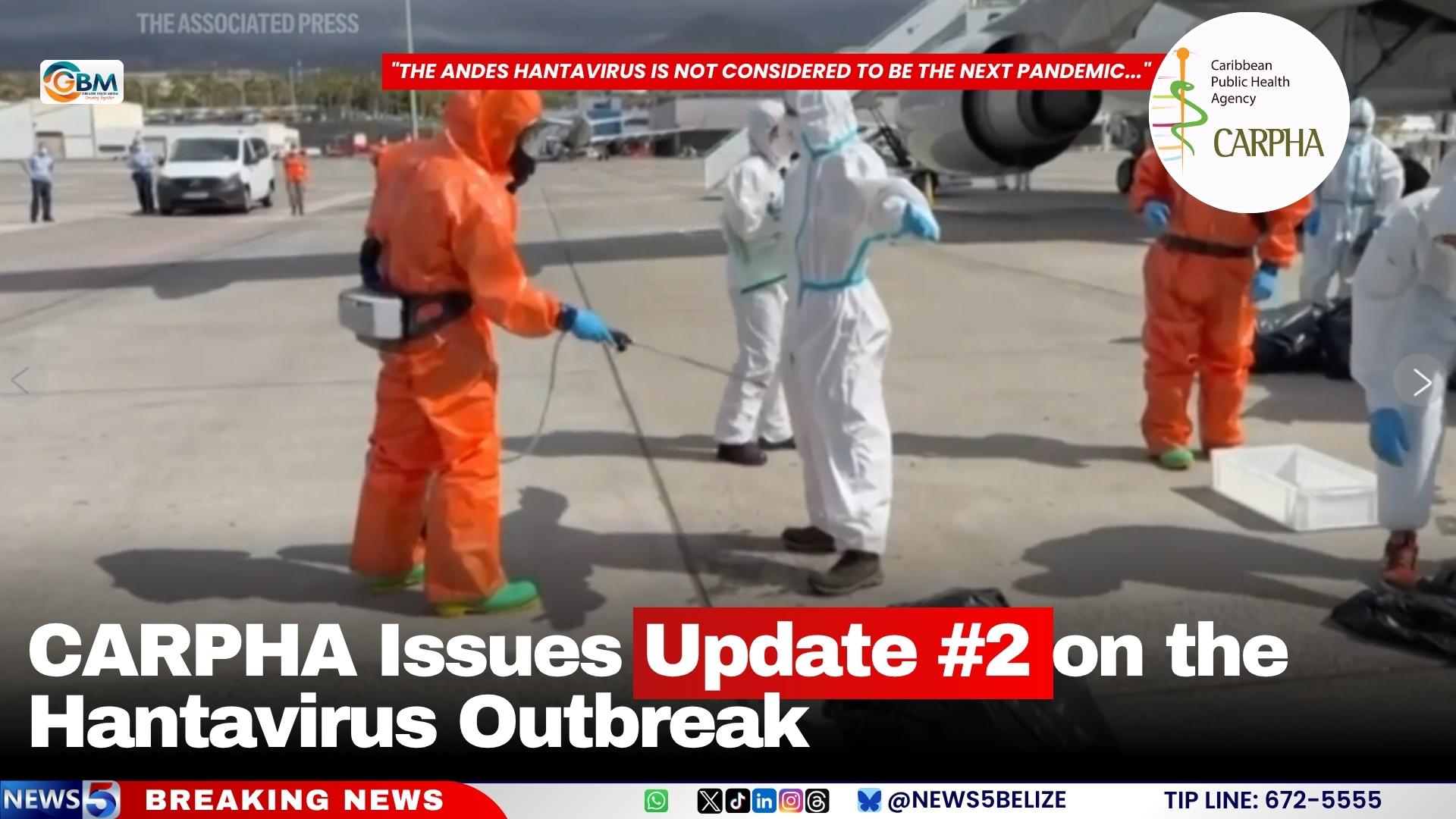
Nearly six weeks after a hantavirus outbreak was first detected on an international expedition cruise ship, the Caribbean Public Health Agency (CARPHA) has released its second official guidance update for its 12 member states, including Belize, reassuring regional health authorities that the public health risk across the Caribbean remains low at this stage.
The outbreak, which has been traced to the MV Hondius, a polar expedition vessel that set sail from Ushuaia, Argentina on April 1, has resulted in 11 confirmed cases and three fatalities to date. Of the 11 reported cases, eight have received formal laboratory confirmation. Affected passengers hold citizenship from a range of countries across North America and Europe, including the United States, France, Switzerland, Spain, the Netherlands, as well as South Africa. After completing its journey through isolated Antarctic and South Atlantic routes, the vessel docked in Tenerife, Spain on May 10, where all remaining passengers and crew were safely disembarked and repatriated to their home countries via specially arranged non-commercial flights.
Genetic sequencing has confirmed the outbreak is caused by the Andes strain of hantavirus, the only known variant of the pathogen capable of limited human-to-human transmission. CARPHA emphasized that this spread only occurs through extended, close personal contact, meaning the virus cannot transmit easily through casual interactions or airborne routes in most public settings. In its update, the agency explicitly pushed back against speculation that the strain could trigger a new global pandemic, repeating its assessment that the Caribbean faces minimal current risk from the outbreak.
Despite the low current risk, CARPHA highlighted that the Caribbean’s status as the world’s top cruise tourism destination leaves the region uniquely vulnerable to imported infectious disease outbreaks linked to international maritime travel. To mitigate any potential spillover risk, the agency has issued a set of precautionary recommendations for all member states: maintaining routine mandatory surveillance for all incoming vessels, systematically reviewing onboard medical logs to identify potential undiagnosed cases, strengthening sanitation and biosecurity protocols at all regional ports of call, and requiring immediate reporting of any suspected hantavirus cases to local public health authorities.
“Sustained vigilance remains essential given the Caribbean’s status as the world’s leading cruise tourism destination,” the agency noted in its official statement.
As of the latest update, there remains no specific, targeted antiviral treatment for hantavirus infection, and no vaccine approved for widespread public use globally. Public health experts stress that early recognition of symptoms and prompt supportive medical care drastically improves patient outcomes for those infected.