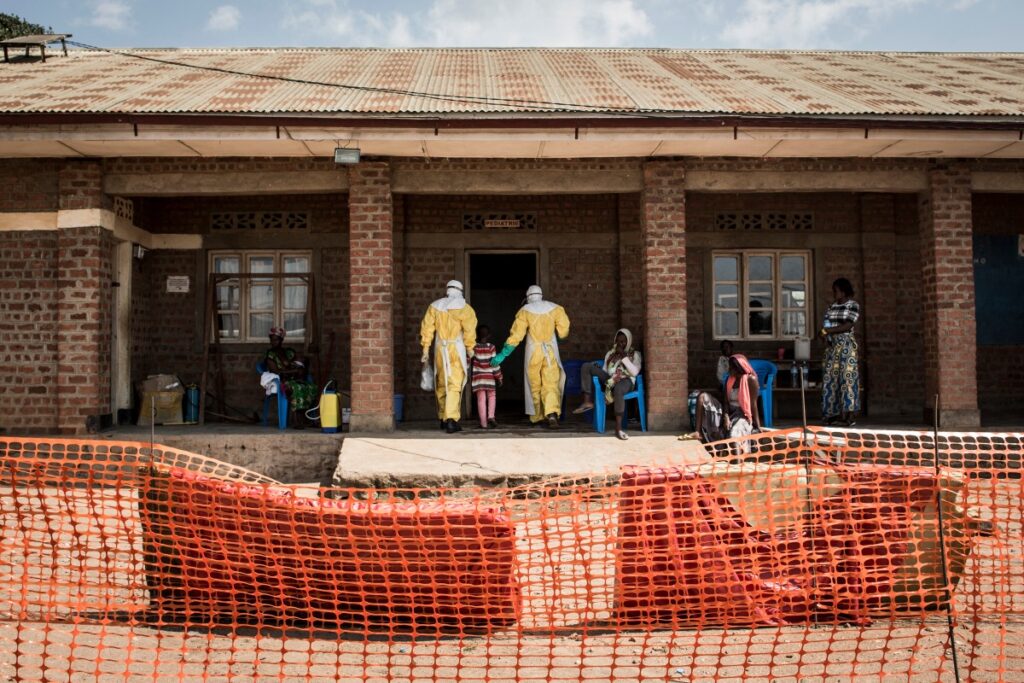
On Friday, African public health officials announced a confirmed Ebola virus outbreak in the Democratic Republic of the Congo’s (DRC) conflict-stricken Ituri Province, triggering urgent regional coordination to contain the pathogen’s spread.
The Africa Centres for Disease Control and Prevention (Africa CDC) confirmed via laboratory testing that four deaths are tied to the new outbreak, with preliminary data recording 246 suspected cases across the region, including a total of 65 suspected fatalities. Initial genomic analysis points to a potential non-Zaire strain of the virus, a critical detail, as full genomic sequencing results are expected within 24 hours to confirm the variant.
Currently, only the Zaire strain — the deadliest variant of Ebola, with a case fatality rate ranging between 80% and 90% — has an approved, widely available vaccine. This means if a different strain is confirmed, public health teams will face additional challenges in rolling out targeted immunization responses to slow transmission.
First discovered in 1976 and traced to bats as its natural reservoir, Ebola is a severe hemorrhagic viral infection that spreads through direct contact with infected bodily fluids. The disease triggers rapid symptom onset, often leading to massive internal bleeding, organ failure, and death. Even with decades of medical progress in developing vaccines and therapeutic treatments, the virus has killed roughly 15,000 people across Africa since it was first identified. The DRC’s deadliest outbreak on record, which ran from 2018 to 2020, claimed nearly 2,300 lives before it was contained.
For this latest outbreak, the first confirmed cases were detected in two rural health zones: Mongwalu, home to around 150,000 people and located 56 miles from Ituri’s provincial capital Bunia, and Rwampara, another 150,000-person jurisdiction that borders Bunia directly. Suspected cases have also been reported within Bunia itself, a city of 300,000 residents, and those samples are currently pending confirmation. This marks the 17th Ebola outbreak the DRC has faced since the virus was first detected within its borders, coming just months after the country eradicated a smaller outbreak in its central region in December 2023. That earlier outbreak killed at least 34 people between August and December 2023. Other West and East African nations, including Guinea, Uganda, and Sierra Leone, have also fought small, contained Ebola outbreaks in recent years.
A key concern for public health leaders is the unique set of risk factors driving potential spread in Ituri. The province, a gold-rich region bordering Uganda and South Sudan, has been trapped in cycles of armed militia violence for more than 30 years, with persistent clashes destabilizing local healthcare infrastructure and leaving large populations displaced. Africa CDC notes that widespread population movement, ongoing insecurity that blocks access for response teams, and the close proximity of affected areas to the DRC’s two neighboring countries create a high risk of cross-border transmission.
In response to the declaration, Africa CDC has already convened an urgent high-level coordination meeting bringing together health officials from the DRC, Uganda, South Sudan, and global public health partners. The priority of the meeting is to strengthen cross-border surveillance, boost local preparedness, and scale up coordinated outbreak response efforts across the region. “Rapid regional coordination is essential,” Africa CDC Director General Jean Kaseya emphasized in the agency’s official statement. Experts note that the virus only becomes contagious after symptoms develop during an incubation period that ranges from two to 21 days, giving response teams a narrow window to identify and isolate cases before widespread transmission occurs.