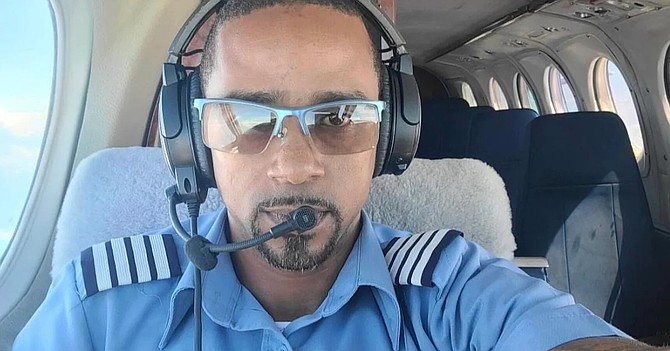
A recent ocean plane crash that ended in a miraculous full survival of all on board has now sparked intense public scrutiny over the pilot’s decades-long legal and regulatory battles rooted in a prior drug conviction.
Ian Nixon, the pilot at the controls of a Beechcraft King Air 300 that went down roughly 80 miles off Florida’s coast this Tuesday, has been widely praised for his emergency handling that let all 11 passengers and crew endure five hours adrift in open water before rescue. But newly uncovered 2022 Supreme Court documents lay bare a tangled 15-year history of regulatory action against Nixon, dating back to his 2007 U.S. federal conviction.
Court records show Nixon was first issued a commercial pilot license by the U.S. Federal Aviation Administration in 2002. That changed in May 2007, when he was found guilty of conspiracy to supply illegal substances into the United States in a Florida federal court and served a prison term for the offense. In 2009, the FAA permanently revoked his American pilot license as a result of the conviction.
Following his release from custody, Nixon returned to his home country The Bahamas in 2011. There, he successfully converted his revoked U.S. commercial license to a valid Bahamian pilot license, and secured a flying position with local regional carrier Pineapple Air. He also obtained a security pass granting him access to restricted airside areas at Lynden Pindling International Airport (LPIA), Nassau’s main international hub.
The first sign of regulatory pushback came in March 2013, when the Bahamas Department of Civil Aviation (DCA) sent an email to Nixon’s employer notifying the airline that his U.S.-origin permit had been revoked and demanding the document’s return. Nixon later told officials he was informed his 2007 U.S. drug conviction was the sole reason for the revocation.
Over the following years, two key regulatory actions prompted Nixon to launch a judicial review challenge with the Bahamas Supreme Court. The first was a February 2018 decision by the DCA director to suspend Nixon’s Bahamian commercial pilot license and airman medical certificate, pending investigation into a separate aircraft accident involving the pilot. The second was the 2013 permanent revocation of his LPIA restricted-area security pass and official identification badge.
In the 2022 ruling on the challenge, Justice Loren Klein laid out the full details of the case. Government respondents defending the regulatory actions argued Nixon had intentionally hidden critical information on his 2013 application for a new security badge: he failed to disclose his prior felony conviction in the U.S. After conducting a cross-check with U.S. Customs and Border Protection, airport officials confirmed the conviction and prison term, leading to the pass revocation.
Respondents also presented allegations of ongoing violations: they claimed that even after his aviation credentials were restricted, Nixon continued to fly commercial operations in breach of Bahamian aviation rules. He allegedly accessed restricted LPIA airside areas with help from his wife, who worked for local aviation services firm Executive Flight Support, and used repeated deceptive tactics to obtain identification badges at airports in Rock Sound and Grand Bahama. These violations continued, they said, until a 2018 crash involving Nixon.
Justice Klein ruled that while the two regulatory actions were connected, they were legally distinct. He granted Nixon an extension of time and leave to challenge the 2018 license suspension, noting that a suspension is inherently temporary and constitutes a continuing impact on the pilot’s ability to work, and that Nixon had presented an arguable case with reasonable prospects of success. Klein stressed, however, that judicial review only examines the procedural legality of decisions, not whether the outcome was substantively correct.
The judge dismissed Nixon’s challenge to the 2013 revocation of his security pass, closing that portion of the case. As of the time of this week’s crash, no final ruling on the license suspension challenge had been publicly released, and it remains unclear whether the suspension was ever lifted, allowing Nixon to return to commercial flying.
The revelation of Nixon’s ongoing regulatory battle has raised urgent questions about aviation safety oversight in The Bahamas: how a pilot with a permanently revoked U.S. license and a felony drug conviction was able to regain commercial flying privileges, and how he continued to operate in the years after his credentials were suspended. At the same time, aviation safety experts note that Nixon’s emergency skills during Tuesday’s ditching remain undisputed, with all 11 on board surviving a five-hour wait for rescue in open ocean, an outcome widely described as extraordinary.